Airbnb Host Insurance Policy: What Providers Cover for Hosts
Hosting on Airbnb in Pennsylvania comes with real financial risks that standard homeowners insurance won’t cover. Guest injuries, property damage, and lost rental income can quickly become expensive problems without the right protection.
We at Eric L. Ash Insurance Agency help hosts understand what an Airbnb host insurance policy actually covers and what gaps remain. This guide walks you through your coverage options so you can protect your rental business properly.
What Your Homeowners Policy Actually Excludes
Your standard homeowners insurance policy treats short-term rental activity as a business use, and most carriers will either deny claims or cancel your coverage entirely if they discover you’re hosting on Airbnb. The exclusion isn’t accidental-it’s built into how homeowners policies define covered occupancy. When a guest injures themselves on your property and sues, your homeowners insurer can refuse to pay because the injury occurred during a rental period that falls outside residential use. Similarly, if a guest damages your kitchen cabinets, breaks windows, or stains carpets, your homeowners policy won’t cover guest-caused property damage. Pennsylvania hosts often discover these gaps only after filing a claim, which is too late to change course.
Why Guest Injuries Create Exposure You Can’t Ignore
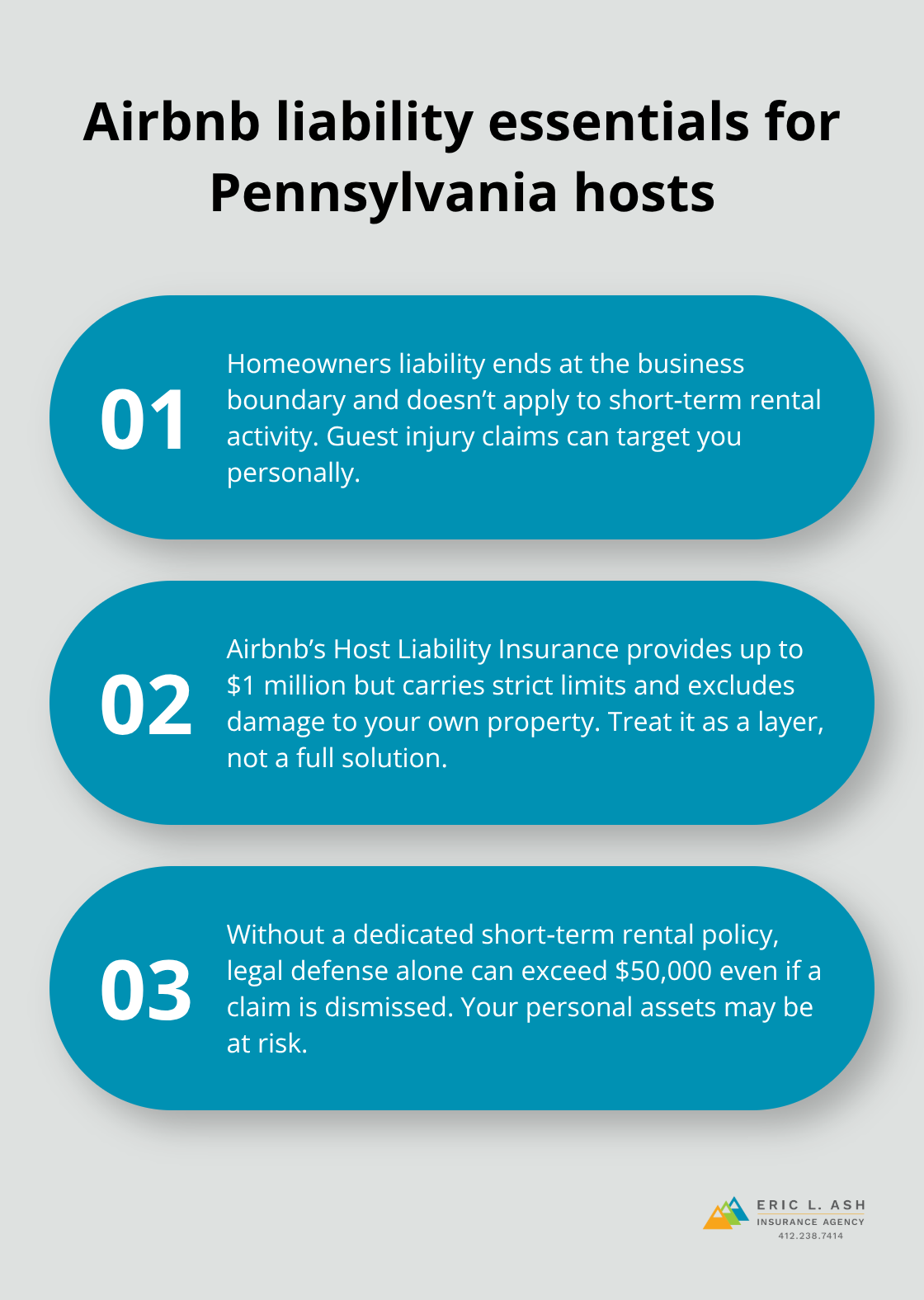
If a guest slips on your stairs or is injured by a faulty appliance, they can file a liability claim against you personally. Your homeowners liability coverage stops at the policy boundary-it doesn’t apply to business activities like short-term rentals. Airbnb’s Host Liability Insurance provides up to $1 million in coverage if you’re found legally responsible for bodily injury or damage to guest belongings, but this coverage has strict limits. It doesn’t cover intentional acts, and it excludes damage to your own property caused by a guest. Without a dedicated short-term rental policy, you face significant personal liability exposure, including legal defense costs that can exceed $50,000 even if the claim is dismissed.
The Real Cost of Property Damage from Guest Stays
Guest-caused damage represents one of the most common insurance claims among Airbnb hosts. Broken furniture, damaged flooring, stained linens, and broken appliances add up quickly. Your homeowners policy excludes this entirely because it views the damage as business-related loss. Standalone short-term rental insurance fills this gap with property damage protection that covers guest-caused harm to your rental space and furnishings. Without this coverage, you absorb these costs directly, which means unexpected damage can wipe out several months of rental income in a single incident.
Income Loss When Your Property Becomes Uninhabitable
If a fire, water leak, or storm makes your rental property uninhabitable, you lose rental income until repairs are complete. Standard homeowners insurance covers the physical damage to the structure, but it won’t reimburse you for the income you would have earned during the shutdown period. Pennsylvania hosts with mortgage payments and property taxes can’t afford weeks or months without rental revenue. Specialized short-term rental policies include loss of income coverage that compensates you for expected rental earnings when a covered peril forces you offline. This coverage protects your cash flow when circumstances beyond your control interrupt your business operations.
What Comes Next in Your Coverage Search
These gaps in standard homeowners coverage explain why Pennsylvania hosts need specialized protection. The good news is that multiple coverage options exist to address each of these exposures-from Airbnb’s built-in protections to standalone policies designed specifically for short-term rental operations. Understanding what each option covers will help you identify which combination of protections fits your hosting situation and your property’s risk profile.
Coverage Options Available for Airbnb Hosts in Pennsylvania
Airbnb includes Host Liability Insurance as part of AirCover for Hosts, which provides up to $1 million in coverage if you’re found legally responsible for bodily injury or damage to guest belongings during a stay. This protection activates automatically on every listing you create, with no additional cost or enrollment required. However, this coverage contains significant blind spots that Pennsylvania hosts must understand before treating it as their sole protection. The $1 million limit sounds substantial until you face a serious injury claim where medical expenses, legal defense, and settlements quickly exceed that amount. More importantly, Host Liability Insurance explicitly excludes damage to your own property caused by a guest, which means broken furniture, damaged appliances, and stained carpets fall outside Airbnb’s protection entirely. Airbnb’s separate Host Damage Protection component covers up to $3 million for damage to your rental property caused by guests, but these two coverages operate independently and don’t automatically extend to each other. The combination leaves gaps for scenarios like a guest’s injury combined with property damage, where you might exhaust one coverage limit before the other applies. Pennsylvania hosts who experience guest-related incidents often discover that Airbnb’s process requires you to file claims through their intake form, where a third-party insurer assigns a representative and determines coverage based on policy terms and conditions you may not have fully reviewed.
Why Standalone Short-Term Rental Policies Fill the Gaps Airbnb Misses
Specialized short-term rental insurance offers comprehensive protection that addresses what Airbnb’s coverage misses. Short-term rental insurance delivers commercial general liability starting at $1 million alongside building and contents coverage with new-for-old replacement cost protection. This means if a guest breaks your kitchen countertops or damages hardwood floors, the policy covers replacement at current market prices rather than depreciated value.
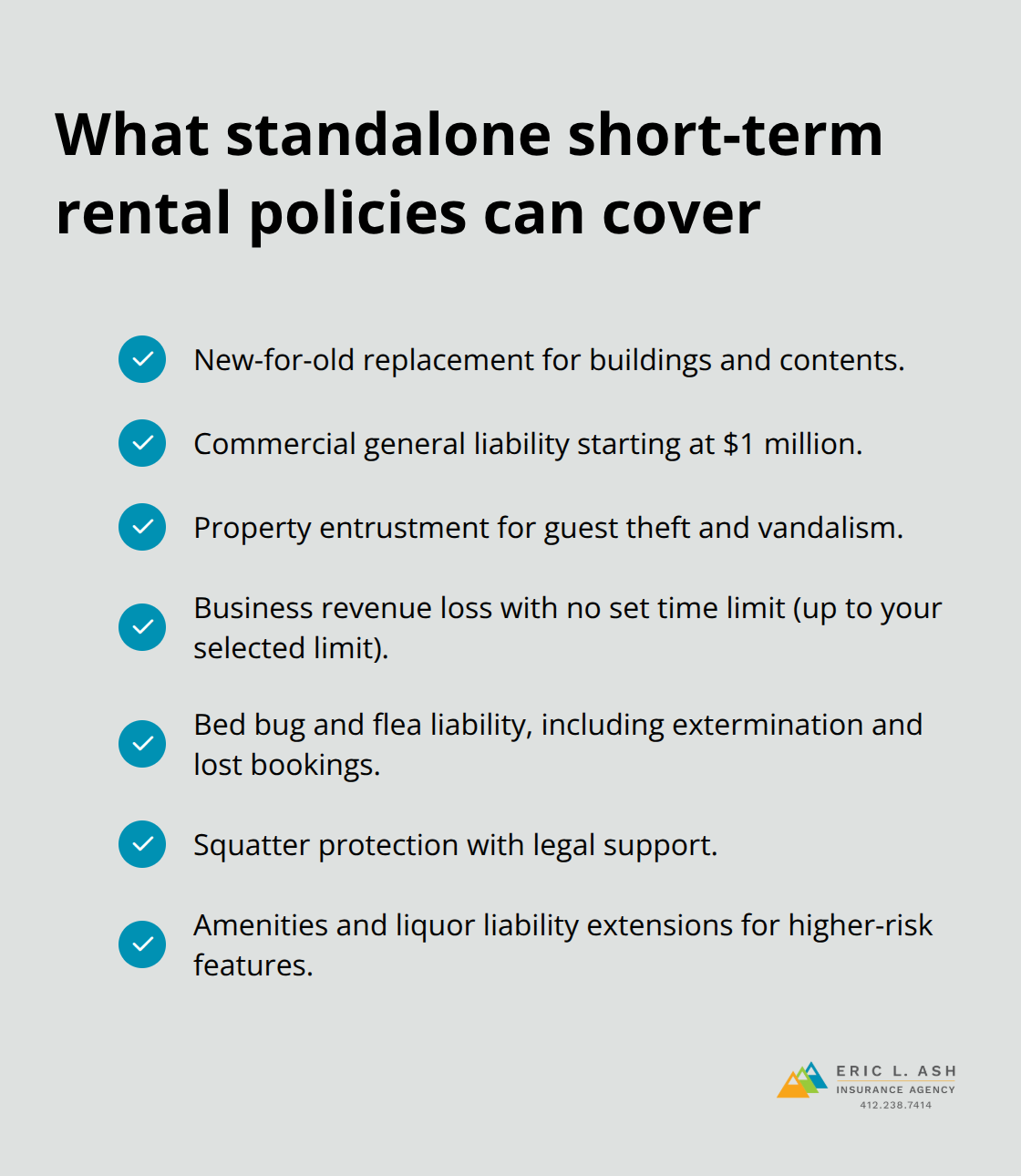
The policy also covers business revenue loss when a covered claim prevents you from renting, with no time limit and up to whatever limit you select, giving you genuine income protection rather than the uncertainty of Airbnb’s claims process. Standalone policies additionally cover bed bug and flea liability with extermination costs and lost revenue from canceled bookings, plus squatter protection with legal support if a guest refuses to leave. Pennsylvania hosts with amenities like pools, hot tubs, or off-premises equipment such as bikes and kayaks gain amenities coverage that extends liability protection to these items, which Airbnb and standard homeowners policies explicitly exclude. The policy also includes liquor liability coverage, addressing alcohol-related incidents that create significant exposure for hosts who allow guests to bring alcohol onto the property.
How to Layer Your Coverage Strategically
The practical approach for Pennsylvania hosts involves combining Airbnb’s built-in protection with a standalone short-term rental policy rather than choosing one or the other. Airbnb’s $1 million liability coverage provides a first layer of defense at no cost, but it shouldn’t be your only protection given the exposure that comes with hosting strangers in your home. A dedicated short-term rental fills the gaps that matter most: comprehensive property damage coverage, true income protection, and liability extensions for amenities and special situations. Hosts who rent fewer than 30 days per year face different exposures than those operating year-round, and your coverage should reflect that difference. Pennsylvania’s local ordinances add another layer of complexity, with towns like Paupack requiring $1 million in general liability coverage and Bethlehem mandating $500,000, which means your policy limits must meet or exceed local requirements to maintain legal compliance.
What to Compare When Shopping for Standalone Coverage
Coverage limits vary significantly across carriers, and the right limits depend on your property’s value and your rental frequency. A policy with $1 million in general liability may prove insufficient if you operate a multi-bedroom property in a high-income area where a serious injury claim could exceed that threshold. Property damage limits should reflect your furnishings and appliance replacement costs at current Pennsylvania market rates, not depreciated values. Income protection limits should cover your average monthly rental revenue plus a buffer for extended shutdowns, since a major fire or water damage can take months to repair. Requesting quotes from multiple carriers takes 15 minutes and reveals significant price variations based on your property’s location, guest volume, and claims history. Local requirements in your Pennsylvania municipality may mandate specific coverage types or minimum limits, so verify your town’s ordinances before selecting a policy.
Understanding Policy Exclusions That Still Apply
Even comprehensive short-term rental policies contain exclusions you need to understand. Most policies exclude intentional damage, meaning if a guest deliberately destroys your property, you won’t recover those losses. Policies typically exclude damage from normal wear and tear, which creates disputes about what constitutes guest damage versus expected deterioration. Some carriers exclude coverage for properties in high-crime areas or those with poor security measures, so your property’s location and locks matter to underwriting. Flood damage often requires a separate flood insurance policy, which Pennsylvania hosts near rivers or in flood zones should address separately. Reviewing the actual policy document before you purchase reveals these exclusions and helps you identify whether additional riders or endorsements make sense for your specific situation.
The combination of Airbnb’s built-in protection and a tailored standalone policy creates the foundation for protecting your rental business, but your coverage strategy must also account for Pennsylvania’s specific local requirements and your property’s unique characteristics.
How to Choose the Right Airbnb Host Insurance Coverage
Match your coverage limits to your actual hosting operation
Your property type and rental frequency determine which coverage limits actually protect you versus which ones sit unused. A single-family home with a finished basement rented 20 times per year faces different exposures than a three-bedroom property rented 100 times annually, yet many hosts purchase identical policies without accounting for this difference. Calculate your average nightly rate and multiply it by the number of days you rent annually to establish your actual revenue at risk. If you earn $15,000 per year from hosting, you need income protection that covers at least that amount plus a buffer for extended repairs. Hosts operating year-round with higher occupancy rates should select income limits that cover three to six months of lost revenue, since major damage like roof or foundation issues can require longer repair periods.
Pennsylvania’s local ordinances create hard minimums you cannot negotiate around. Verify whether your municipality requires $500,000 or $1 million in general liability before requesting quotes. A host in Bethlehem operating within the 30-day annual rental cap faces different liability exposure than someone in Philadelphia running a year-round operation, which means your coverage strategy must align with local rules and your actual business model. General liability limits of $1 million work for most single-property hosts, but properties with pools, hot tubs, or other high-risk amenities should consider $2 million limits since a serious drowning or injury claim can exceed standard thresholds.
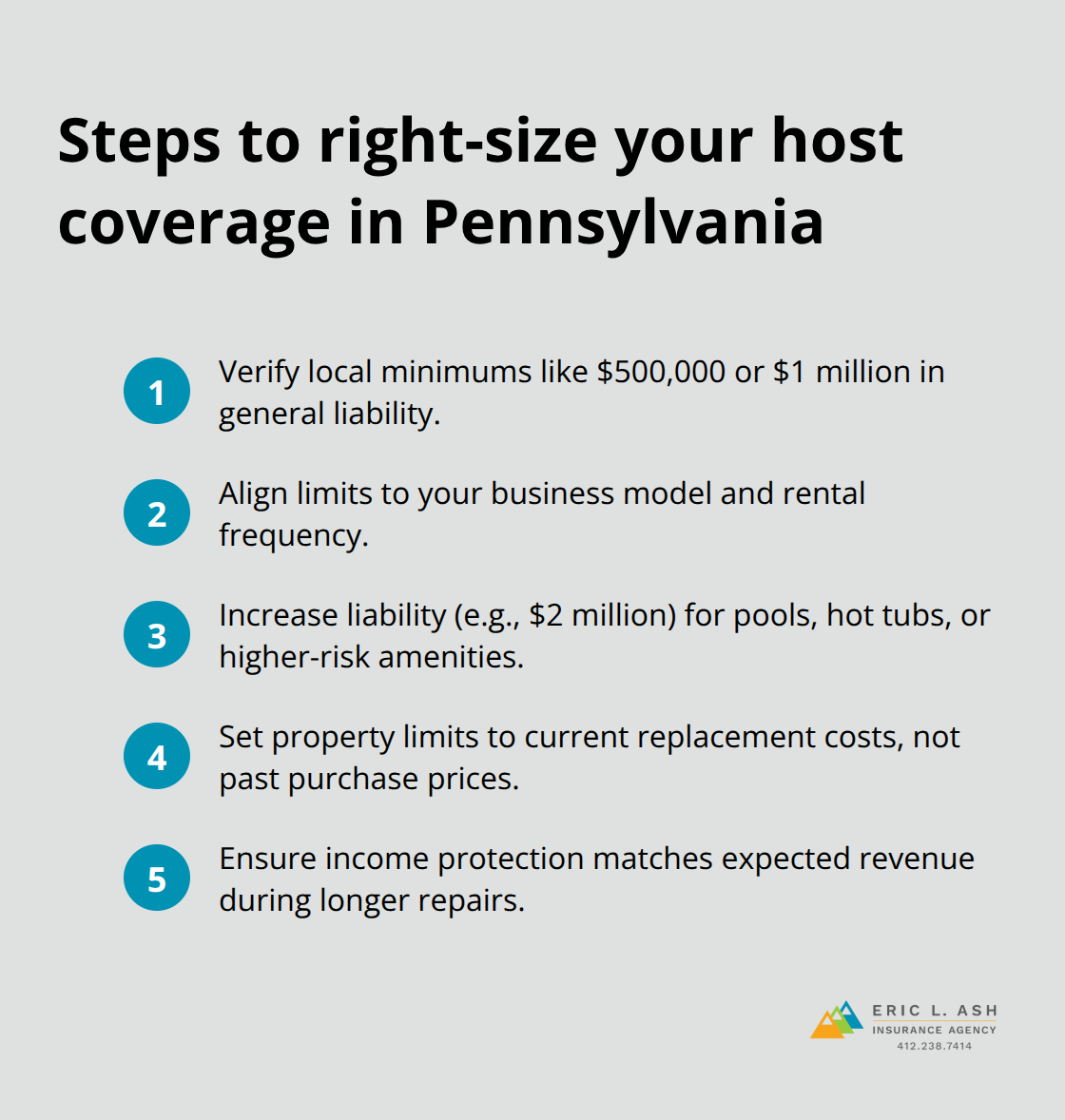
Property damage coverage should reflect your furnishings and appliance replacement costs at current Pennsylvania prices, not what you paid five years ago, since replacement cost policies pay what it costs to rebuild today.
Evaluate Deductibles Based on Your Claims History
Comparing deductibles requires understanding the trade-off between lower premiums and higher out-of-pocket costs when claims occur. A $500 deductible costs more monthly than a $2,500 deductible, but that difference compounds over years of claims-free hosting. Calculate how many claims you expect annually based on your guest volume and property condition, then work backward to determine whether the premium savings justify accepting higher deductibles. Hosts with newer furnishings and appliances experience fewer property damage claims, so higher deductibles make sense for you, while hosts with older properties should stick with lower deductibles since guest damage becomes more likely.
Identify Exclusions That Create Coverage Gaps
Policy exclusions deserve more attention than most hosts give them because they reveal what the insurer won’t pay when you need it most. Request the full policy document from carriers before purchasing, not just the summary page, and specifically search for exclusions related to water damage, theft, and intentional acts. Some carriers exclude coverage for properties without deadbolt locks or security systems, which means upgrading your locks might lower your premium or make coverage available at all. Flood damage exclusions appear in nearly every standard policy, forcing Pennsylvania hosts near rivers or in flood zones to purchase separate flood insurance through the National Flood Insurance Program or private carriers.
Account for Special Requirements and Inspections
Special requirements like annual property inspections or guest screening procedures vary by carrier and should factor into your selection since some hosts find these requirements burdensome while others view them as reasonable risk management. Carriers that demand inspections typically charge lower premiums because they reduce claims frequency, so the inspection cost often pays for itself through premium savings. Guest screening requirements (background checks or booking history verification) create additional administrative work but signal to insurers that you take risk management seriously. Understanding these requirements upfront prevents surprises after you purchase a policy and discover obligations you didn’t anticipate.
Final Thoughts
Standard homeowners insurance won’t protect your Airbnb rental business, and Airbnb’s built-in coverage alone leaves significant gaps in your protection. Guest injuries, property damage, and lost income during shutdowns represent real financial threats that require an Airbnb host insurance policy to address properly. Pennsylvania hosts who operate without comprehensive coverage risk absorbing thousands of dollars in unexpected costs when incidents occur, which can quickly eliminate months of rental income.
The right coverage combines Airbnb’s free $1 million liability protection with a standalone short-term rental policy that covers property damage, income loss, and liability extensions for amenities. Your coverage limits should match your actual hosting operation, your deductibles should reflect your claims history, and your policy exclusions should align with your property’s specific risks. Pennsylvania’s local ordinances add another requirement layer, with some municipalities requiring $1 million in general liability, so your coverage must meet these minimums to maintain legal compliance.
Shopping multiple carriers reveals significant price variations and helps you identify which combination of limits, deductibles, and special requirements delivers genuine value for your situation. We at Eric L. Ash Insurance Agency help Pennsylvania hosts navigate these coverage decisions by shopping multiple markets and delivering tailored recommendations backed by local customer service. Contact us to discuss your hosting situation and receive quotes that reflect your property’s actual risks and your municipality’s specific requirements.
The information provided in this blog is for general informational purposes only and does not constitute legal, financial, or insurance advice. Coverage options, terms, and availability may vary. Please consult with a licensed professional for advice specific to your situation.