PA Teen Driver Policy: What It Covers
Your teen is getting behind the wheel, and you want to make sure they’re protected. Understanding Pennsylvania’s teen driver policy and insurance coverage is the first step toward keeping them safe on the road.
At Eric L. Ash Insurance Agency, we help parents navigate the rules and find the right coverage for their young drivers. This guide breaks down what the PA teen driver policy requires and how to get the best rates.
Pennsylvania’s Teen Driver Licensing Stages
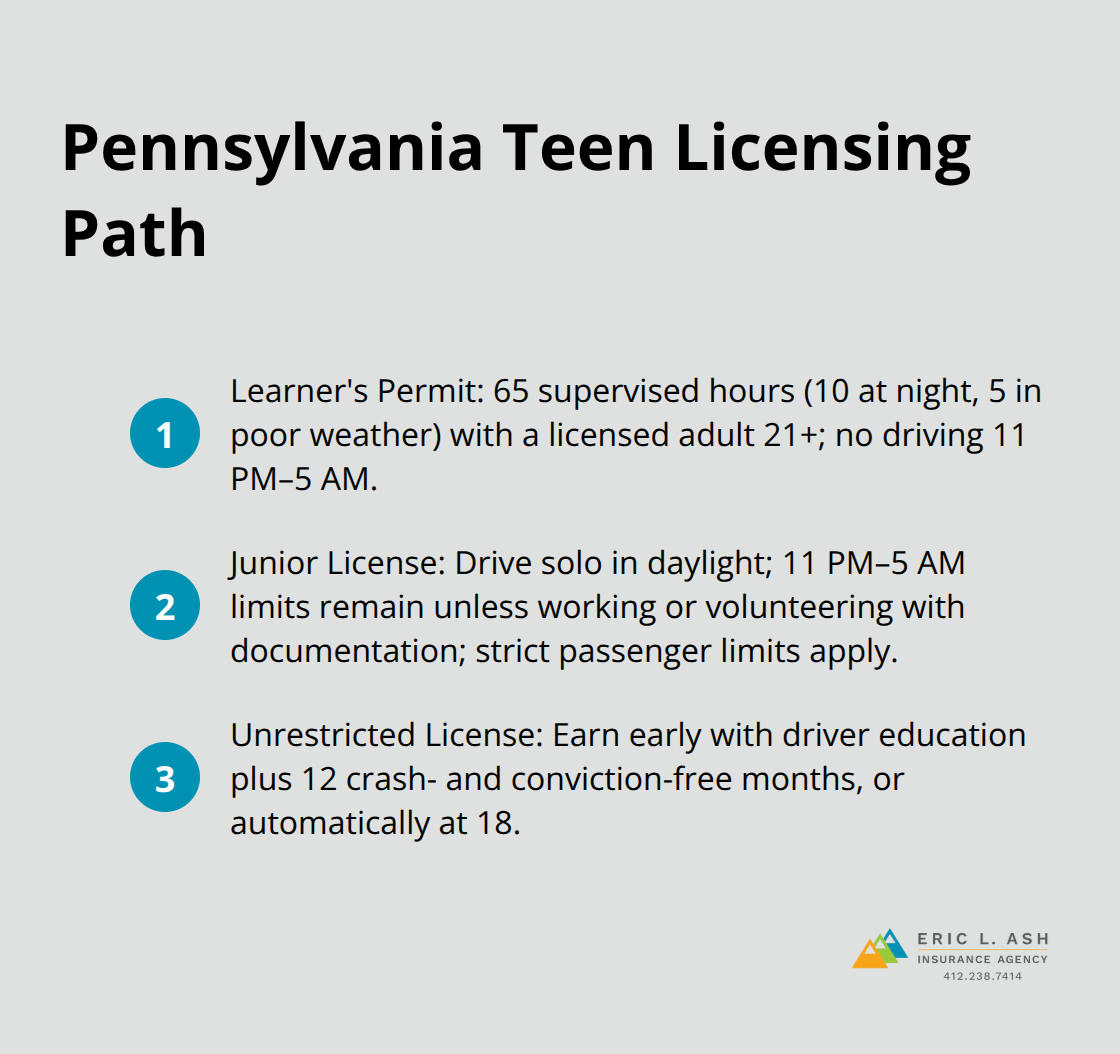
Pennsylvania uses a three-step licensing system that gradually increases driving privileges as teens gain experience. The learner’s permit stage requires at least 65 hours of supervised driving, including 10 hours at night and 5 hours in poor weather conditions. A licensed adult aged 21 or older must accompany your teen at all times during this phase, and night driving is prohibited between 11 PM and 5 AM unless your teen works or volunteers (in which case you’ll need a notarized employer affidavit). The permit remains valid for one year, giving your teen plenty of time to log those required hours before moving to the next stage.
Moving to the Junior License
After six months on the learner’s permit with at least 65 hours of documented practice, your teen can apply for a junior license. Restrictions begin to ease at this point, but parental oversight remains critical. Your teen can now drive alone during daylight hours, though nighttime driving between 11 PM and 5 AM stays off-limits unless they’re employed or volunteering with proper documentation. Passenger restrictions are tight initially: only one non-family member under 18 can ride along for the first six months. After six months without at-fault accidents, this expands to three passengers. A single at-fault accident or six driving points on their record can trigger a 90-day license suspension. This is why monitoring their driving habits and discussing accountability matters more than most parents realize. Your teen must maintain a clean record to avoid losing driving privileges entirely.
Full Licensure Before Turning 18
Your teen can graduate to an unrestricted license before age 18, but this requires completing a PennDOT-approved driver education course and maintaining a crash- and conviction-free record for at least 12 months on the junior license. If your teen doesn’t meet these requirements, the junior license automatically converts to a regular license when they turn 18, lifting all restrictions. Pennsylvania’s Zero Tolerance Law applies to anyone under 21: any amount of alcohol in their system results in a license suspension, potential jail time, and fines. This law is absolute and shows no leniency, even for first-time offenders without a crash involved.
Insurance Coverage Starts Here
Once your teen holds a valid permit or license, insurance coverage becomes your next priority. Pennsylvania law requires all drivers to carry liability coverage, and adding your teen to your existing policy typically costs less than purchasing a separate policy. The coverage you select now protects your teen across all vehicles listed on your policy, and the liability limits you choose apply to every driver in your household. Understanding what types of coverage your teen actually needs-and which ones protect your family’s assets-shapes both your budget and your peace of mind on the road.
What Coverage Your Teen Driver Needs
Liability Coverage: The Foundation
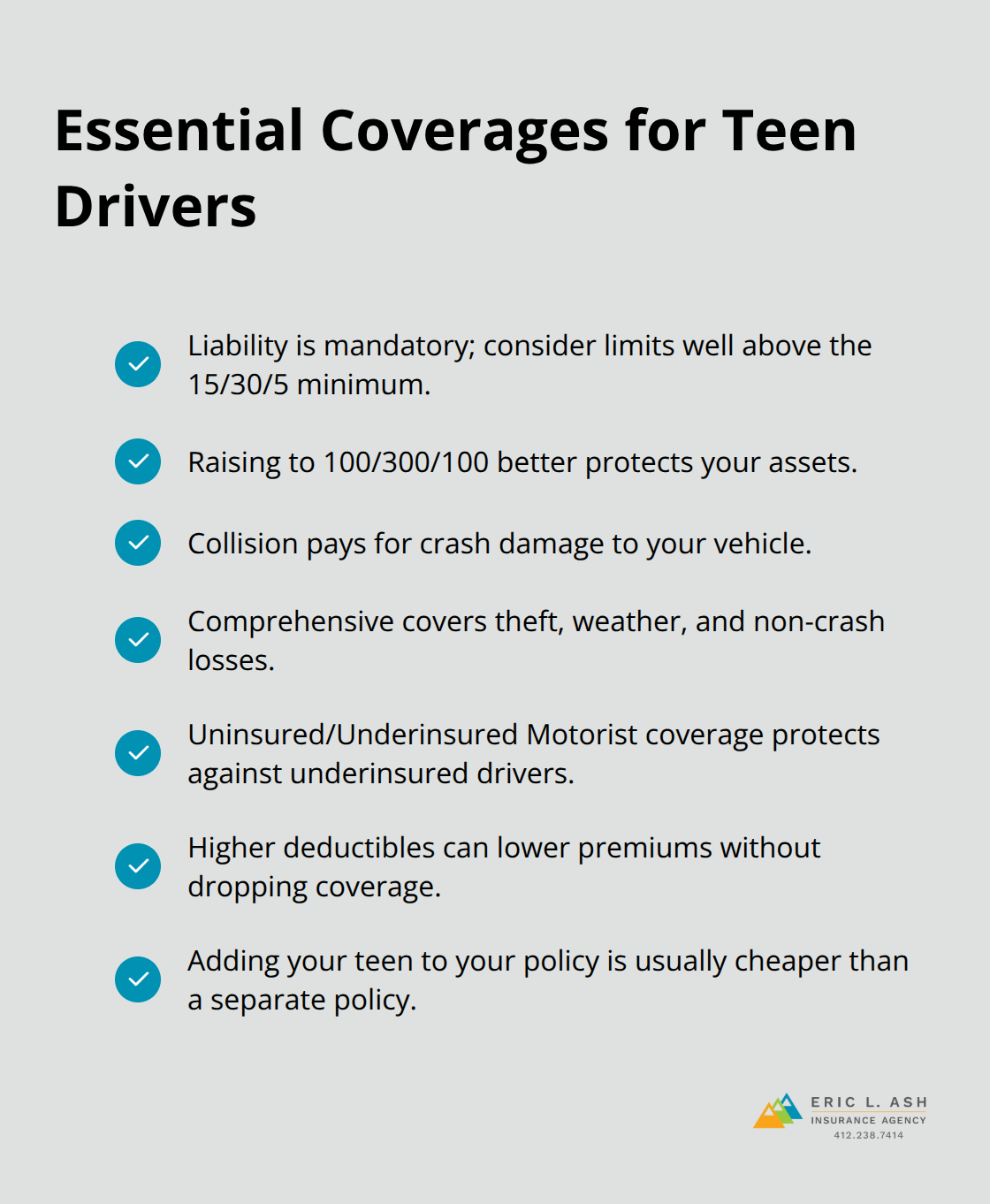
Liability coverage is mandatory in Pennsylvania, and it forms the foundation of any teen driver policy. When you add your teen to your existing auto policy, they operate under the same liability limits you’ve selected, which means those limits apply to every driver in your household. Pennsylvania requires a minimum of 15/30/5 liability coverage ($15,000 per person, $30,000 per accident in bodily injury, and $5,000 in property damage), but this bare minimum won’t protect your family’s assets if your teen causes a serious accident.
A teen driver with a higher crash risk needs stronger protection. Try increasing your liability limits to at least 100/300/100 or higher, especially if you own a home or have savings worth protecting.
Adding a teen to a parent’s policy costs significantly more than insuring an adult, with premiums typically increasing by 50% to 100%, but this cost varies significantly based on your current coverage levels, location, and the teen’s driving history. When you raise liability limits, the premium increase is often smaller than you’d expect, making it one of the smartest investments you can make for a young driver.
Collision and Comprehensive Coverage
Collision and comprehensive coverage protects your vehicle itself rather than just liability to others. Collision covers damage from crashes, while comprehensive handles theft, weather, and other non-accident events. If your teen drives a newer vehicle with a loan or lease, your lender requires these coverages. Even if you own the car outright, skipping them leaves you paying out of pocket for repairs.
Many parents reduce costs by increasing deductibles on collision and comprehensive rather than dropping coverage entirely. Raising your deductible from 500 dollars to 1,000 dollars can lower your premium noticeably while keeping essential protections in place. This strategy protects your vehicle without sacrificing your budget.
Uninsured and Underinsured Motorist Protection
Uninsured and underinsured motorist protection covers your teen if another driver causes an accident but lacks adequate insurance. Pennsylvania sees plenty of uninsured drivers on the road, and this coverage prevents your family from absorbing those losses. This protection matters more than many parents realize, especially when a teen driver shares the road with high-risk drivers.
The right balance between protection and affordability depends on your vehicle’s value, your financial situation, and your teen’s driving patterns. An independent insurance agent can review your complete coverage picture and help you understand which protections matter most for your specific situation. As you evaluate your options, the next step involves finding the rates that fit your budget without compromising the coverage your teen actually needs.
How Teen Drivers Reduce Insurance Costs
Driver Education and Good Student Discounts
Driver education courses make a measurable difference in your teen’s premium, and insurance companies reward this investment through concrete discounts. Many carriers offer a good student discount around 5%, and completing an approved driver education course can qualify your teen for a teen driver discount that applies to drivers 18 and under who have been insured for at least 12 months.
The number 100% seems to be not appropriate for this chart. Please use a different chart type. The real payoff comes when you combine multiple discounts: a teen with good grades, completed driver training, and clean driving history pays significantly less than one without these credentials. Adding your teen to your policy typically costs around 230 dollars monthly according to current industry estimates, but strategic discount stacking can reduce that number substantially. Start by asking your current carrier which discounts your teen qualifies for right now, then explore what additional savings become available after completing driver education through PennDOT or an approved provider.
Safe Driving Monitoring Programs
Safe driving monitoring programs offer another powerful way to lower costs while actually improving your teen’s behavior on the road. These programs reward safe driving based on actual behavior, giving you visibility into how your teen operates the vehicle. This usage-based approach means your teen’s premium reflects their actual driving habits rather than age alone, and safe drivers see measurable savings.
Shopping Multiple Carriers for Competitive Rates
Shopping multiple carriers reveals dramatic rate differences for the same coverage: one insurer might charge 300 dollars monthly while another charges 200 dollars for identical protection. Contact several carriers directly or work with an independent agent who represents multiple companies to compare quotes side by side. An independent agent can leverage relationships with dozens of carriers to shop multiple markets and deliver competitive rates tailored to your teen’s specific situation. Request quotes from at least three carriers, provide identical information for each, and compare not just the price but which discounts each company offers your teen’s profile.
Final Thoughts
Pennsylvania’s teen driver policy creates a structured path toward safe, independent driving, but the rules alone don’t protect your family financially. The licensing stages establish clear expectations and gradually build your teen’s skills, while liability coverage forms the foundation of protection. Collision, comprehensive, and uninsured motorist coverage fill critical gaps that most parents overlook, and selecting the right combination for your budget and your teen’s risk profile matters far more than many families realize.
Reducing costs requires strategy, not sacrifice. Driver education courses, good student discounts, and safe driving monitoring programs deliver measurable savings while actually improving your teen’s behavior on the road. Shopping multiple carriers reveals rate differences that can save hundreds annually for identical protection, and an independent agent who represents dozens of carriers can navigate these options faster than you can alone.
Contact an independent insurance agent to review your current coverage and explore how adding your teen affects your premium. Ask which discounts apply immediately and which become available after your teen completes driver education, then request quotes from multiple carriers using identical information so you can compare apples to apples. We at Eric L. Ash Insurance Agency help Pennsylvania families navigate the PA teen driver policy requirements and find coverage that protects what matters most-reach out to discuss your teen’s specific situation and get competitive quotes tailored to your needs.
The information provided in this blog is for general informational purposes only and does not constitute legal, financial, or insurance advice. Coverage options, terms, and availability may vary. Please consult with a licensed professional for advice specific to your situation.