Contractor Insurance Quotes PA: Comparing Quotes for Your PA Business
Getting contractor insurance quotes in PA is one of the smartest moves you can make for your business. The right coverage protects you from liability claims, employee injuries, and equipment loss-but only if you understand what you’re comparing.
We at Eric L. Ash Insurance Agency help contractors navigate these decisions every day. This guide walks you through what to look for in quotes and how different factors affect your rates.
What Contractor Insurance Actually Protects
General Liability Covers Third-Party Injuries and Property Damage
General liability insurance protects you when a third party gets hurt or their property gets damaged because of your work. If a homeowner slips on wet flooring at a job site you’re managing, or your crew accidentally damages their deck railing, general liability covers the medical bills, legal fees, and settlement costs. Pennsylvania law doesn’t mandate this coverage statewide, but most clients require it before you step foot on their property.
The baseline minimum under Pennsylvania’s Home Improvement Consumer Protection Act is $50,000 per injury and $50,000 per property damage incident, though larger commercial projects often demand $1 million or higher limits. Your actual liability exposure depends on the scope of your work and the value of the properties you touch.
Workers’ Compensation Protects Your Employees and Your Wallet
Workers’ compensation is legally required if you have employees in Pennsylvania, and this coverage is non-negotiable. It pays medical expenses, rehabilitation costs, and lost wages when an employee gets injured on the job. Without this coverage, your health insurer can deny claims entirely, leaving you personally liable for costs that could bankrupt your business.
The financial impact of skipping workers’ comp extends beyond immediate medical bills. Your business faces potential fines, license suspension, and civil lawsuits from injured workers. Pennsylvania takes this requirement seriously, and enforcement is real.
Tools and Equipment Coverage Protects Your Assets
Tools and equipment coverage protects your saws, drills, ladders, and other assets from fire, vandalism, theft, and weather events. Most contractors overlook this protection until theft or weather damage wipes out thousands in equipment. For contractors with significant tool investments, this coverage becomes essential to business continuity.
Building Your Coverage Foundation
General liability and workers’ compensation form the foundation of any contractor’s insurance program. Most contractors bundle these with property coverage in a Business Owner’s Policy to save money. According to data from Insureon, Pennsylvania contractors pay roughly $57 monthly for general liability, $171 monthly for workers’ compensation, and $259 monthly for commercial auto insurance.
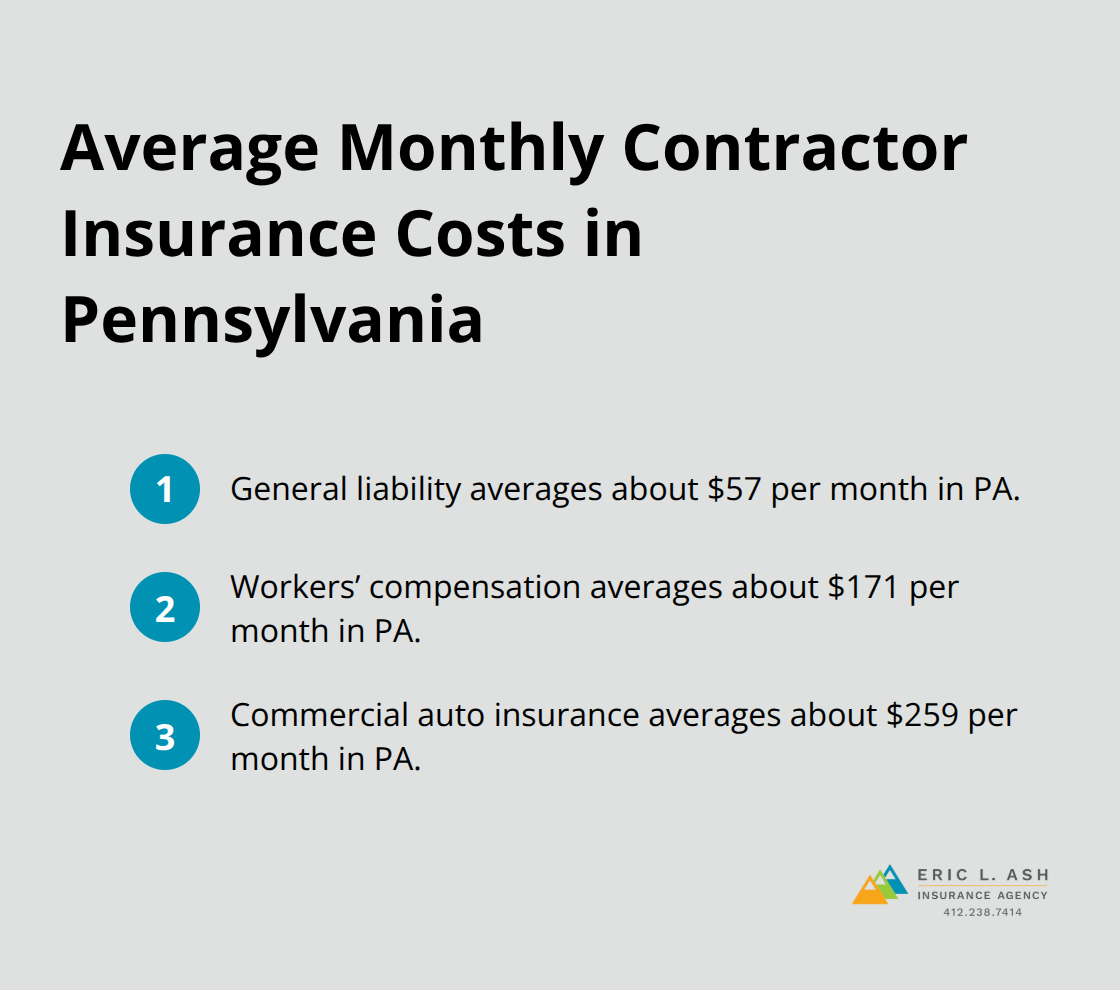
These are averages across different contractor types and risk profiles, so your actual costs depend on your specific work, the number of employees, your claims history, and the coverage limits you select. If you’re doing home improvements and earning over $5,000 annually, Pennsylvania requires you to carry that minimum $50,000 liability coverage before you can legally operate.
Many contractors also add commercial umbrella insurance to boost their liability limits beyond what general liability alone provides, which costs significantly less than increasing primary policy limits. The key is matching your coverage limits to the actual risk you face and the requirements your clients impose, not just buying whatever is cheapest.
Understanding what each policy covers sets the stage for the next critical step: knowing exactly what information you need to provide when you request quotes from carriers.
How to Get Accurate Contractor Insurance Quotes
Organize Your Business Information First
Requesting quotes without preparation wastes time and produces useless comparisons. Insurance carriers need specifics about your operation to generate accurate pricing, and vague information leads to lowball quotes that spike when you actually apply. Start by documenting your exact business structure: are you a sole proprietor, partnership, or LLC? How many employees do you have, and what are their job titles and experience levels? Pennsylvania carriers weight experience heavily because a crew of seasoned workers poses less risk than inexperienced labor.
Next, calculate your projected annual revenue and specify the types of projects you handle. A contractor doing kitchen renovations faces different underwriting than one managing foundation repairs or exterior work. Carriers also need your claims history for the past three to five years, including any incidents whether or not they resulted in claims. If you have no claims, state this explicitly because silence makes underwriters assume you’re hiding something.
Compare Coverage Limits Against Your Actual Needs
When you compare quotes across multiple carriers, focus first on whether coverage limits match your client requirements and Pennsylvania’s legal minimums. That $50,000 personal injury and $50,000 property damage baseline is a floor, not a target.
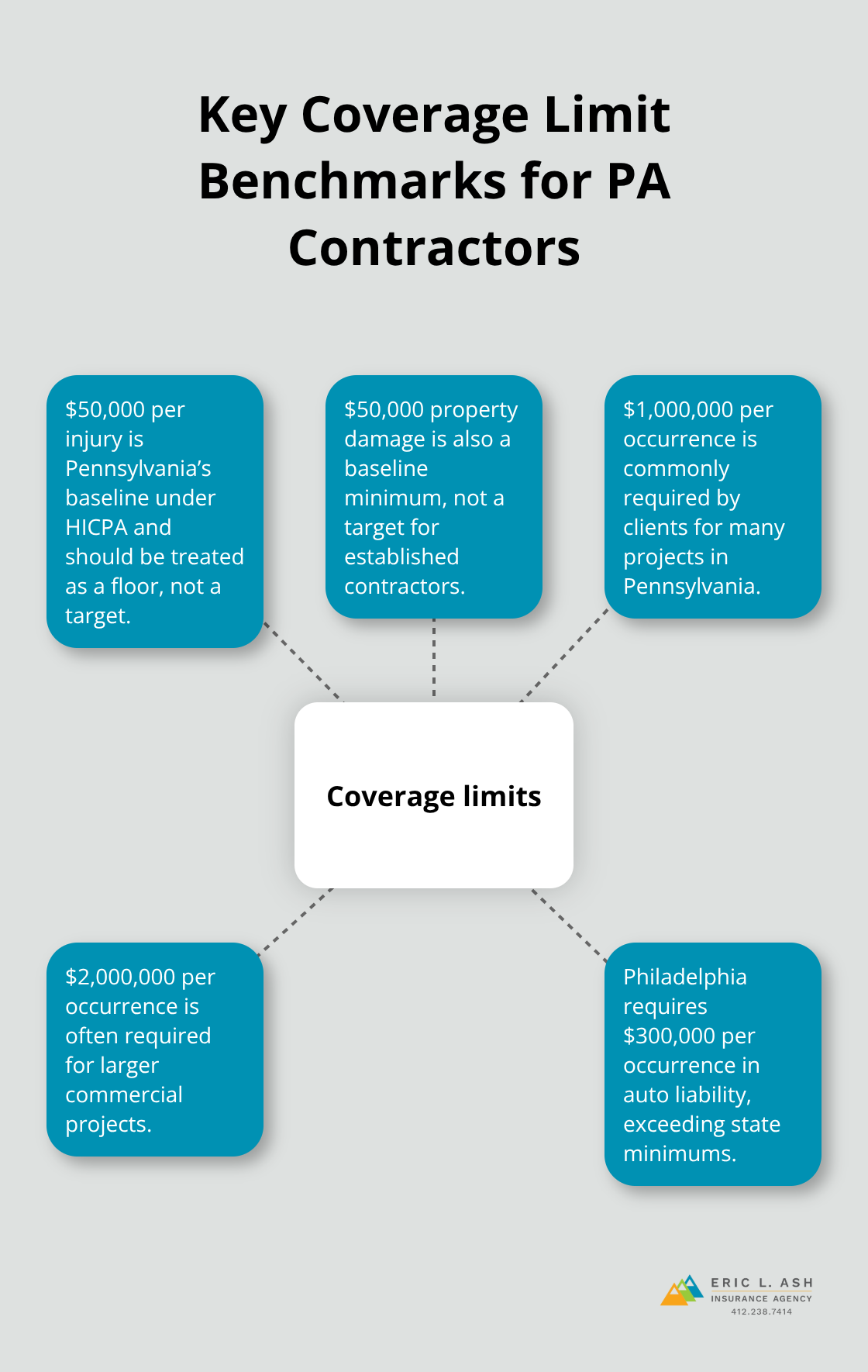
Most clients demand $1 million per occurrence, and commercial projects often require $2 million. If quotes offer different limits, you’re not comparing apples to apples.
Next, examine what each policy excludes because exclusions create gaps that no price can justify. Does the general liability cover pollution liability from silica dust or asbestos exposure? Does it cover subcontractors you hire, or do they need their own policies? Check whether commercial auto coverage includes hired and non-owned vehicles if you use personal cars for work.
Request Certificates and Verify Endorsements
Request certificates of insurance from each carrier to confirm they can deliver what the quote promises. Pennsylvania contractors shopping multiple carriers typically find price variation across options, making the comparison effort worthwhile. Ask each carrier about endorsements specific to your trade. A contractor doing work in Philadelphia needs different coverage than one in rural areas because Philadelphia requires $300,000 per occurrence in auto liability, far exceeding state minimums.
Endorsements also address whether additional insureds like property owners get named on your policy, which most client contracts now require. An independent agency like Eric L. Ash Insurance Agency can help you navigate these local requirements and compare options across multiple carriers to find competitive rates tailored to your specific work. Getting quotes takes 15 to 20 minutes per carrier when you have your information organized, and comparing three to five quotes gives you realistic options rather than settling for the first offer.
With accurate quotes in hand, you’re ready to understand the factors that actually drive your rates up or down.
Key Factors That Affect Your Contractor Insurance Rates
Type of Work Shapes Your Premium More Than Anything Else
The type of work you perform shapes your insurance cost more than almost any other factor. A contractor specializing in interior finishing faces different underwriting than one doing roofing or foundation work because risk profiles vary significantly. Roofing carries higher injury rates and weather exposure, which insurers price accordingly. Interior work like drywall and painting presents lower fall risk but higher exposure to customer disputes over quality. Commercial auto insurance costs more when you haul heavy equipment than when you transport hand tools. Carriers weight these distinctions carefully, and a quote that seems cheap for one trade may not apply to another. When you request quotes, specify your exact work type rather than generalizing as a general contractor. If you do multiple trades, disclose all of them because hiding work scope gets your policy cancelled later when a claim reveals undisclosed operations.
Business Size and Revenue Drive Underwriting Decisions
Your business size and revenue directly affect what you’ll pay because larger operations with more employees and higher annual revenue generate more claims exposure. A sole proprietor doing $80,000 in annual home improvement work pays significantly less than a contractor with five employees pulling $500,000 in revenue. Pennsylvania carriers examine your payroll classifications closely because misclassifying workers inflates risk. Subcontractors cost more to insure than employees because their coverage status creates liability gaps.
Claims History and Safety Records Matter Most
Your claims history matters most. Filing a claim can raise your insurance premiums for three to five years after the incident because insurers view claims frequency as the strongest predictor of future losses. Even a single claim from years ago stays on your record and affects quotes. If you’ve had claims, disclose them immediately when requesting quotes rather than hoping carriers miss them. Safety records matter too. Contractors with documented safety programs, worker training records, and OSHA compliance evidence get better rates than those with informal operations. If your crew has completed OSHA 10 or 30 certifications, mention this in your application because carriers offer modest discounts for safety credentials.
Location Within Pennsylvania Influences Your Rates
Location within Pennsylvania influences rates as well. Philadelphia and Pittsburgh have higher minimums and stricter enforcement than rural areas, which increases baseline costs. Work in high-crime areas or areas prone to environmental claims (like silica dust exposure) also drives rates up. Contractors operating statewide need quotes that reflect their highest-risk markets rather than their average market to avoid coverage gaps.
Final Thoughts
Shopping multiple carriers is where real savings happen. Pennsylvania contractors who compare contractor insurance quotes PA across three to five insurers typically find significant price variation for identical coverage, with differences ranging from 30 to 40 percent between carriers.
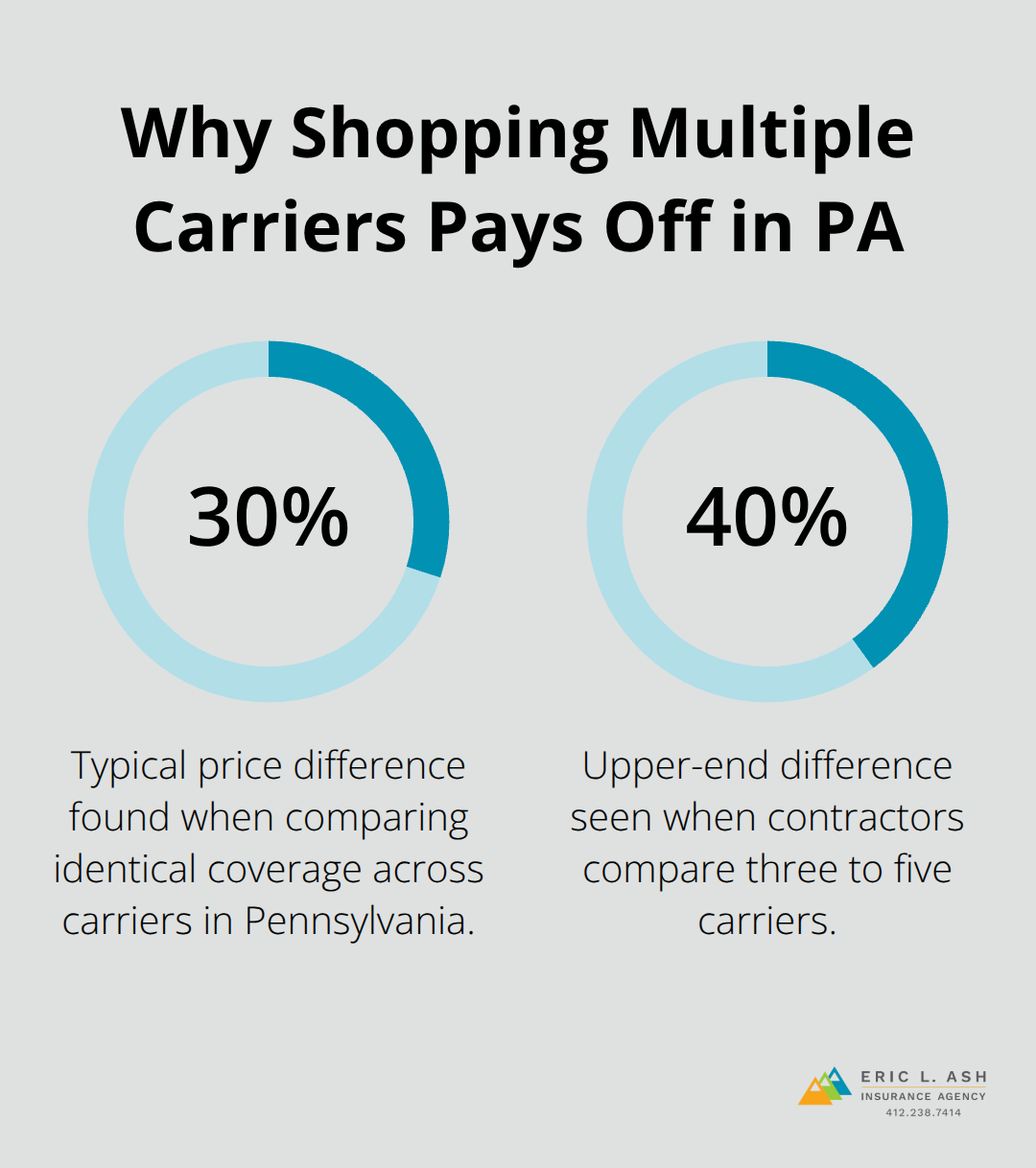
The effort to organize your business information upfront and request quotes from multiple sources takes a few hours but saves hundreds annually.
Your claims history and safety record matter more than you might think because carriers price based on your past behavior, so a single claim from years ago still affects your rates today. Location within Pennsylvania also shapes your costs, as work in Philadelphia or Pittsburgh carries higher minimums and stricter requirements than rural areas. Contractors working statewide need coverage that protects them everywhere, not just in their primary market.
We at Eric L. Ash Insurance Agency work with Pennsylvania contractors to find competitive rates and coverage that matches your operations. As an independent agency, we shop multiple carriers to deliver options tailored to your specific work and risk profile. Contact us to compare contractor insurance quotes and get the coverage your business needs without overpaying.
The information provided in this blog is for general informational purposes only and does not constitute legal, financial, or insurance advice. Coverage options, terms, and availability may vary. Please consult with a licensed professional for advice specific to your situation.