RV Insurance PA Resources: Find The Right Coverage With Local Independent Brokers
Owning an RV in Pennsylvania comes with unique insurance needs that many owners overlook. From liability requirements to weather damage protection, the right coverage keeps you and your investment safe on the road.
We at Eric L. Ash Insurance Agency help RV owners find the best RV insurance PA resources tailored to their specific situation. Our local independent brokers connect you with multiple carriers so you get competitive rates and personalized recommendations.
Why Your RV Needs Proper Insurance Coverage in Pennsylvania
Pennsylvania law requires motorhome owners to carry liability coverage with bodily injury limits of $15,000 per person and $30,000 per accident, plus $5,000 for property damage. Travel trailer owners need liability coverage on the vehicle that tows the trailer, but that coverage doesn’t protect the trailer itself from damage. This is where most RV owners make a costly mistake-they assume their auto policy covers everything. It doesn’t. Weather in Pennsylvania hits RVs hard. Hail, wind, and heavy rain cause thousands of dollars in damage annually, and standard auto policies won’t cover it. Comprehensive coverage specifically protects against these events, plus theft and vandalism. Collision coverage handles accidents. If you financed your RV, your lender requires both. If you own it outright, skipping these coverages means you’re gambling with your investment.
What Liability Actually Covers
Liability protects you if someone gets hurt around your RV or you damage someone else’s property. A guest slips on your campsite steps, or you back into another RV in a Pennsylvania campground-liability covers their medical bills and repair costs up to your policy limits. The state minimum sounds low, but serious injuries exceed those limits fast. Medical payments coverage adds another layer by covering medical expenses for injuries to others, regardless of fault. Uninsured motorist coverage protects you if another driver hits your RV and lacks insurance. Pennsylvania requires this coverage for motorhomes, though you can reject it with a signed form. Most RV owners should keep it because uninsured drivers are common.
Personal Property and Optional Protections
Personal property coverage inside your RV is separate from vehicle damage. Your electronics, camping gear, and clothing aren’t protected under standard RV policies unless you add this coverage. If someone breaks into your RV and steals your laptop or camera, you need personal property coverage to recover those costs. Emergency expense coverage pays up to $2,000 for hotel and meals if your RV breaks down more than 50 miles from home. Roof Protection Plus covers water damage from roof leaks on RVs under six years old. These aren’t required, but Pennsylvania’s weather makes them smart choices.
Finding the Right Coverage Mix
Different RV owners need different protection levels. Full-time residents in their RVs face different risks than owners who travel seasonally. A vintage RV with high sentimental value requires different coverage than a newer model. Local independent brokers understand these distinctions and work with multiple carriers to match your specific situation. At Eric L. Ash Insurance Agency, we leverage relationships with dozens of carriers to shop multiple markets and deliver competitive rates alongside tailored coverage. Your next step involves identifying which optional coverages match your travel habits and protect what matters most to you.
RV Coverage Types That Match Your Travel Style
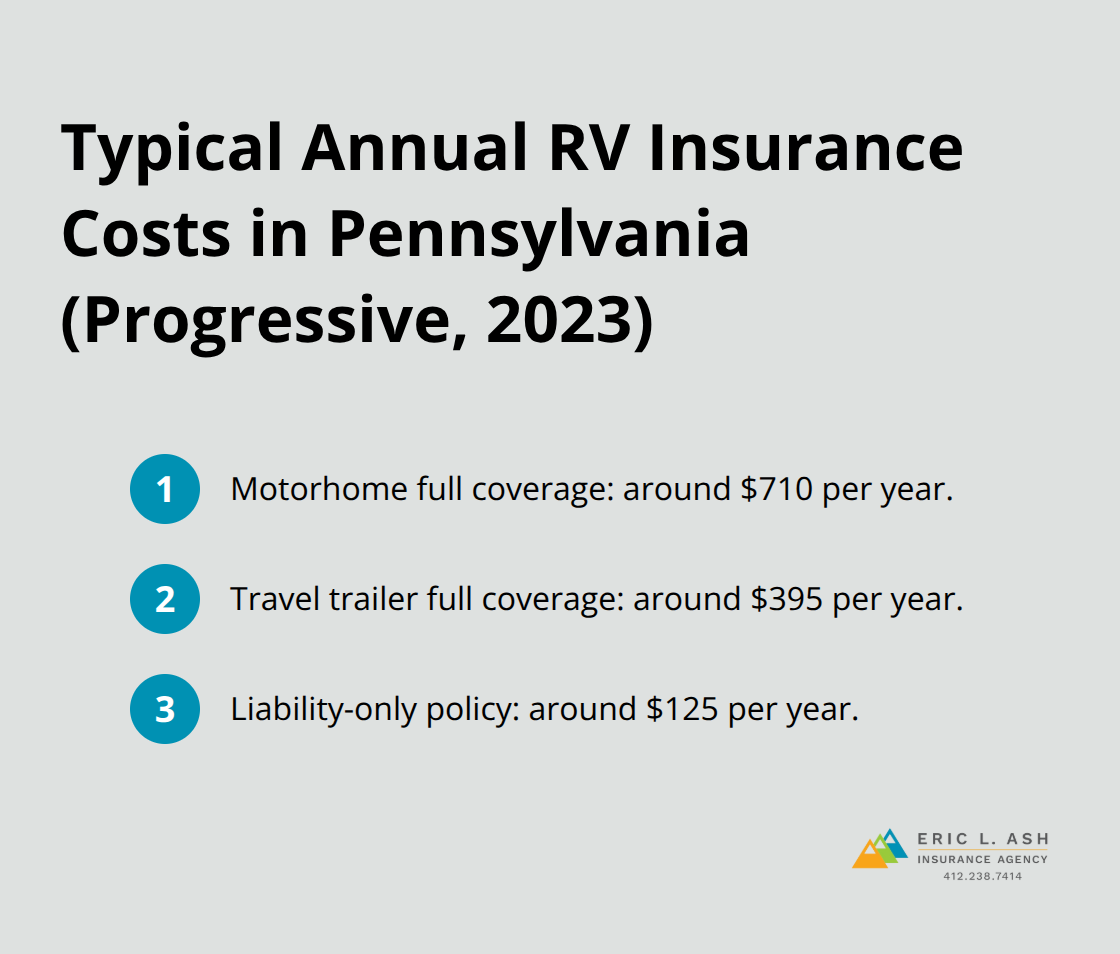
Comprehensive and collision coverage form the foundation of any solid RV protection plan, yet many owners misunderstand what each covers. Comprehensive protects against weather damage, theft, vandalism, and animal strikes-the events that occur when your RV sits parked or travels through Pennsylvania’s unpredictable seasons. Collision covers accidents with other vehicles or objects, regardless of fault. If you financed your RV, your lender demands both coverages. If you own it outright, skipping them means a single hailstorm or fender-bender wipes out thousands in repair costs. The math is straightforward: comprehensive and collision premiums typically cost far less than the damage they prevent. Progressive’s 2023 data shows motorhome owners pay around $710 annually for full coverage in Pennsylvania, while travel trailer owners average $395 per year. Those numbers include liability, comprehensive, and collision combined. For liability-only policies, costs drop to around $125 annually, but that leaves your RV’s physical damage completely exposed.
Full-Time Versus Seasonal Coverage Approaches
Full-time RV residents face fundamentally different insurance needs than seasonal travelers, and treating them the same way leaves gaps. If your RV serves as your permanent residence, standard policies fail to cover personal liability for injuries occurring around your living space, medical payments for visitors, or loss assessment if your RV community faces a shared loss. Full-time coverage adds these protections specifically designed for residential use. Seasonal travelers benefit from different strategies-storage discounts apply when your RV sits unused during off-season months, reducing your premium significantly. Some owners drop comprehensive and collision during storage periods, keeping only liability since the RV isn’t on the road. That approach cuts costs but exposes your parked RV to theft and weather damage.
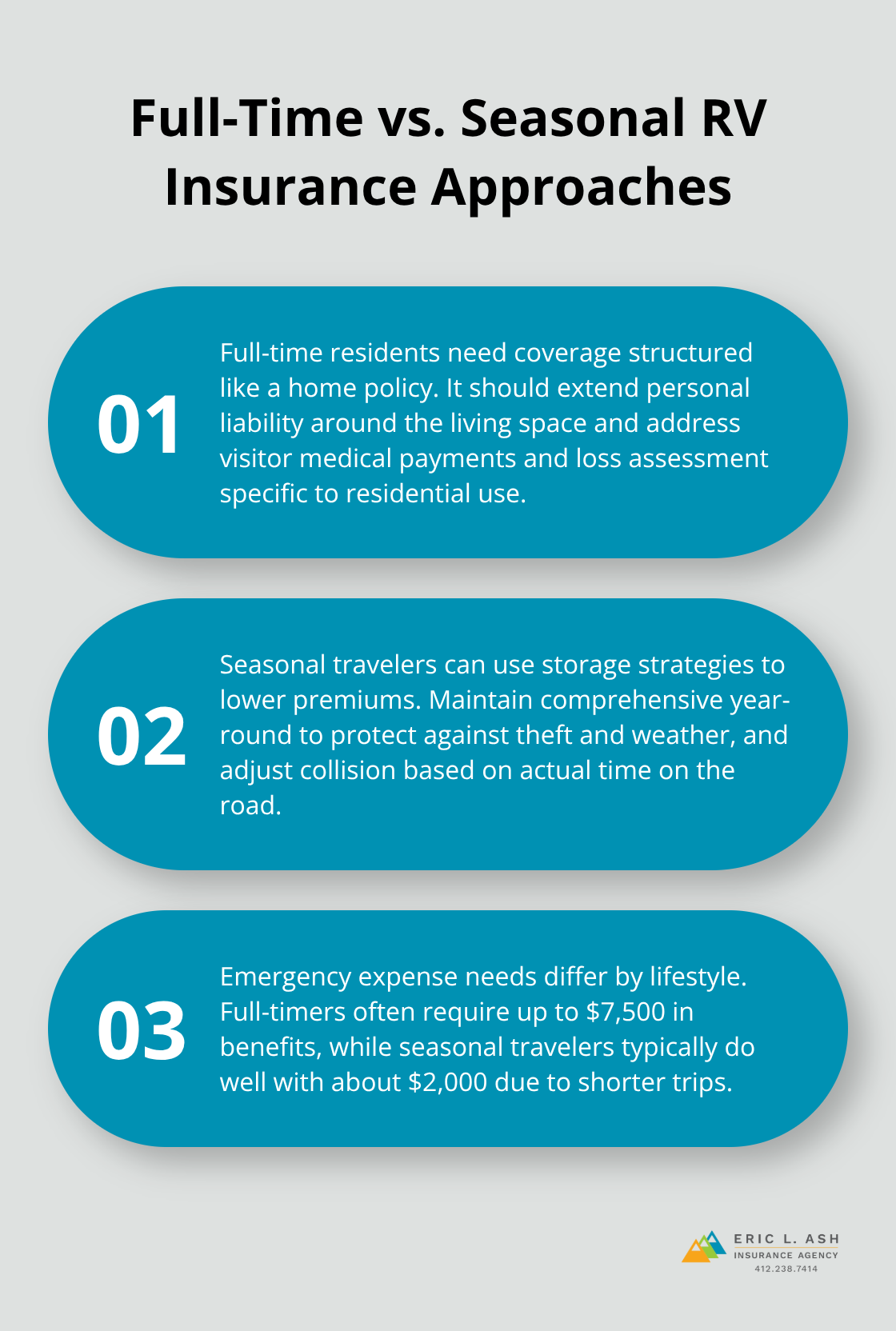
A better strategy maintains comprehensive coverage year-round while adjusting collision based on actual travel frequency. Emergency expense coverage becomes critical for full-timers, paying up to $7,500 toward hotel and meals if mechanical failure strands you far from home. Seasonal travelers typically need lower limits-$2,000 covers most situations since they travel shorter distances.
Protecting Specialty and Valuable RVs
Vintage RVs and high-value units require coverage beyond standard policies. Newer motorhomes with advanced technology and luxury finishes cost significantly more to repair than basic models, justifying higher coverage limits and lower deductibles. Total loss replacement coverage protects you if your newer RV is totaled-you receive a replacement of the same make, model, and features in the case of a total loss. Without this coverage, you get paid the actual cash value, which for newer RVs can mean thousands in depreciation loss. Specialty equipment like satellite dishes, awnings, generators, and custom hitches requires explicit endorsement coverage since standard policies exclude them. A roof protection rider covering water damage from leaks costs minimal premium but prevents expensive interior damage on RVs under six years old. Vintage RV owners should discuss replacement cost coverage for personal property inside-a 1970s motorhome with original furnishings and collectible items needs different protection than standard policies provide. Location matters too: RVs stored in Pennsylvania’s northern regions face greater hail and winter storm exposure, justifying comprehensive coverage even during storage months.
Working With Local Brokers on Specialty Coverage
Local independent brokers understand the nuances of specialty RV protection and work with multiple carriers to match coverage to your specific vehicle and travel patterns. They identify which endorsements your RV actually needs and which ones you can skip, saving you money while closing gaps. A broker who knows Pennsylvania’s weather patterns and regional risks can recommend the right deductibles and coverage limits for your situation. They also explain how equipment modifications or upgrades affect your policy-adding a custom hitch or upgrading your electrical system may require additional coverage. When you need to file a claim on specialty equipment, a knowledgeable broker advocates on your behalf and helps navigate the claims process. This expertise proves invaluable when you own a vintage RV or a high-value motorhome where standard policies fall short. Your coverage needs will shift as your RV ages, your travel patterns change, or you add equipment-a local broker reviews your policy annually to keep pace with those changes and identify new discount opportunities.
Why Independent Brokers Beat Shopping Alone
Most insurance companies now sell coverage directly-Progressive, Travelers, GEICO, and others-so you don’t always need an independent agent or broker. However, local independent brokers in Pennsylvania still access multiple insurance carriers, which can help you compare options. When you call an insurer directly or shop online, you see only that company’s rates and policy options. A broker can compare motorhome policies from multiple carriers in minutes. This matters because RV insurance pricing varies wildly between carriers for identical coverage. One insurer might charge $850 annually for a Class A motorhome in Lancaster County while another quotes $650 for the same vehicle and coverage level. Without comparing multiple options, you’d never know that $200 annual difference exists.
Finding Better Rates Across Multiple Carriers
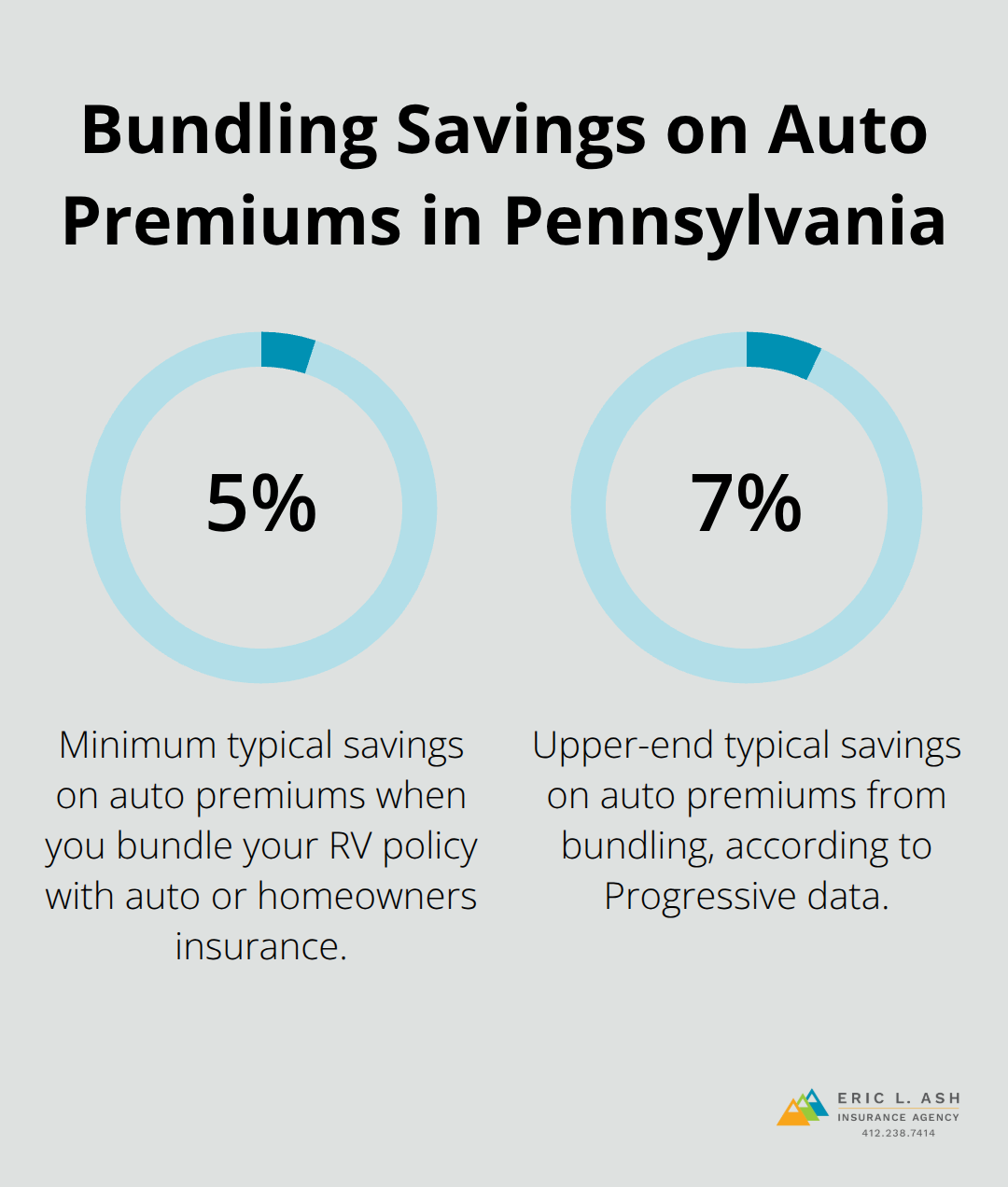
Progressive is a major player in the RV insurance market, but they’re not the right fit for every Pennsylvania owner. A broker evaluates your specific RV type, travel patterns, and claims history against multiple carriers’ underwriting criteria to find where you’ll receive the best rate and coverage. They also identify discounts you’d miss on your own. Bundling your RV policy with auto or homeowners coverage saves approximately 5 to 7 percent on auto insurance premiums according to Progressive data. A broker automatically applies these multi-policy discounts and flags others like paid-in-full discounts, safe driver discounts for clean records, and original owner discounts if you’re the first person who owned your RV.
They understand Pennsylvania’s specific requirements too-the $15,000 per person bodily injury minimum isn’t always sufficient for serious claims, and brokers recommend appropriate limits based on your assets and risk exposure.
Personalized Recommendations for Your Travel Style
Beyond rate shopping, brokers provide personalized recommendations that protect your specific situation rather than generic coverage everyone purchases. Full-time RV residents need personal liability coverage for injuries occurring around their residential space, plus emergency expense coverage that pays up to $7,500 for hotel and meals if mechanical failure strands you far from home. Seasonal travelers benefit from storage discounts during off-season months and different emergency expense limits of $2,000. A broker asks detailed questions about how you use your RV, where you park it, what equipment you’ve added, and your financial situation to recommend appropriate deductibles and coverage limits. They explain that a $500 deductible costs more than a $1,000 deductible but makes sense if you travel frequently and face higher accident risk. They also identify specialty endorsements your RV actually needs versus unnecessary add-ons. A vintage RV with original furnishings and collector value needs replacement cost coverage for personal property, but a newer motorhome with standard furnishings doesn’t. Roof Protection Plus makes sense for RVs under six years old in Pennsylvania’s hail-prone regions but wastes money on older units.
Adjusting Coverage as Your Situation Changes
When your situation changes-you purchase a larger RV, add expensive equipment, or shift from seasonal to full-time travel-a broker reviews your policy and adjusts coverage rather than leaving you underprotected. During claims, this relationship becomes invaluable. A broker advocates on your behalf with the insurer, explains coverage details when claims become complicated, and helps navigate disputes over damage assessments or coverage interpretation. They know Pennsylvania’s weather patterns create common claim scenarios and work with carriers to resolve them fairly. At Eric L. Ash Insurance Agency, we leverage relationships with multiple carriers to shop markets and deliver competitive rates alongside tailored coverage backed by responsive, local customer service. A broker who understands your RV and your travel patterns makes the difference between adequate protection and gaps that cost you thousands when you need coverage most.
Final Thoughts
RV insurance in Pennsylvania protects your investment and keeps you legally compliant on the road. Liability coverage is mandatory for motorhomes, comprehensive and collision protect against weather and accidents, and optional coverages like personal property and emergency expense fill gaps that standard policies leave open. Full-time residents need different protection than seasonal travelers, and specialty RVs require endorsements for custom equipment and high-value items.
Local independent brokers solve this problem by comparing multiple carriers and identifying the best rates and coverage for your RV type and travel patterns. They apply discounts you’d miss shopping alone, explain Pennsylvania’s specific requirements, and adjust your coverage as your situation changes. When claims happen, they advocate on your behalf and navigate the process with carriers.
Finding the right RV insurance PA resources starts with understanding your actual needs rather than buying generic coverage everyone purchases. Contact Eric L. Ash Insurance Agency to discuss your RV and get personalized recommendations from brokers who know Pennsylvania’s weather, terrain, and insurance landscape. We’ll compare options across multiple carriers, identify discounts that apply to your situation, and build a policy that protects what matters most.
The information provided in this blog is for general informational purposes only and does not constitute legal, financial, or insurance advice. Coverage options, terms, and availability may vary. Please consult with a licensed professional for advice specific to your situation.