
Teen driver risk factors: Understanding The Variables Behind Premiums
Teen drivers in Pennsylvania face some of the highest insurance premiums on the road. Insurance companies charge more because teen driver risk factors-like inexperience, distracted driving, and poor judgment-create real dangers.
We at Eric L. Ash Insurance Agency know that parents want to understand what drives these costs up and how to bring them down. This guide walks you through the specific factors that impact your teen’s rates and the practical steps you can take to lower them.
Why Insurance Companies Charge Teens More
Teen drivers represent a measurable and significant risk to insurance companies, which is why premiums skyrocket the moment a teenager gets licensed. The Insurance Institute for Highway Safety reports that drivers aged 16 to 19 have crash rates nearly three times higher than drivers aged 20 and older. This isn’t speculation or industry bias-it’s data collected from real accidents across the country. Insurance companies set rates based on actuarial tables built from decades of claims history, and those tables consistently show that inexperienced drivers cause more accidents, injuries, and property damage than any other age group.
The Experience Gap
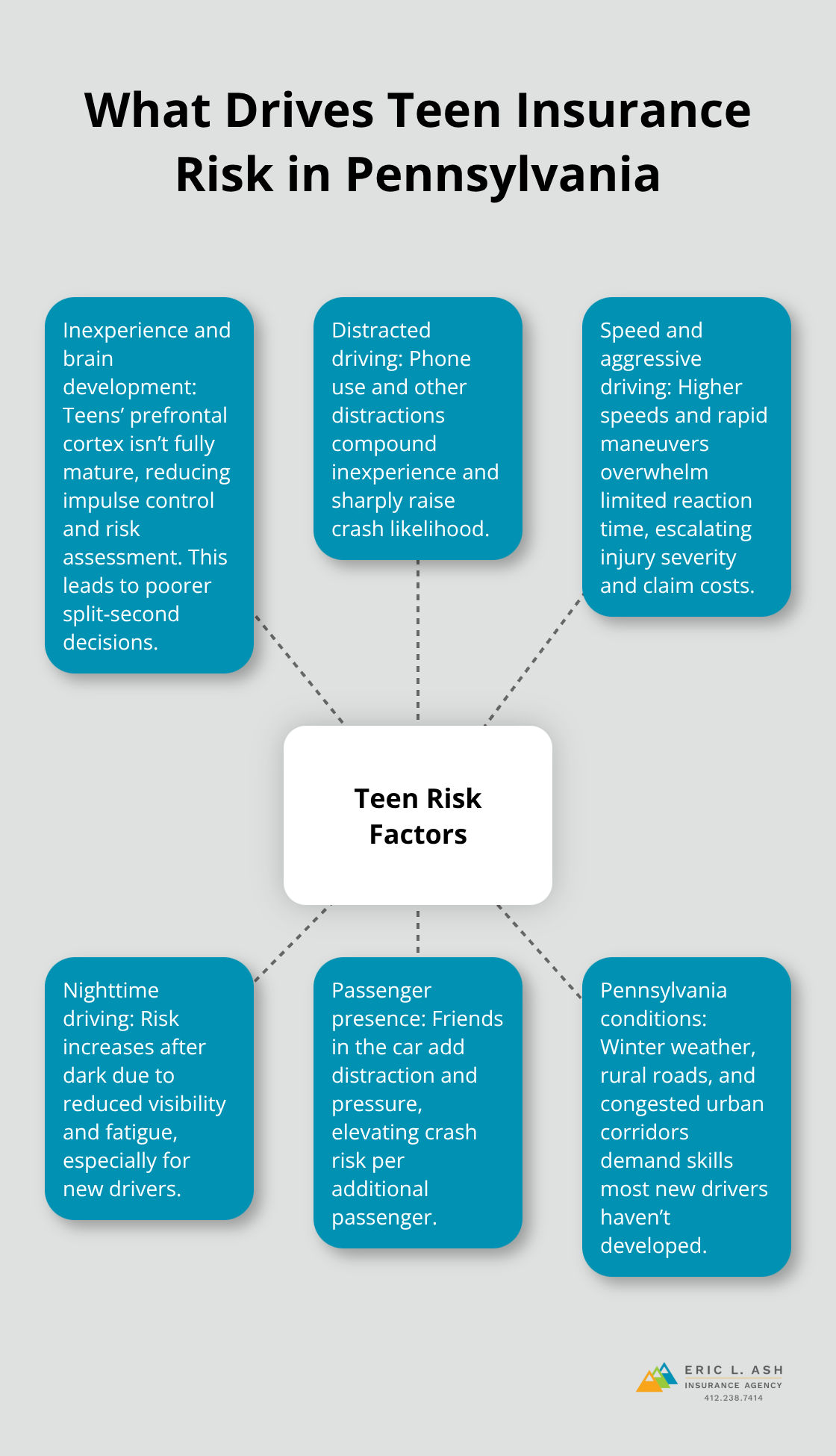
A newly licensed 16-year-old has fundamentally different brain development than a 25-year-old, and insurers account for this biological reality when pricing policies. The prefrontal cortex, which handles risk assessment and impulse control, doesn’t fully mature until the mid-20s. This means teen drivers struggle with split-second decisions that experienced drivers make automatically. They misjudge stopping distances, fail to recognize hazards early enough, and overestimate their ability to handle emergency situations. Pennsylvania teens specifically face challenging driving conditions-winter weather, rural roads with limited visibility, and congested urban corridors around Philadelphia and Pittsburgh-that demand skills most 16-year-olds simply haven’t developed yet. Insurance companies charge more because they’ve seen the outcomes of these skill gaps play out in thousands of claims.
Real Numbers Behind the Rates
In 2023, 5,133 young drivers aged 15–20 were involved in fatal crashes, representing a 5.3% increase from 2022. For every dollar spent on medical care, lost productivity, and property damage from adult drivers, teen drivers generate two dollars in costs. When you add distracted driving into the equation, the numbers get worse-according to the CDC, nine teens die every day in the United States from preventable car crashes, and distraction plays a role in roughly one-quarter of all teen driver crashes. Pennsylvania insurance companies price teen policies with these statistics front and center. They’re not guessing; they’re responding to patterns that repeat year after year across millions of policies nationwide.
What Happens Next
These statistics explain why insurers charge what they do, but they also point toward solutions. Understanding which specific behaviors and situations create the highest risk allows parents to take targeted action. The next section examines the particular risk factors that most influence your teen’s premium-and which ones you can actually control.
What Actually Drives Up Your Teen’s Insurance Premium
Distracted Driving: The Phone Problem
Insurers don’t charge teens more based on age alone-they charge more because specific behaviors and situations create measurable risk. Phone use behind the wheel tops the list of controllable factors. The NHTSA reports that sending or reading a text message takes an average driver’s attention off the road for 4.6 seconds, which at 55 mph means traveling the length of a football field blind. For teens, this distraction compounds the inexperience problem. A teen’s brain isn’t wired yet to multitask safely while driving, so even a quick glance at a phone significantly increases crash probability.
Insurance companies see this play out in claims data-distracted driving contributes to crashes among teens according to research on teen driving safety. Pennsylvania insurers factor this into premiums because they know that a teen checking Snapchat or responding to a text isn’t just risking a fender bender; they’re creating conditions for serious injury or death. Parents who install monitoring apps that block notifications while driving or who establish clear phone-free driving rules directly reduce their teen’s accident likelihood, which insurers recognize through lower rates.
Speed and Aggressive Driving
Speed and aggressive driving create the second major premium driver. Teens are twice as likely as older drivers to speed, and when they speed, the consequences turn catastrophic. The Insurance Institute for Highway Safety found that for every 5 mph increase in crash speed, the risk of serious injury doubles. Combine this with a teen’s slower reaction times and poorer hazard recognition, and you have a recipe for expensive claims. Setting firm speed limits and discussing the physics of stopping distance helps teens understand why this matters beyond just following rules.
Time of Day and Passenger Presence
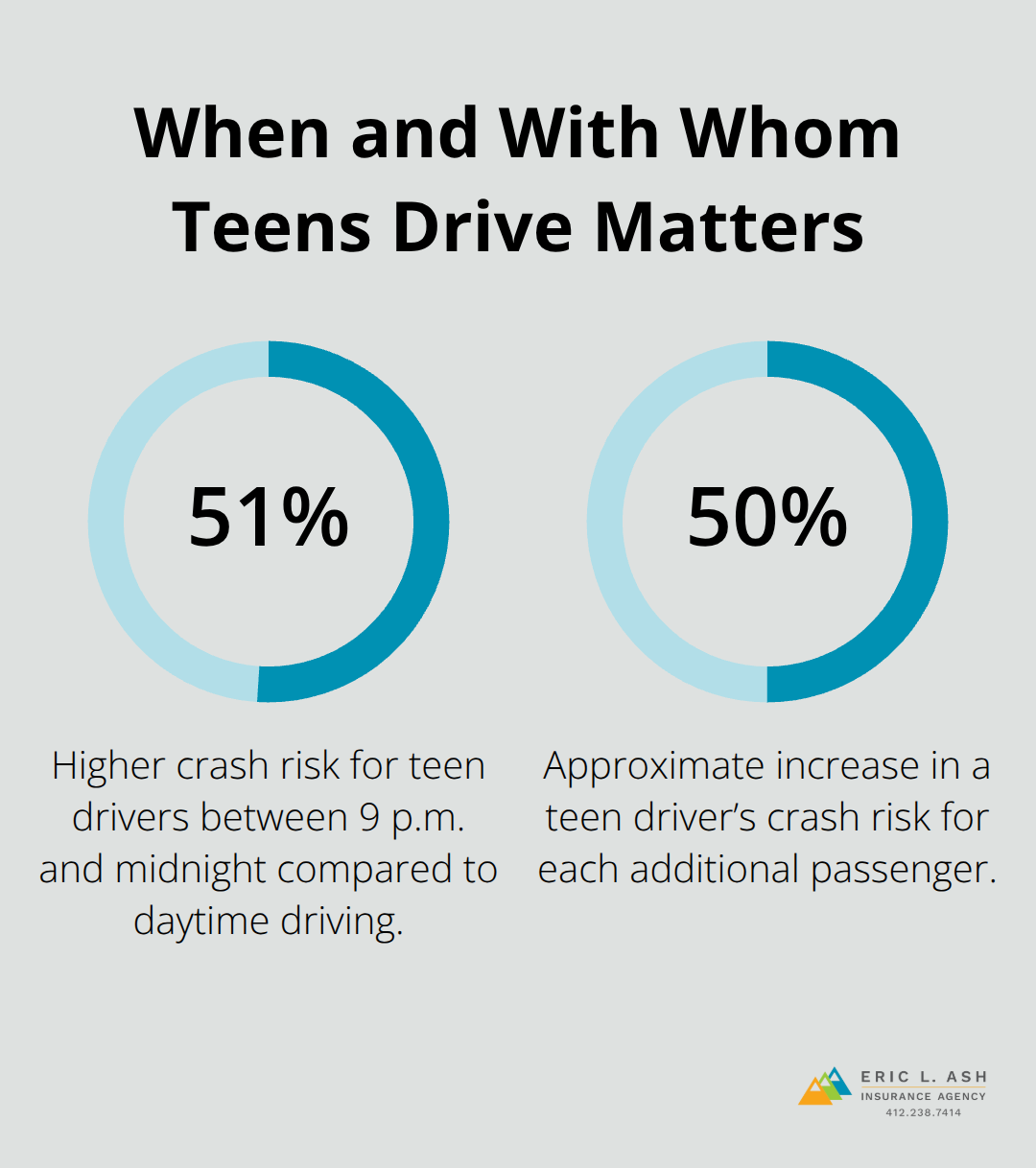
Time of day and passenger presence matter more than most parents realize. Teen drivers have a 51% higher crash risk between 9 p.m. and midnight compared to daytime driving, according to research from the Journal of Safety Research. Adding passengers amplifies this-each additional passenger increases a teen driver’s crash risk by roughly 50%. Insurance companies adjust rates based on these patterns because they’re not random; they reflect real behavioral changes.
A 16-year-old driving alone on a sunny afternoon presents a different risk profile than that same driver at 11 p.m. with three friends in the car. Parents who limit night driving during the first year of licensure or restrict passengers directly address the factors that insurers reward with premium reductions. These aren’t arbitrary restrictions-they’re based on the same data that determines your teen’s rates in the first place.
Moving Forward With Prevention
Understanding which risk factors apply to your specific teen allows you to take practical steps that actually lower premiums. The next section covers concrete actions parents can implement right now to reduce costs and, more importantly, keep their teen safe on Pennsylvania roads.
Ways to Actually Lower Your Teen’s Insurance Costs
The risk factors we’ve covered aren’t destiny-they’re opportunities for action. Parents who take specific steps can reduce their teen’s premium significantly while building safer driving habits. Insurance companies reward concrete behavioral changes with measurable rate reductions, and the three approaches that work best address the exact risk factors that drive premiums up in the first place. Defensive driving courses, telematics devices, and maintaining clean records aren’t just insurance industry suggestions; they’re proven methods backed by carrier data and real premium savings.
Defensive Driving Courses Cut Rates Fast
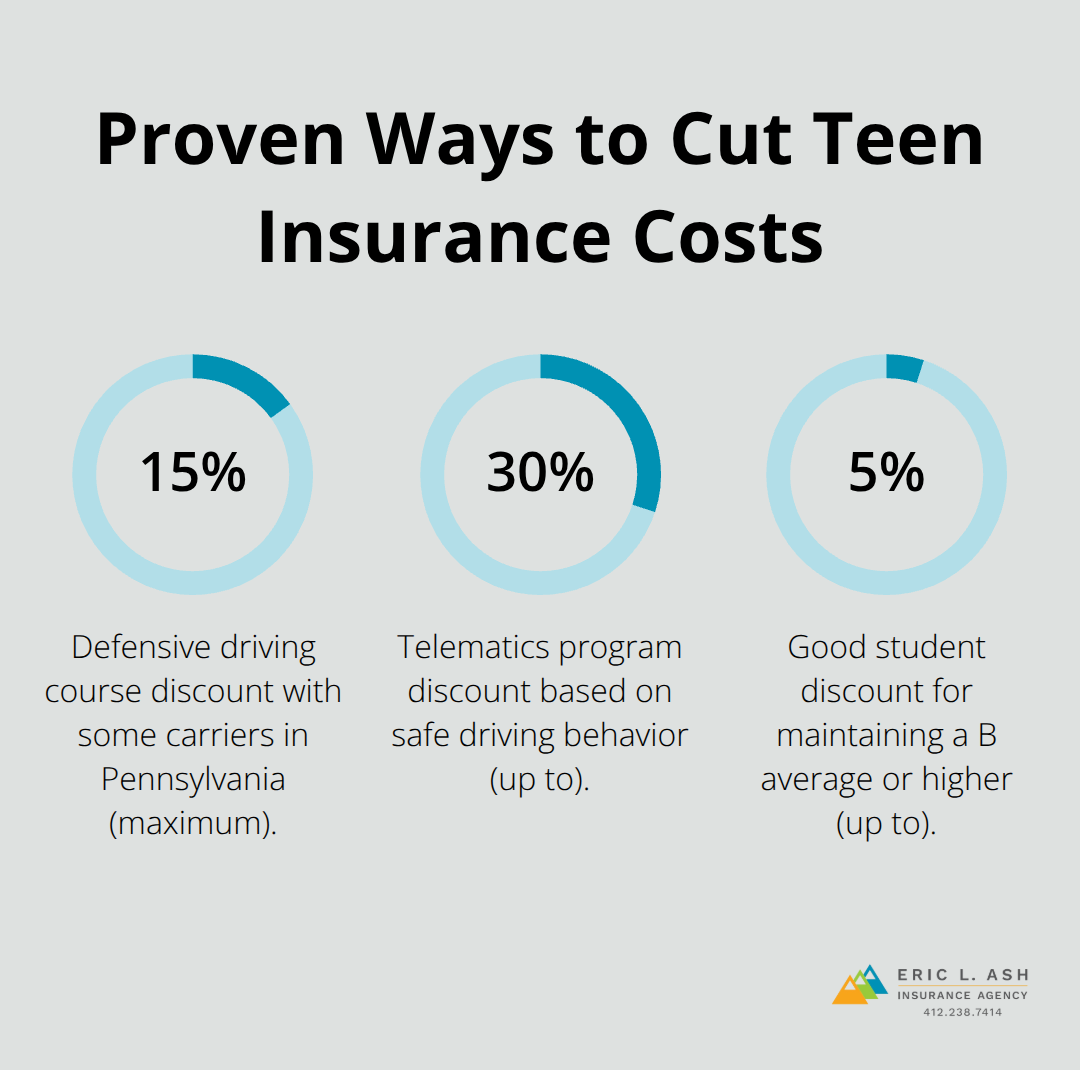
Defensive driving courses remain one of the fastest ways to lower your teen’s premium. Most Pennsylvania insurers offer a 5% to 10% discount for completion, and some carriers go as high as 15%. The National Highway Traffic Safety Administration reports that defensive driving courses reduce crash risk for teen drivers. The best courses take 4 to 6 hours and cover hazard recognition, emergency braking, and how to handle adverse weather-exactly the skills that prevent the crashes insurers pay out on. Pennsylvania offers both in-person and online options, so logistics shouldn’t be an obstacle. More importantly, teens who complete these courses demonstrate to insurers that they’re willing to invest in safety, which translates directly into lower premiums. Parents should confirm their specific discount before enrolling, as rates vary by carrier.
Telematics Devices Reward Safe Driving Behavior
Telematics devices-small boxes that plug into your car’s diagnostic port-track driving habits and send data to your insurance company. Insurers use this data to reward safe driving with discounts ranging from 10% to 30%, depending on the carrier and your teen’s actual performance. Programs like Geico’s DriveEasy, State Farm’s Drive Safe & Save, and Progressive’s Snapshot measure hard braking, rapid acceleration, phone use, and time of day the vehicle operates. A teen who drives during daylight hours, maintains steady speeds, and avoids hard stops will see substantially lower rates than one who drives at night or exhibits aggressive behavior. The real power of telematics is visibility-parents can see exactly when and how their teen drives, addressing problems before they cause accidents. Some carriers require only 30 days of data before applying discounts, so results appear quickly. Families routinely report premium reductions of $300 to $800 annually when their teen demonstrates safe habits through these devices.
Grades and Clean Records Matter More Than Parents Think
Good grades and a clean driving record directly impact rates because insurers treat both as predictors of responsibility. Many carriers offer a good student discount of 3% to 5% for teens maintaining a B average or higher-this reflects research showing that academic performance correlates with safe driving decisions. A single speeding ticket or at-fault accident can increase a teen’s premium by 20% to 50% for three to five years, so prevention during the first years of driving matters enormously. Pennsylvania traffic violations remain on driving records for an extended period, making that first year especially critical. Parents should discuss the financial consequences of traffic violations with their teen before they happen, not after. Maintaining a clean record during the first 12 months of driving establishes a pattern that carriers reward for years. If your teen does receive a ticket, some insurers offer defensive driving course discounts that can offset part of the premium increase-another reason to confirm available discounts with your carrier upfront.
Final Thoughts
Teen driver risk factors boil down to inexperience, distraction, and poor judgment in high-risk situations. Insurance companies charge higher premiums because these factors create measurable, predictable patterns in claims data-a 16-year-old driving alone during daylight hours presents a fundamentally different risk profile than that same driver at 11 p.m. with passengers. Understanding this connection between behavior and cost gives parents a clear roadmap for action.
The steps that lower premiums also keep teens alive on Pennsylvania roads. Defensive driving courses teach hazard recognition and emergency response, telematics devices create accountability and reward safe habits with real savings, and maintaining good grades plus a clean driving record demonstrates responsibility that insurers recognize through discounts. A teen who establishes safe practices during the first year of licensure develops automatic responses that stick, while a single accident or traffic violation can increase premiums for three to five years.
Contact Eric L. Ash Insurance Agency to discuss coverage options that fit your teen driver and your budget. We work with Pennsylvania families to identify discounts and programs that reward safe driving habits. Let us help you find a policy that protects your teen while keeping costs manageable.
The information provided in this blog is for general informational purposes only and does not constitute legal, financial, or insurance advice. Coverage options, terms, and availability may vary. Please consult with a licensed professional for advice specific to your situation.