
Contractor General Liability Insurance: Why It Matters
One accident on a job site can cost you thousands in medical bills, property damage, and legal fees. Contractor general liability insurance protects your business from these financial disasters.
We at Eric L. Ash Insurance Agency help Pennsylvania contractors understand what coverage they actually need. This guide walks you through the essentials.
What General Liability Insurance Actually Protects
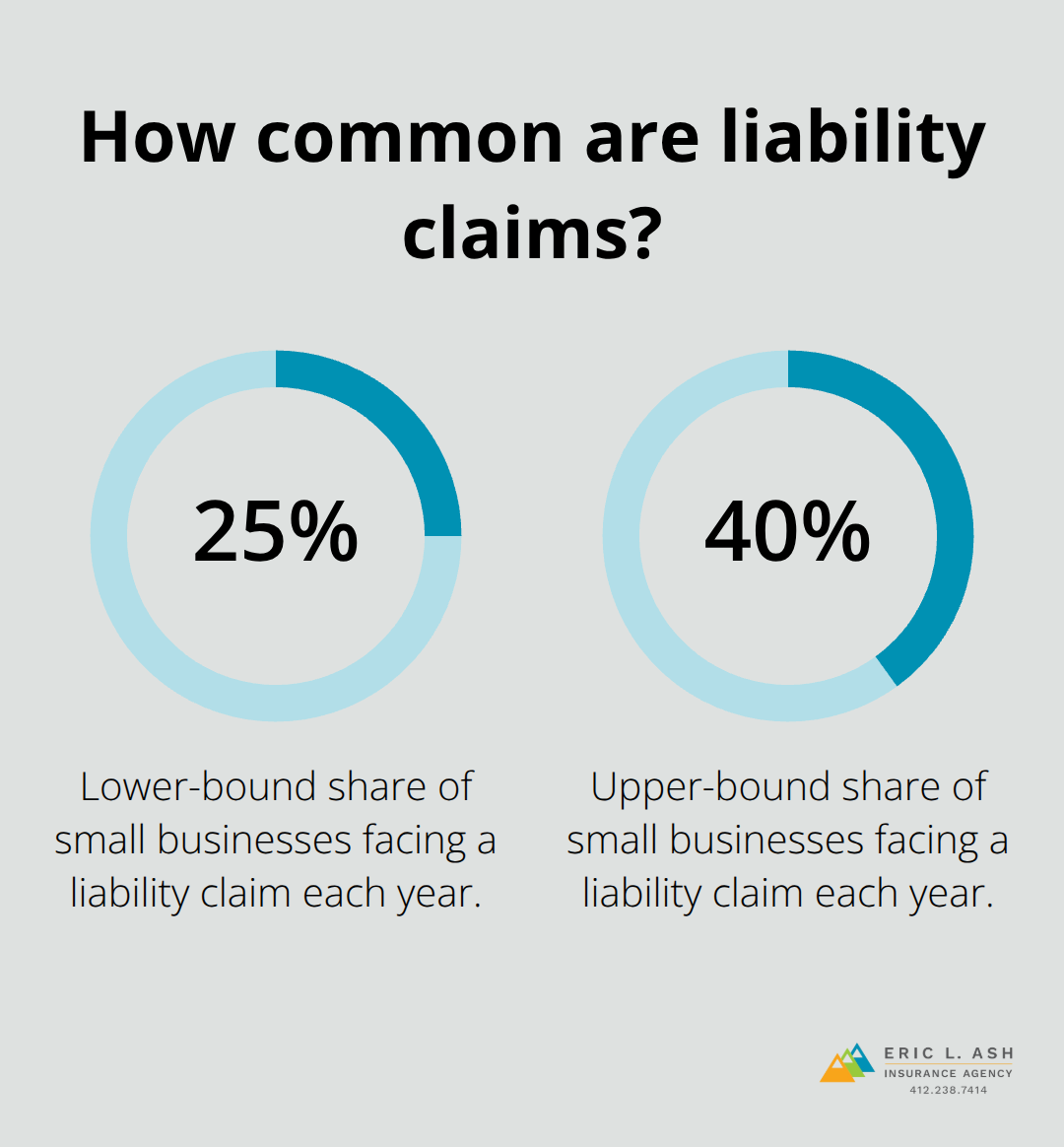
General liability insurance covers three main categories of risk that hit contractors hardest: injuries to people on your job site, damage to someone else’s property, and the legal bills that follow when something goes wrong. The Insurance Information Institute reports that about 25 to 40 percent of small businesses face a liability claim each year, so this isn’t theoretical-it’s a regular business expense you need to prepare for.
Medical Bills and Injury Claims
When a client or their customer gets hurt at your work site, your general liability policy covers their medical expenses and any settlement or judgment they win against you. The Hartford’s data shows the average general liability claim costs between $15,000 and $45,000, which means one incident can wipe out months of profit if you’re uninsured. Legal defense costs are often the biggest surprise for contractors without coverage. Even if you win a lawsuit, your attorney fees can reach six figures-money that comes straight out of your pocket without insurance. Your general liability policy covers those defense costs regardless of whether you’re found liable, which means you’re protected from the financial bleeding that happens just from defending yourself in court.
Slip-and-Fall Accidents on Job Sites
Slip-and-fall accidents are the most common liability claim contractors face. The CDC reports that slip-and-fall accidents result in significant emergency department visits, and many of those happen on construction sites, in client homes, or in commercial spaces where contractors work. Your general liability policy covers the injured person’s medical bills, lost wages if they can’t work, and pain-and-suffering damages if they take you to court. This matters because Pennsylvania homeowners and business owners will absolutely sue if they’re hurt on a job you’re doing-it’s their only way to recover costs your negligence caused.
Property Damage You Cause During Work
Property damage claims follow a similar pattern but apply to the client’s building, fixtures, or belongings rather than their body. If you accidentally puncture a water line, damage flooring, or break expensive equipment during your work, general liability covers the repair or replacement costs. The policy also covers damage you cause to adjacent properties-if your work damages a neighbor’s fence or causes water intrusion into their home, your coverage protects you from that claim too. Without this protection, you’d be personally liable for damages that could exceed your annual revenue.
Why Coverage Limits Matter for Your Operation
The amount of coverage you carry directly affects your ability to bid on jobs and satisfy client requirements. Many Pennsylvania clients (especially commercial property owners and larger residential projects) won’t hire a contractor without proof of adequate general liability coverage. Your policy limits determine the maximum your insurance will pay for any single claim and for all claims in a year, so choosing the right limits is essential to your business survival.
Why Pennsylvania Contractors Really Need This Coverage
Legal Requirements Set the Floor
Pennsylvania’s Home Improvement Consumer Protection Act requires contractors to register with the state, and that registration demands proof of at least $50,000 in personal injury liability and $50,000 in property damage liability coverage. This isn’t optional-it’s the baseline to legally operate. But the legal requirement tells only half the story. Contractors without general liability insurance lose bids constantly because commercial clients and property managers in Pennsylvania won’t even look at your estimate without a current certificate of insurance.
One Claim Destroys Your Profit Margin
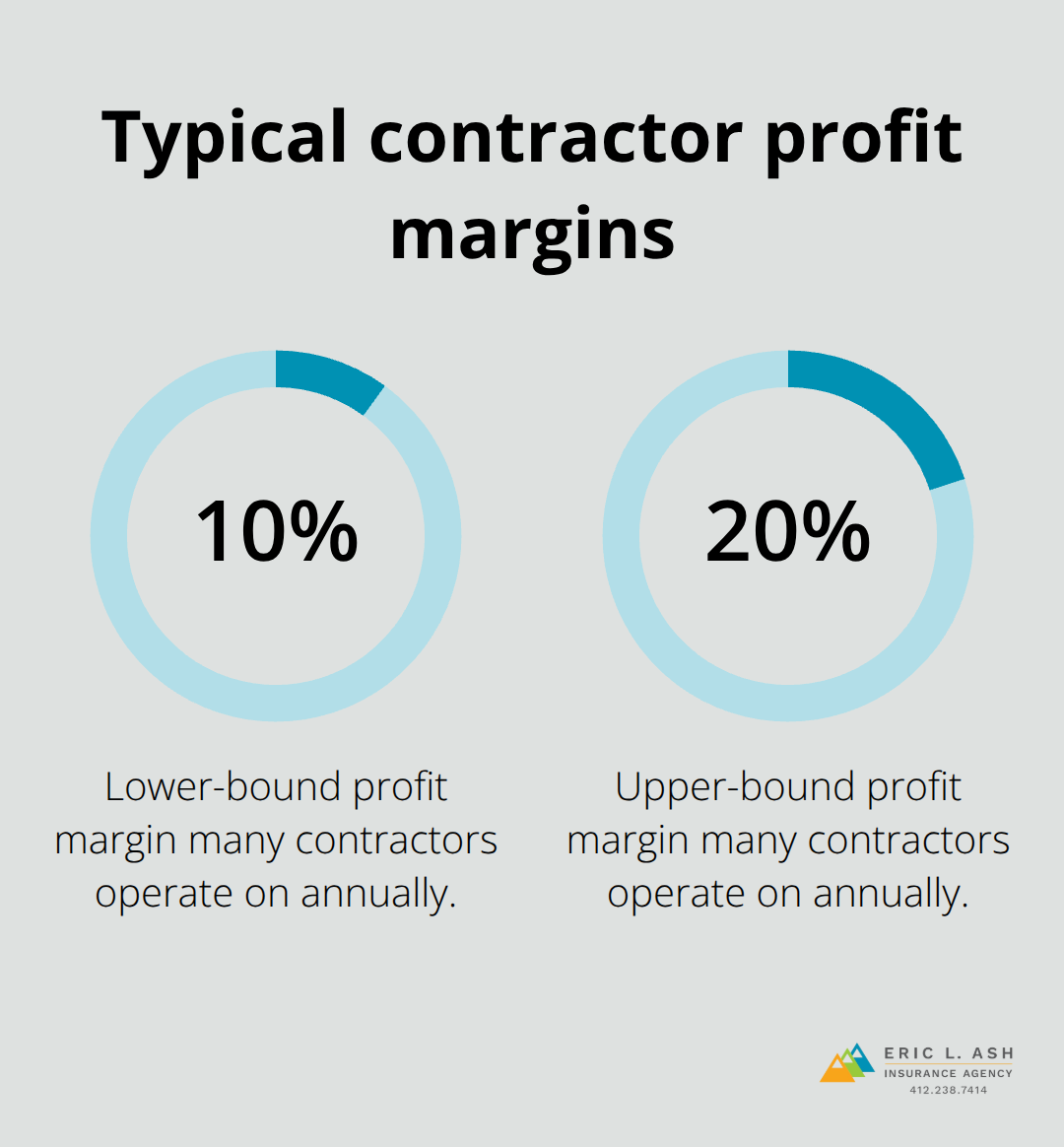
The Hartford’s research shows the average general liability claim costs between $15,000 and $45,000, and that’s just one incident. Most contractors operate on profit margins of 10 to 20 percent annually, which means a single uninsured claim wipes out an entire year’s profit or pushes you into debt.
If a client slips on your work site and sues, your legal defense alone could reach six figures even if you win. Without insurance, that money comes directly from your business bank account. You’re also personally liable for damages if you’re uninsured-which means your personal assets, home, and future earnings are at risk.
Clients Demand Proof Before Work Starts
Pennsylvania homeowners are increasingly savvy about contractor liability. They ask for proof of insurance before signing contracts, and many require you to name them as an additional insured on your policy. Larger commercial projects, property management companies, and homeowners with significant assets almost always require proof of coverage before work begins. When you show up with a current certificate of insurance, you’re showing professionalism and financial stability. When you can’t produce one, clients move to the next contractor on their list.
Insurance Costs Far Less Than Claims
The cost of a general liability policy is typically far less than what a single claim would cost you uninsured. Premiums often range from $500 to $2,000 annually depending on your operation size and claims history. That’s insurance math every contractor should understand: pay a modest premium now or risk financial ruin later. The contractors thriving in Pennsylvania right now aren’t cutting corners on insurance-they’re using it as a competitive advantage.
Coverage Shapes Your Bidding Power
Contractors with general liability coverage win more bids and keep more clients. Whether you work in residential renovation, commercial construction, HVAC, plumbing, or electrical work, coverage opens doors that uninsured competitors can’t access. Pennsylvania’s construction market rewards contractors who demonstrate financial responsibility and risk management. As you evaluate your coverage options and determine what limits fit your specific trade and project types, understanding how to choose the right policy becomes your next critical step.
How to Choose the Right General Liability Policy
Match Coverage to Your Specific Trade and Projects
Start by listing the specific risks your operation creates. A plumber working in residential homes faces different liability exposure than an electrical contractor doing commercial buildouts, and both differ from a general contractor managing multiple trades on larger projects. Your trade, project types, and typical client base determine what coverage limits make sense.
Pennsylvania contractors in HVAC, plumbing, and electrical work typically need higher limits because their work touches critical systems and affects more people. A residential remodeler might operate safely at $1 million per occurrence and $2 million aggregate, while a contractor doing commercial work or managing subcontractors should seriously consider $2 million per occurrence and $4 million aggregate.
Understand Why Minimums Fall Short
The Pennsylvania Home Improvement Consumer Protection Act sets a $50,000 minimum for personal injury and property damage liability, but that floor is dangerously low for most contractors. Most clients won’t accept those minimums, and most claims exceed them instantly. Your actual coverage should reflect the dollar value of projects you undertake and the potential damage exposure. A $500,000 kitchen remodel creates more liability exposure than a $20,000 bathroom fixture replacement, so your limits should scale accordingly.
Shop Multiple Carriers for Better Rates
Shop quotes from at least three different carriers before deciding. Insurance rates vary dramatically between companies for identical risk profiles, and getting multiple quotes typically reveals 20 to 40 percent price differences. When you request quotes, provide consistent information to each carrier: your specific trade, annual revenue, number of employees, claims history, and the types of projects you typically handle.
Choose Deductibles That Fit Your Cash Flow
Deductibles directly affect your premium, and higher deductibles lower your annual cost but increase out-of-pocket expense when a claim occurs. A $1,000 deductible costs more annually than a $2,500 deductible, but you pay less when something happens. Most contractors choose $1,000 deductibles because the premium difference is modest and the out-of-pocket exposure remains manageable.
Verify Coverage Details Before Commitment
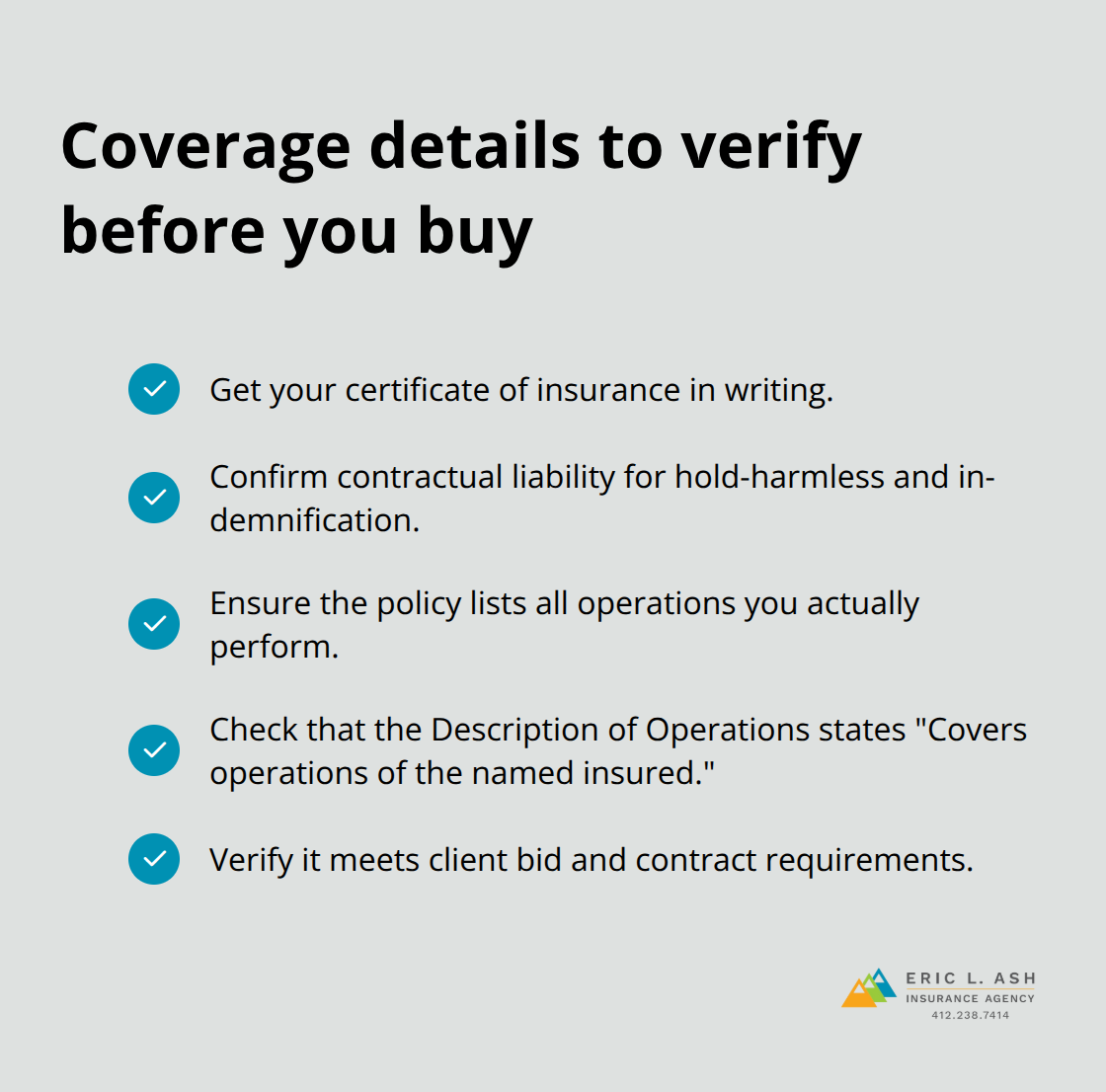
Request your certificate of insurance in writing before you commit, and confirm it includes contractual liability coverage for hold-harmless and indemnification clauses that clients require. Your policy should explicitly cover operations you actually perform, and the Description of Operations section must state “Covers operations of the named insured” so clients accept it for bid requirements and contract compliance.
We at Eric L. Ash Insurance Agency work with dozens of carriers to find rates and terms that fit your specific operation rather than forcing you into standard packages.
Final Thoughts
General liability insurance isn’t a luxury for Pennsylvania contractors-it’s the foundation of a sustainable business. One accident costs $15,000 to $45,000 or more, legal defense fees alone reach six figures, and clients increasingly refuse to work with uninsured contractors. The state’s Home Improvement Consumer Protection Act requires at minimum $50,000 in coverage, but that floor is too low for most operations.
The financial math is straightforward: a modest annual premium protects your profit margin, your personal assets, and your ability to bid on jobs that matter. Contractors thriving in Pennsylvania’s market understand that contractor general liability insurance opens doors that uninsured competitors can’t access and demonstrates the professionalism clients demand before signing contracts. Your next step is to list your specific trade, typical project values, and the coverage limits that fit your operation.
We at Eric L. Ash Insurance Agency work with dozens of carriers across Pennsylvania to find competitive rates and tailored coverage for contractors in every trade. Contact us today to discuss your coverage needs and get quotes that reflect your actual risk profile.
The information provided in this blog is for general informational purposes only and does not constitute legal, financial, or insurance advice. Coverage options, terms, and availability may vary. Please consult with a licensed professional for advice specific to your situation.