
PA home insurance quotes: How to Compare Premiums for Luxury-Grade Home Coverage
Luxury homes in Pennsylvania require more than standard coverage. When you own a high-value property, getting accurate PA home insurance quotes becomes essential to protecting your investment properly.
At Eric L. Ash Insurance Agency, we help homeowners understand what sets luxury coverage apart. The right policy should match both your home’s value and your lifestyle.
What Sets Luxury Home Coverage Apart in Pennsylvania
Standard homeowners insurance maxes out at $300,000 to $500,000 in dwelling coverage, which falls short for Pennsylvania properties valued at $1 million or more. Luxury home policies remove these caps entirely. A high-value home in the Philadelphia suburbs or Pittsburgh’s prestigious neighborhoods needs coverage that reflects its actual replacement cost.
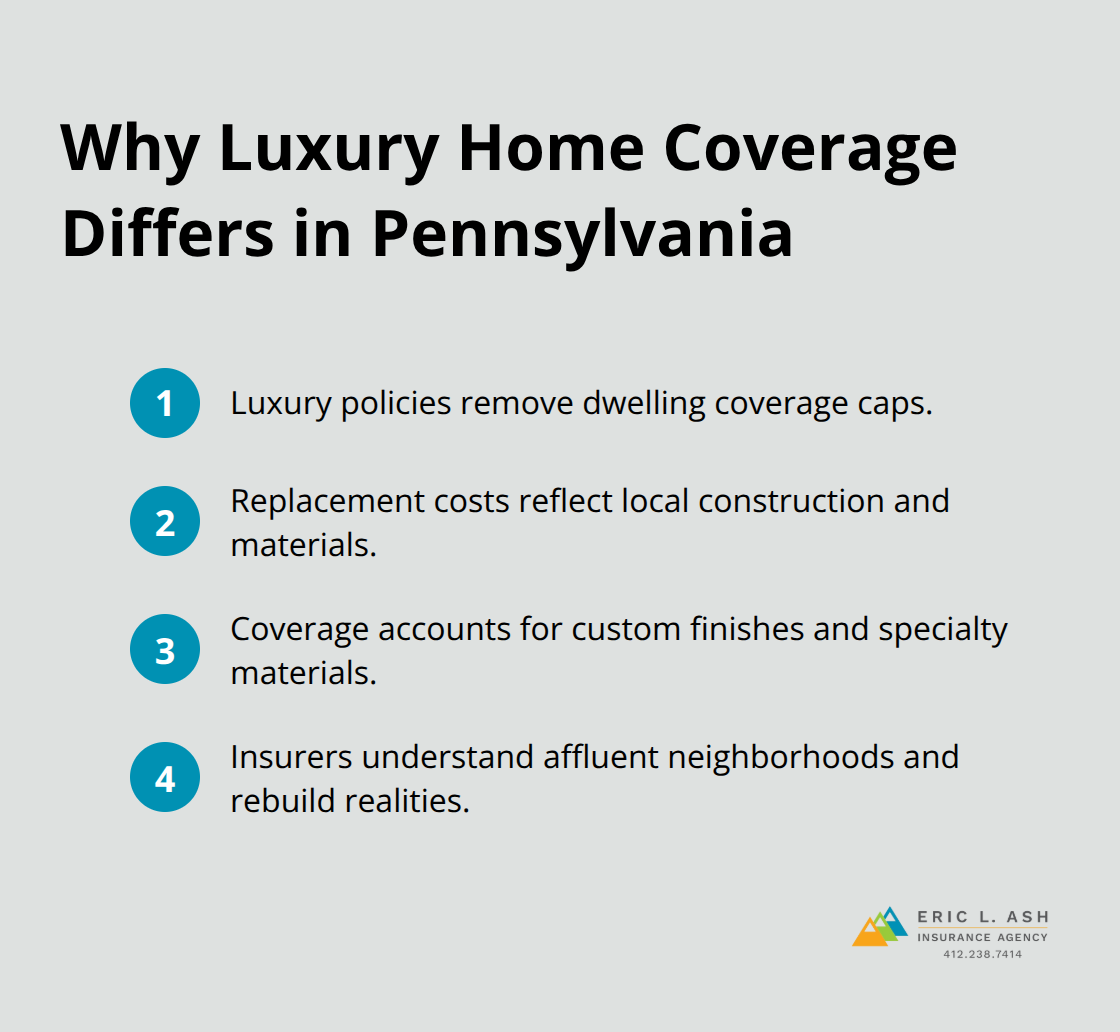
Insurance companies that specialize in affluent properties understand that rebuilding a custom stone mansion costs far more per square foot than a standard suburban home. They also recognize that your home likely contains irreplaceable elements-imported Italian marble, custom millwork, or original hardwood flooring-that standard policies simply won’t cover adequately.
Understanding Replacement Cost in Your Market
The difference between adequate coverage and luxury-grade coverage often comes down to whether your insurer has appraised homes in your specific neighborhood and understands local construction costs. Pennsylvania’s regional variations matter significantly. A home in Radnor Township faces different rebuilding expenses than one in the Laurel Highlands. Specialized carriers maintain databases of local construction costs and material pricing specific to affluent neighborhoods. This knowledge prevents you from purchasing either insufficient coverage or overpaying for protection you don’t need.
Protecting Collections and High-Value Belongings
Your jewelry, art, wine collection, or antique furniture won’t receive full coverage under a basic homeowners policy. Most standard policies cap jewelry claims at $1,500 to $2,500 total, regardless of actual value. A single piece of art or a watch collection can easily exceed this limit. Luxury policies allow you to schedule these items separately, meaning each piece gets individually appraised and listed on your policy with full coverage. This scheduled property approach eliminates disputes when you file a claim. You’ll need documentation-appraisals, photographs, purchase receipts-but this investment pays off immediately when you need to file a claim.
Expanded Liability Protection for Affluent Homeowners
Liability coverage also expands significantly in luxury policies. Standard coverage typically maxes out at $100,000 to $300,000 if someone is injured on your property. Affluent homeowners face greater liability exposure due to the value of their assets and the likelihood of hosting gatherings. Luxury policies routinely offer $500,000 to $1 million in liability protection, protecting your personal wealth if a serious accident occurs on your property.
Getting accurate quotes for this specialized coverage requires a different approach than shopping for standard homeowners insurance.
How to Gather Information and Request Accurate Quotes
Gathering accurate information before requesting quotes separates homeowners who overpay from those who secure competitive rates on luxury coverage. Start with your home’s original construction documents, including blueprints, building permits, and contractor records from any major renovations. Insurance companies pricing high-value properties need specifics: square footage of heated living space, construction materials, roof age, foundation type, and when major systems last received updates. A Pennsylvania home built with granite countertops and imported hardwood differs dramatically from one with standard finishes, and insurers need these details to calculate accurate replacement costs. Photograph your home’s exterior and interior, including distinctive architectural features, custom built-ins, and high-end finishes.
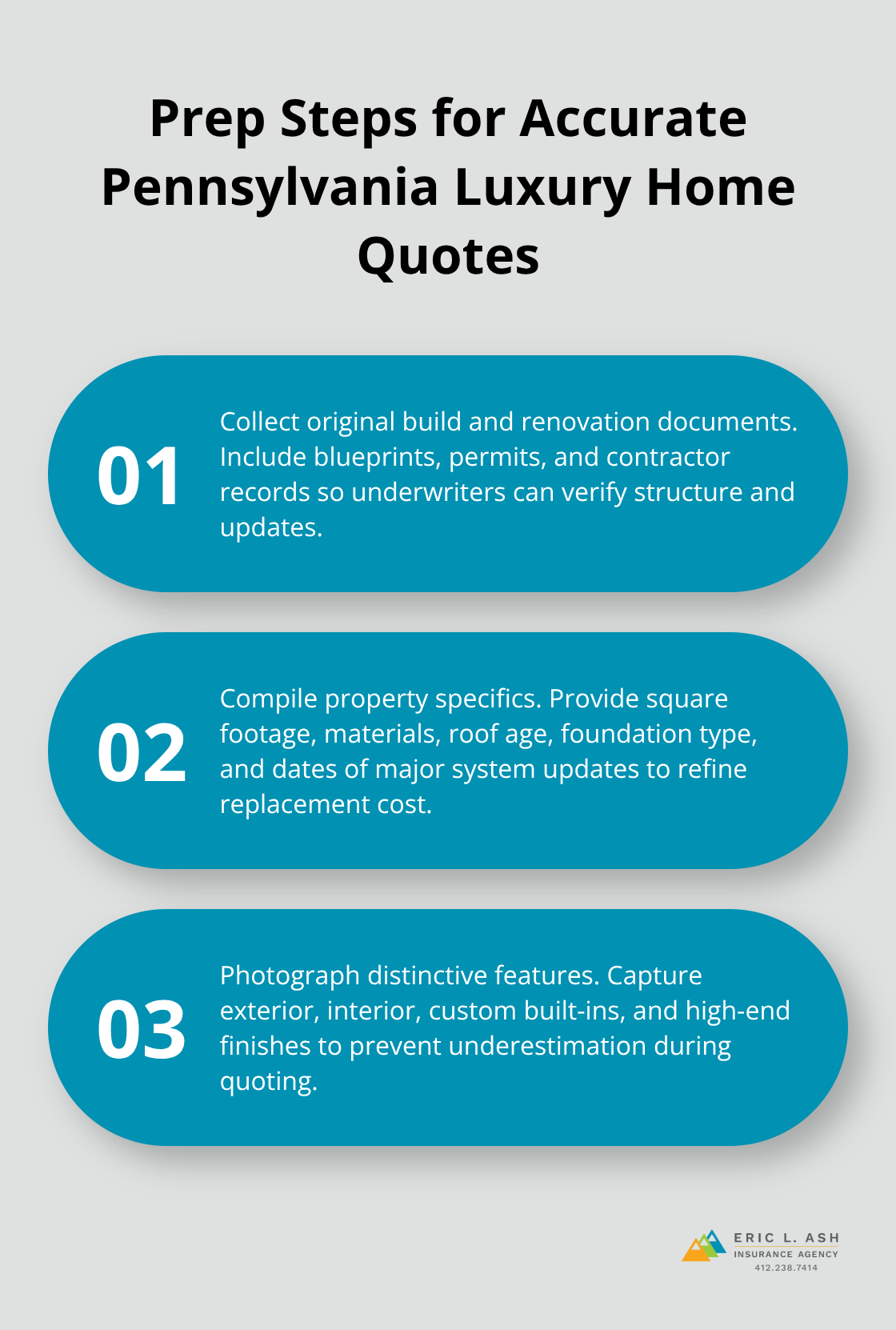
These images help insurers understand what they’re covering and prevent underestimation during the quoting process.
Document Your Personal Property Inventory
Your personal property inventory matters equally. Create a detailed list of items worth more than $2,500, including art, jewelry, watches, wine collections, antiques, and electronics. For each item, gather appraisals from certified professionals, purchase receipts, and photographs showing condition and identifying marks. Professional appraisals become essential documentation when filing claims on luxury belongings. Insurance companies won’t quote scheduled property coverage without this documentation, and having it prepared before contacting insurers speeds up the entire process significantly.
Request Quotes from Multiple Carriers
Contact at least three insurers that specialize in high-value homes in Pennsylvania. Different insurers price luxury homes differently based on their underwriting appetite and local market knowledge, so comparing at least three quotes is non-negotiable for finding genuine value rather than just the lowest premium. As a veteran-owned, independent agency, we at Eric L. Ash Insurance Agency work with dozens of carriers, allowing us to shop your specific situation across multiple markets and identify which companies offer the best rates and coverage terms for your property and collections.
With your documentation prepared and quotes in hand, the real work of comparison begins.
Comparing Luxury Home Insurance Quotes in Pennsylvania
The lowest premium among your three quotes will almost certainly be the wrong choice. Pennsylvania homeowners shopping luxury coverage often fixate on price, missing critical differences in how insurers handle high-value properties. A quote $200 cheaper monthly might exclude your art collection from scheduled coverage or cap liability at $500,000 instead of $1 million. The real comparison happens when you examine what each insurer actually covers for your specific situation.
Assess Dwelling Coverage and Replacement Costs
Start by listing each quote’s dwelling coverage limit alongside its estimated replacement cost for your home. If one insurer quotes $1.2 million dwelling coverage and another quotes $1.8 million for the same property, the difference reflects their assessment of local construction costs and building methods in your neighborhood. Request that each insurer explain their replacement cost calculation in writing, including whether they factored in your home’s custom finishes, foundation type, and regional labor costs. Insurers using outdated construction cost databases will underprice your coverage, leaving you exposed if you need to rebuild.
Compare Deductibles and Coverage Terms
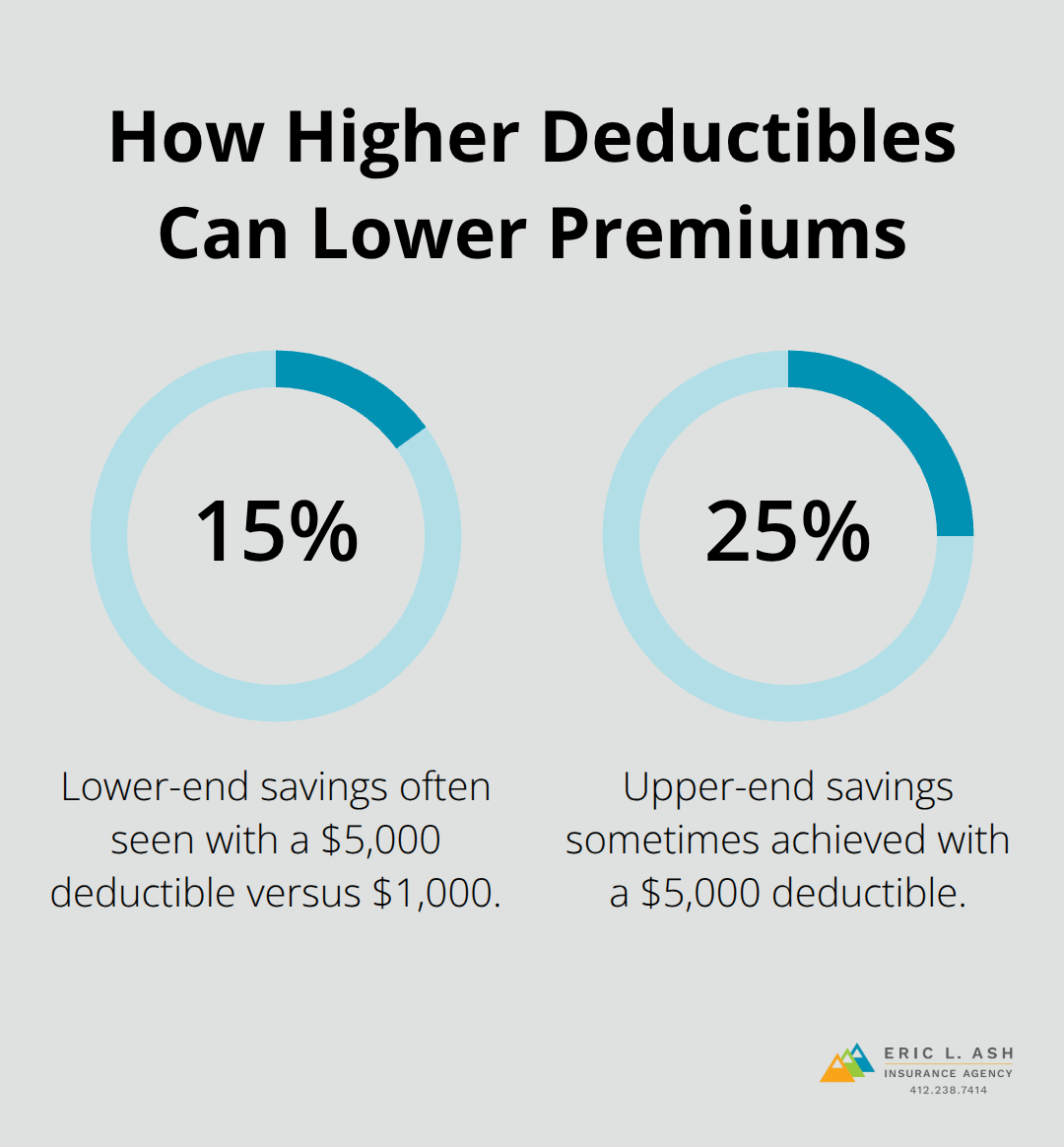
Deductibles vary dramatically across luxury policies, with options ranging from $1,000 to $10,000 or higher. A higher deductible reduces your premium but means you’ll pay more from pocket when filing a claim. For homeowners with substantial assets, a $5,000 deductible often provides better value than a $1,000 option, reducing annual premiums by 15 to 25 percent.
Check whether each quote includes agreed value coverage, which locks in a specific payout negotiated in advance, versus replacement cost coverage that pays whatever it costs to rebuild your home up to the policy limit.
Evaluate Discounts and Bundle Opportunities
Most insurers offer 10 to 15 percent discounts for bundling homeowners coverage with auto or umbrella policies, but some specialize in high-value homes and offer discounts for security systems, updated electrical systems, or claims-free histories that standard carriers ignore. Ask each insurer specifically which discounts apply to your property rather than accepting their standard list. This step often reveals which carriers truly understand luxury home markets versus those treating your property as a standard risk.
Investigate Claims Handling and Local Expertise
Claims handling matters more for luxury coverage than standard policies because high-value claims involve complex documentation and potential disputes over replacement costs. Contact each insurer’s claims department directly and ask about their process for appraising damaged custom finishes, artwork, or collectibles. Some carriers maintain networks of local contractors and appraisers in Pennsylvania, allowing faster claims resolution, while others route everything through national adjusters unfamiliar with regional construction standards. Request references from current policyholders in your area if possible, or read recent reviews specifically about claims experiences rather than general satisfaction ratings. Your choice of insurer ultimately determines whether a claim becomes a smooth process or an extended negotiation over coverage terms and replacement values.
Final Thoughts
Comparing PA home insurance quotes for luxury coverage demands attention to details that standard homeowners often overlook. The lowest premium rarely represents the best value when you’re protecting a high-value property and irreplaceable collections. Instead, focus on whether each quote includes adequate dwelling coverage for your home’s actual replacement cost in your Pennsylvania neighborhood, how personal property gets scheduled and protected, and what liability limits the policy provides.
Deductibles, available discounts, and claims handling processes matter equally when you evaluate your options. Working with a local Pennsylvania agent transforms this comparison process from overwhelming to manageable. An independent agent who understands your region’s construction costs, local market conditions, and the specific challenges of insuring luxury homes brings expertise that online quote tools simply cannot match.
Gather your home’s construction documents, create your personal property inventory with appraisals, and reach out to Eric L. Ash Insurance Agency to discuss your coverage needs. We’ll shop your situation across multiple markets and present you with competitive options backed by responsive, local service. Protecting a luxury home requires more than standard coverage, and it deserves more than a standard approach to finding insurance.
The information provided in this blog is for general informational purposes only and does not constitute legal, financial, or insurance advice. Coverage options, terms, and availability may vary. Please consult with a licensed professional for advice specific to your situation.