Classic Auto Coverage PA: Insuring Your Timeless Ride With Local Expertise
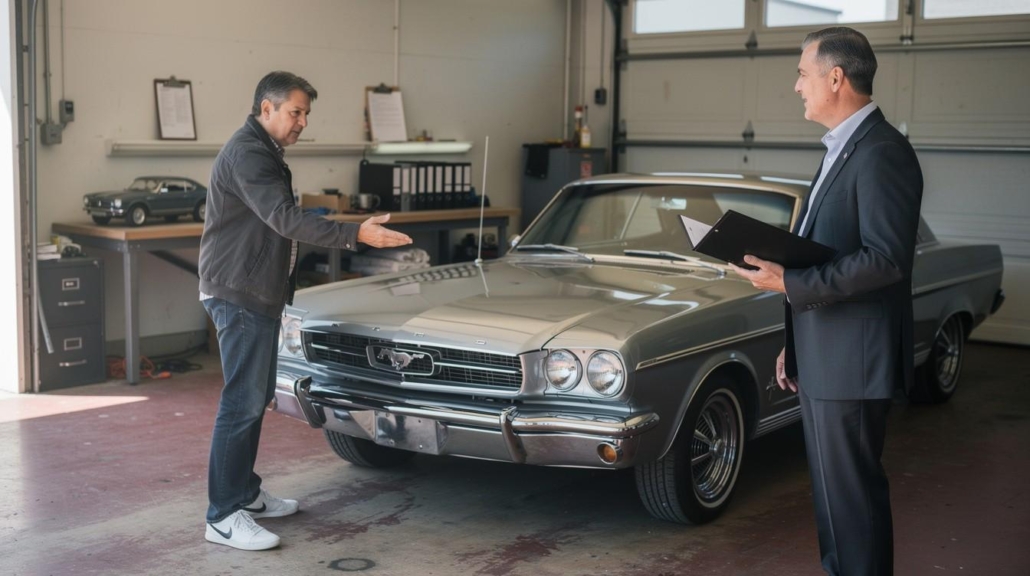
Your classic car is more than just transportation-it’s a piece of automotive history that deserves protection beyond what standard auto insurance offers. Classic auto coverage in PA is specifically designed to recognize the true value of your vehicle, whether it’s a restored 1967 Chevelle or a vintage Mercedes.
At Eric L. Ash Insurance Agency, we understand that classic car owners face unique challenges that regular policies simply don’t address. Read on to learn why specialized coverage matters and how to protect your timeless ride.
How Classic Cars Are Valued and Protected
Standard auto insurance treats your car like a depreciating asset. The moment you drive a 1967 Chevelle off the lot, it loses value according to standard depreciation tables, and that’s exactly what a regular policy pays out if your car is totaled. Classic car coverage works in the opposite direction. Instead of calculating what your vehicle is worth today based on wear and tear, agreed value coverage locks in a specific amount that you and your insurer agree on upfront. If your classic car is declared a total loss, you receive that agreed-upon amount, not some depreciated figure. This matters enormously when you own a vehicle worth $35,000 or $75,000 that may actually appreciate over time. According to State Farm, agreed value coverage fixes the payout amount at total loss based on the agreed value between you and the insurer, preventing the underinsurance that happens with standard policies.
Why Mileage Limits Work in Your Favor
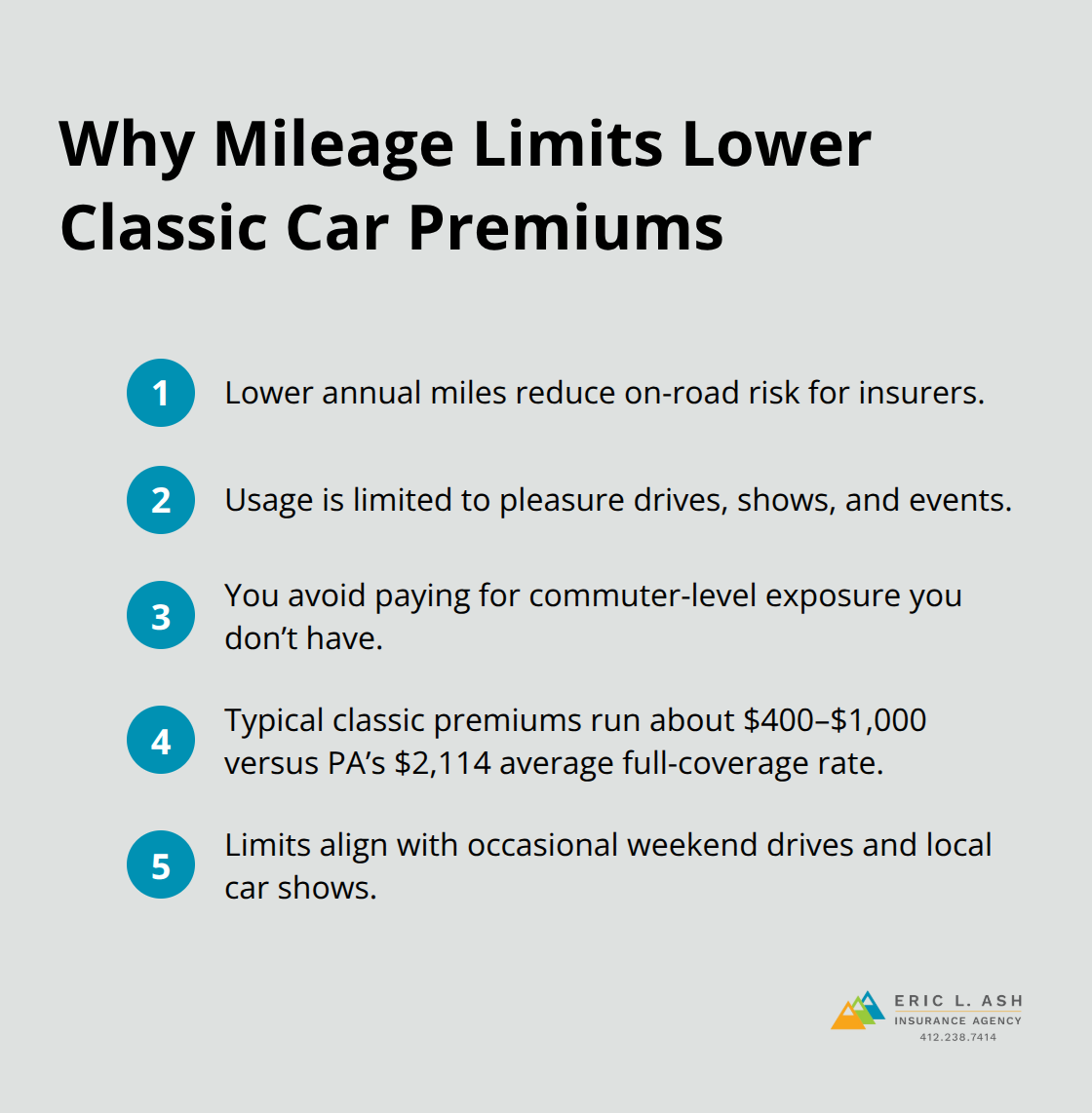
Classic car policies recognize that your prized vehicle spends most of its time in your garage, not commuting to work. Standard policies assume you drive 12,000 to 15,000 miles annually, which factors into their pricing and risk calculations. Classic coverage typically limits you to 2,500 to 5,000 miles per year because the vehicle is used for pleasure driving, car shows, and club events rather than daily transportation. This low-mileage expectation actually reduces your premium significantly compared to standard auto insurance. You don’t pay for coverage that assumes heavy road use when your classic car sees occasional weekend drives through Pennsylvania’s back roads or attendance at local car shows. The Pennsylvania average annual full-coverage auto insurance rate was $2,114 in 2024 according to Insurify, but classic car insurance generally costs between $400 and $1,000 annually because of these usage restrictions.
Protection Built for Restoration Work
If you actively restore your classic car, standard insurance won’t cover the increasing value as you invest in restoration work. A car worth $20,000 today might be worth $45,000 after a two-year frame-off restoration, but standard policies don’t account for that rising investment. Specialized classic car policies include restoration coverage that protects the increasing value of your vehicle while it undergoes active rebuilding. You need coverage that recognizes when you install OEM parts, upgrade the engine, or complete body work that adds significant value. State Farm notes that restoration coverage protects the increasing value of the car while it’s undergoing active restoration, and this protection extends to hard-to-find specialty parts that cost far more than standard replacements. Your agreed value can be updated after major restoration milestones, ensuring your coverage grows alongside your investment rather than leaving you underinsured on a vehicle that becomes more valuable.
The Appraisal Process Sets Your Protection Level
An accurate appraisal determines your agreed value and shapes how well your policy protects your investment. The appraisal documents your vehicle’s condition, history, and current market value, creating the foundation for your coverage amount. This process differs sharply from standard auto insurance, which relies on depreciation schedules rather than detailed vehicle assessment. A thorough appraisal considers restoration work completed, original components retained, and market demand for your specific make and model. When you work with an independent insurance agency like Eric L. Ash Insurance Agency, you gain access to carriers that understand classic car appraisals and can connect you with qualified appraisers who recognize the true value of your vehicle. The appraisal becomes your protection-it’s the number you’ll receive if your car is declared a total loss, so accuracy matters tremendously.
Storage and Security Reduce Your Risk
Classic car policies require secure storage because your vehicle spends minimal time on the road. Most policies mandate that you keep your car in a locked, enclosed structure such as a private garage or storage unit rather than exposed to weather and theft. This requirement actually works in your favor by reducing your premium since the insurer’s risk drops significantly. Additional security measures-alarm systems, GPS tracking, or climate-controlled storage-can lower your costs further while protecting your investment from Pennsylvania’s variable weather conditions. The more you demonstrate that your classic car is protected from theft, weather damage, and deterioration, the better your rates become. This is where specialized coverage truly shines: insurers reward you for the care you take with your vehicle rather than penalizing you for owning something valuable.
Why Pennsylvania Classic Car Owners Need Specialized Coverage
Appreciation, Not Depreciation
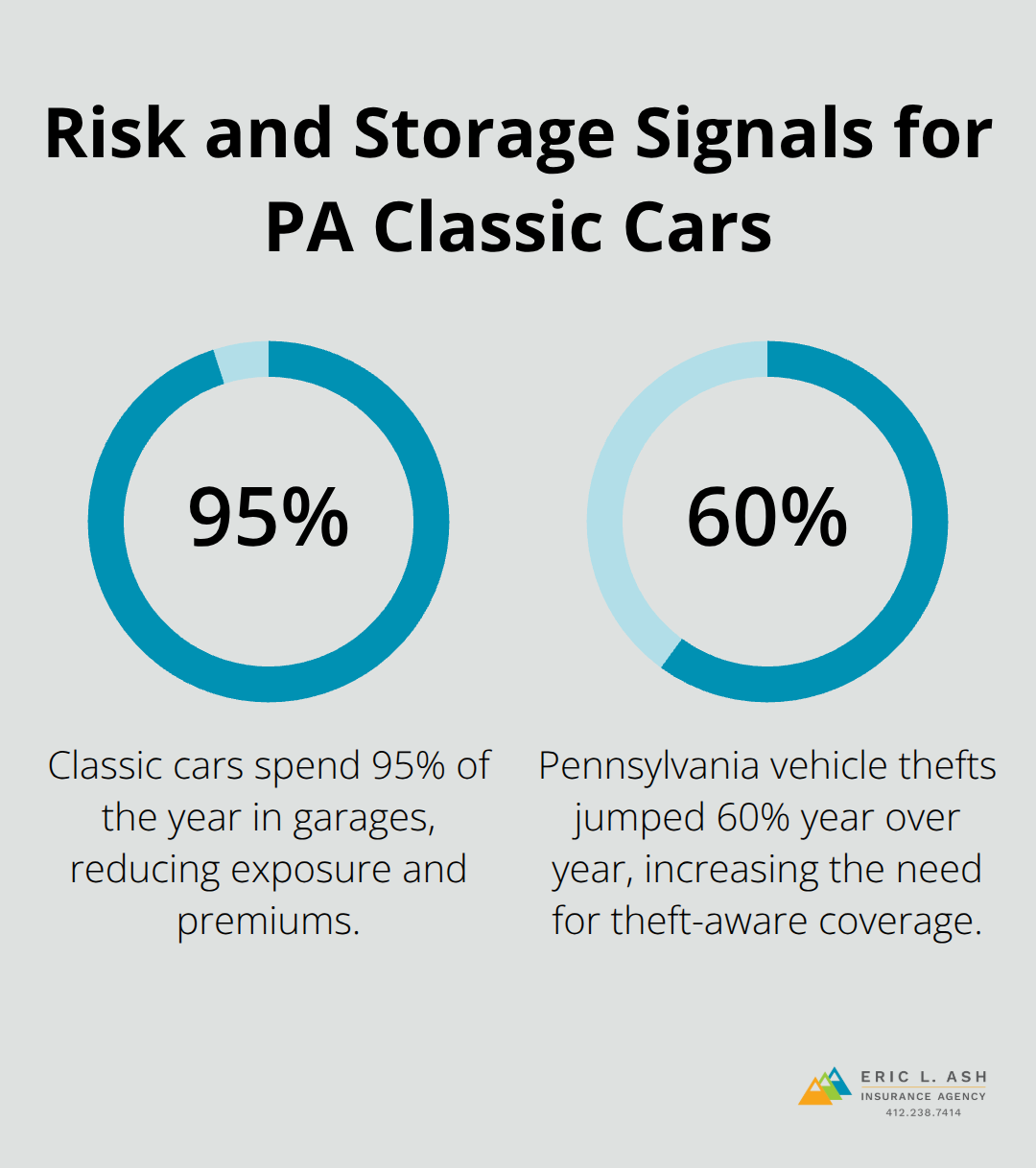
Standard auto insurance fails catastrophically when your vehicle appreciates instead of depreciates. A 1967 Chevelle worth $35,000 today might be worth $50,000 in five years as the collector market strengthens, yet a standard policy would pay you the depreciated value at total loss, not the appreciated value. Pennsylvania vehicle thefts jumped 60% from 2022 to 2023, and classic cars attract thieves specifically because they hold value. Standard policies base payouts on depreciation schedules that assume your vehicle loses 15–20% of its value annually, which makes no sense for a classic car that may gain value with proper restoration. Agreed value coverage flips this entirely. You establish the vehicle’s value upfront through an appraisal, and that’s exactly what you receive if the car is totaled or stolen, regardless of what depreciation tables say.
The Restoration Investment Problem
Restoration work exposes a critical gap in standard policies that most Pennsylvania owners discover too late. As you complete frame work, engine rebuilds, and interior restoration, your vehicle’s value increases substantially, yet standard policies lock in the original value and won’t adjust upward as your investment grows. You could spend $15,000 on OEM parts and specialized labor, watching your car’s market value climb to $40,000, only to have standard insurance pay $25,000 if your vehicle sustains damage mid-restoration. Specialized classic car coverage recognizes that your investment in restoration work adds real value and protects that growing equity through restoration coverage that adjusts your agreed value at major milestones.
Pennsylvania’s Climate Demands Regional Protection
Pennsylvania’s weather compounds storage challenges that standard policies don’t address. Humid summers, freeze-thaw cycles in winter, and salt-laden roads near the state’s highways create conditions that deteriorate classic cars rapidly without proper protection. Your vehicle requires climate-controlled garages or enclosed storage units to survive Pennsylvania winters without rust developing on exposed metal and undercarriage components. Standard policies don’t account for these regional protection needs or offer discounts for proper storage conditions. Specialized classic car coverage recognizes that your vehicle spends 95% of the year protected in a garage, not exposed to weather and road hazards like daily drivers. This low-risk profile justifies significantly lower premiums than standard auto insurance.
Why Carriers Matter for Your Investment
Different carriers structure their policies differently, and some understand classic cars far better than others. A carrier that specializes in classic vehicles recognizes how Pennsylvania’s climate affects your investment and structures policies that protect your car through seasonal storage requirements, climate specifications, and regional theft patterns rather than applying one-size-fits-all depreciation models designed for vehicles that lose value every single day. When you work with an independent agency that shops multiple carriers, you gain access to insurers who truly understand classic car protection. This distinction between carriers becomes apparent when you file a claim or need to adjust your coverage after restoration work-some carriers handle these situations smoothly, while others create unnecessary friction. The right carrier makes protecting your timeless ride straightforward rather than frustrating.
How to Choose the Right Classic Car Insurance Policy
Document Your Vehicle and Usage Patterns
Start by gathering what you actually own and how you truly use it. Pull together photos of your classic car from multiple angles, collect maintenance records, note any restoration work completed, and assess annual mileage honestly.
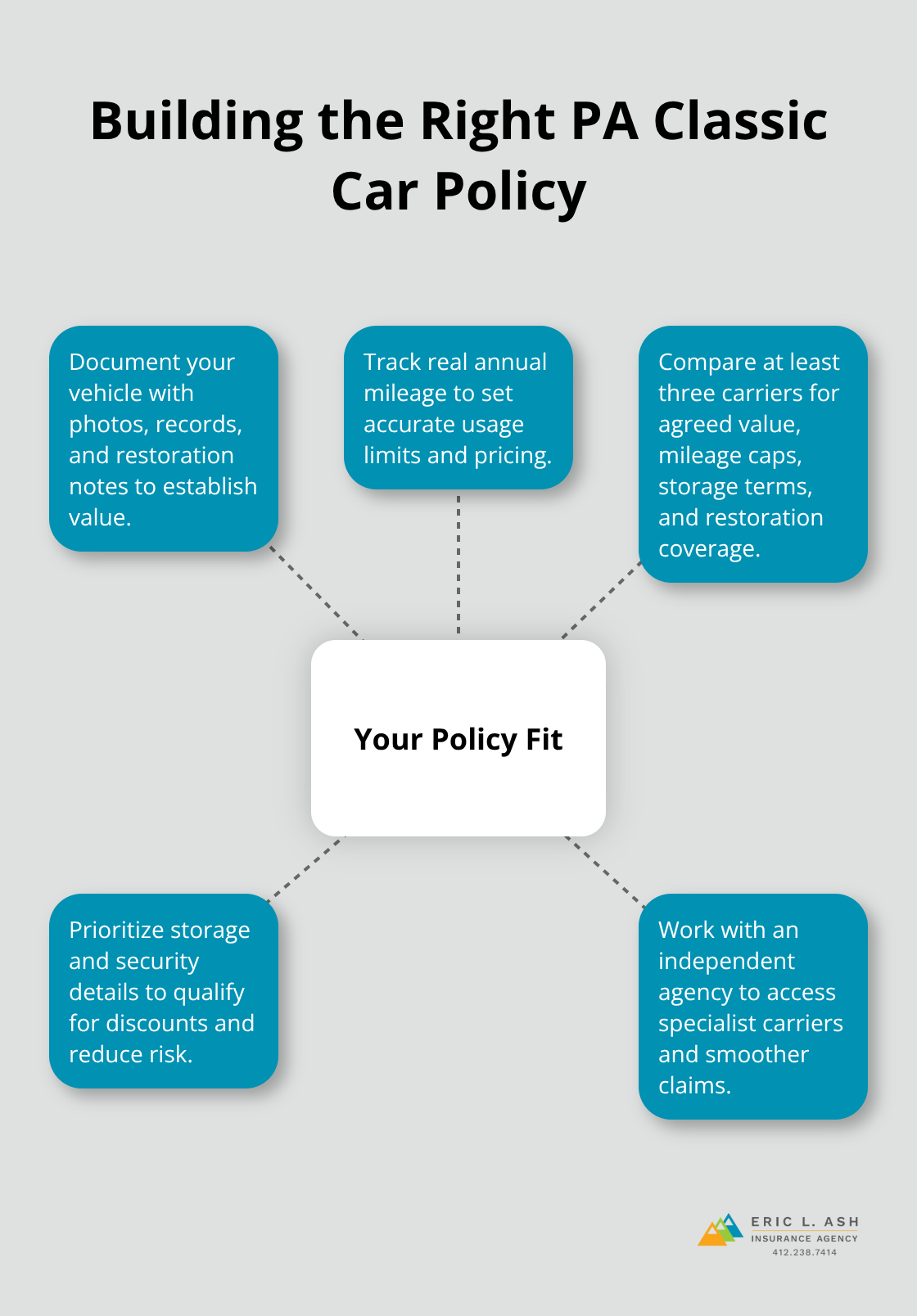
Most owners dramatically underestimate or overestimate their driving patterns until they track actual usage for a month. If you drive your 1967 Chevelle to six car shows annually plus occasional weekend drives, that’s roughly 1,500 miles per year. If you actively restore a vehicle, note the current condition and projected completion date because this changes your coverage needs significantly. Carriers ask specific questions about storage location, security features, and whether you maintain a separate daily-driver vehicle, so having these details ready streamlines quotes and prevents coverage gaps later.
Pennsylvania weather makes storage particularly important. Climate-controlled garage space costs money but dramatically reduces rust risk and qualifies you for lower premiums. Document whether your garage maintains temperature control, has a dehumidifier system, and offers protection from salt spray if you live near highways.
Compare Multiple Carriers for Real Price Differences
Request quotes from at least three carriers and specifically ask each one for their agreed value amount, annual mileage limit, storage requirements, and whether they cover restoration work in progress. Car insurance in Pennsylvania costs an average of $90 per month for liability-only coverage and $161 for full coverage, but your actual quote depends entirely on vehicle value, your age, driving record, and location within Pennsylvania. Urban areas like Philadelphia see higher premiums than rural regions due to theft risk, so a collector car in Pittsburgh costs less to insure than the same vehicle in Philadelphia.
Ask carriers directly about discounts for safety features, garage door openers, alarm systems, and multi-vehicle policies because these stack quickly. One carrier might charge $650 annually while another charges $920 for your exact vehicle-that $270 annual difference matters more than brand recognition.
Focus on Coverage Details, Not Brand Names
When comparing quotes, ignore the carrier name and focus on what you actually receive: the agreed value amount, mileage allowance, deductible options, and coverage for specialty parts. Some carriers include roadside assistance and towing automatically while others charge extra, so calculate total annual cost rather than base premium alone. Coverage for hard-to-find OEM parts varies significantly between carriers, and this distinction becomes critical if your classic car requires specialty components that cost far more than standard replacements.
An independent insurance agency that shops multiple carriers can help you find tailored insurance tailored to your specific classic car, ensuring you’re not overpaying for standard coverage or underinsured on your investment.
Final Thoughts
Your classic car represents years of passion, investment, and automotive history that standard auto insurance simply cannot protect. A 1967 Chevelle or vintage Mercedes deserves coverage built specifically for vehicles that appreciate rather than depreciate, that spend most of their time safely stored rather than commuting daily, and that require specialized parts and restoration expertise. Classic auto coverage PA policies recognize these realities through agreed value protection, mileage flexibility, and restoration support that standard policies never offer.
Pennsylvania’s collector car community thrives because owners understand the difference between generic coverage and specialized protection. When you choose the right policy, you partner with carriers that understand your vehicle’s true market value, respect the investment you’ve made in restoration work, and recognize how Pennsylvania’s climate affects long-term storage. The right coverage means filing a claim becomes straightforward rather than frustrating, and your payout reflects what your classic car is actually worth.
We at Eric L. Ash Insurance Agency work with multiple carriers to find policies tailored specifically to your classic car’s value, usage patterns, and storage conditions. Contact us today to discuss your classic car’s protection and discover how much you could save with coverage designed specifically for your timeless ride.
The information provided in this blog is for general informational purposes only and does not constitute legal, financial, or insurance advice. Coverage options, terms, and availability may vary. Please consult with a licensed professional for advice specific to your situation.