
Investment Property Coverage PA: A Practical Guide From Pennsylvania’s Independent Agents
Your standard homeowners policy won’t cover a rental property. That gap leaves landlords exposed to significant financial risk.
We at the Eric L. Ash Insurance Agency help Pennsylvania investors find the right investment property coverage PA for their specific situation. Whether you own a single rental unit or multiple properties, this guide walks you through your options and how to choose wisely.
Why Your Rental Property Needs Different Coverage
Your homeowners policy explicitly excludes rental income and tenant-related liability. That’s not an oversight-it’s intentional. Insurance companies designed standard homeowners policies for owner-occupied properties where you live full-time. The moment you rent out a property, the risk profile changes dramatically.
Coverage Gaps That Leave You Exposed
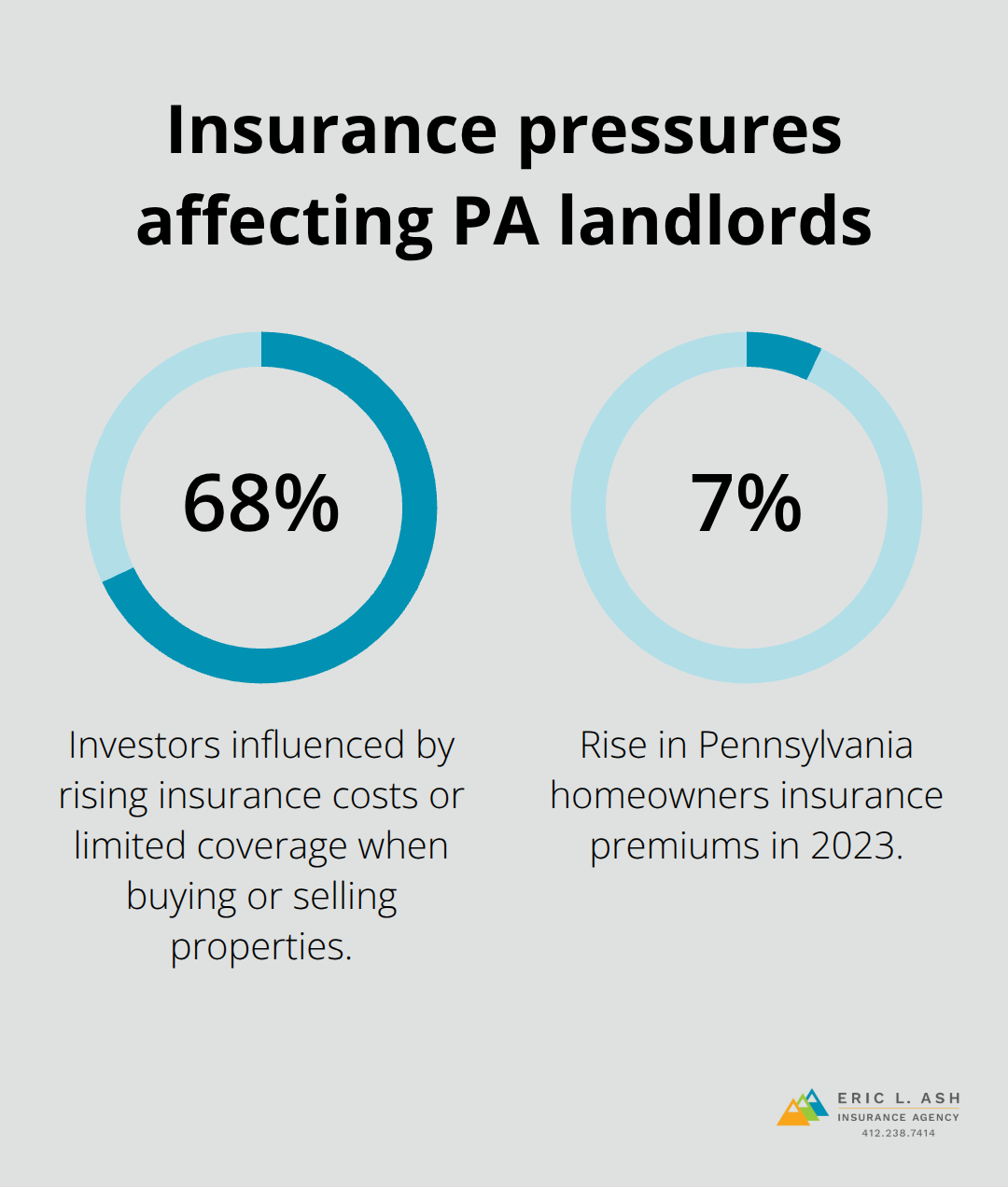
A tenant’s injury on your rental property, damage caused by a tenant, or lost rental income from a covered loss aren’t covered under standard homeowners insurance. According to the Pennsylvania Association of Realtors, traditional homeowners insurance often won’t fully protect landlord liability exposure. This gap matters because approximately 68 percent of real estate investors nationwide report that rising insurance costs or limited coverage influence their buying and selling decisions. In Pennsylvania specifically, homeowners experienced a 7 percent rise in property insurance premiums in 2023, contributing to higher operating costs for rental investors.
Without proper landlord coverage, a single incident-a tenant’s slip and fall, water damage from a burst pipe, or months without rental income during repairs-could wipe out your profit margin or worse.
How Landlord Policies Address Real Risks
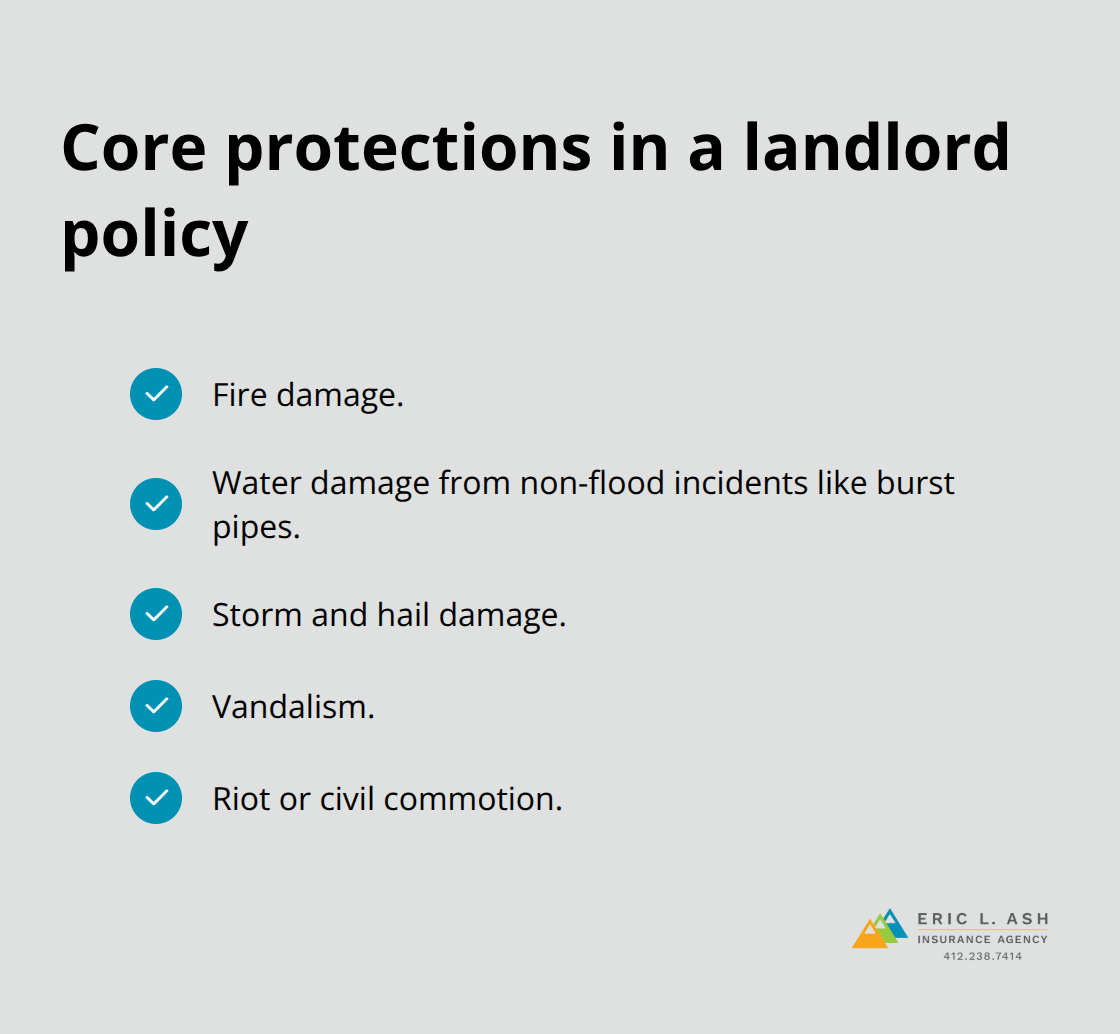
Landlord insurance exists because rental properties carry exposures that owner-occupied homes don’t. These policies include loss of rental income coverage, which provides protection when rental properties become uninhabitable due to a covered event. They also provide liability coverage starting at 1 million dollars per occurrence and 2 million dollars aggregate, protecting you if a tenant or visitor is injured on the property. Standard coverage options include fire, water damage from non-flood incidents like burst pipes, storm and hail damage, vandalism, and riot or civil commotion-all common Pennsylvania risks. You can add specialized protections like flood coverage, equipment breakdown, or property management errors and omissions coverage if you hire managers or contractors.
This customization matters because Pennsylvania’s property mix spans rural areas, city centers, and college towns, each with different seasonal hazards. Snow and ice create slip-and-fall exposure in winter. Occasional flooding affects certain regions. Multi-unit buildings have different liability profiles than single-family homes. A dedicated landlord policy lets you address your specific property type and location rather than settling for blanket coverage that fits nobody perfectly.
Common Misconceptions That Cost Landlords Money
Many landlords assume their standard homeowners policy covers rentals if they add a rider or endorsement. It doesn’t. Others think landlord insurance is optional if their lender doesn’t require it. That’s financially reckless. Your mortgage lender may not mandate it, but your tenants’ safety and your cash flow won’t wait for a policy to exist. Some investors believe a general liability policy is enough. It’s not-you need both liability and property coverage plus loss of rental income protection. A comprehensive approach combines property coverage, liability, and loss of rental income into one package. Many agents recommend a bundled landlord policy rather than piecing together separate coverages, which often costs under 100 dollars per month for solid protection. The Landlord and Tenant Act of 1951 governs Pennsylvania rental relationships and outlines your obligations as a landlord. Insurance doesn’t replace those legal duties, but it protects you financially when accidents happen despite your best efforts.
Finding the Right Agent for Your Situation
A Pennsylvania independent agent who understands local risks and rental law is far smarter than guessing about coverage gaps or relying on online reviews of national carriers unfamiliar with state-specific exposure. Independent agents like those at the Eric L. Ash Insurance Agency shop multiple carriers to find competitive rates and tailored coverage that matches your specific property type and tenant situation. This approach saves you time and money while ensuring you don’t miss critical protections. Your next step is to assess what type of property you own and what coverage limits make sense for your investment goals.
Your Pennsylvania Investment Property Coverage Options
Pennsylvania investors have three primary insurance tracks, and picking the right one depends entirely on what you own and how you operate.
Landlord Insurance for Traditional Rentals
Landlord insurance works best for traditional rentals-single-family homes, duplexes, triplexes, and small multifamily properties where tenants sign leases and live long-term. This coverage type protects your property structure, covers liability if someone gets injured on the premises, and replaces lost rental income when a covered event makes the property uninhabitable. Standard landlord policies include liability limits of $1 million, and premiums vary based on your property’s specific risk profile.
Standard landlord policies include fire, water damage from burst pipes or HVAC failures, storm and hail damage, vandalism, and riot or civil commotion coverage. You can layer on specialized add-ons like flood insurance, equipment breakdown, loss of rental income, property management errors and omissions coverage if you hire managers, and earth movement protection depending on your property’s location and risk profile. The key advantage is flexibility-you pay only for the protections your property actually needs rather than accepting blanket coverage that doesn’t fit.
Short-Term Rental Coverage for Vacation Properties
Short-term rental coverage for properties like Airbnb and VRBO sits in a different risk category entirely, and standard homeowners policies explicitly exclude them. These properties turn over constantly, attract guests unfamiliar with the space, and generate liability exposure that traditional landlord policies weren’t designed to handle. Pennsylvania independent agents now routinely quote short-term rental coverage that addresses guest injuries, property damage from frequent turnover, and the unique liability profile of hospitality-style rentals.
Commercial Property Insurance for Larger Portfolios
Commercial property insurance becomes necessary once you scale beyond a handful of rental units into larger portfolios, especially if you own mixed-use buildings, apartment complexes with five or more units, or properties generating substantial commercial income. Commercial policies offer higher liability limits starting at $1 million per occurrence and $2 million aggregate, with options to increase to $2 million or more per occurrence for substantial portfolios. They also accommodate more complex risk scenarios-multiple tenants, diverse property uses, on-site management offices, and higher property values.
A Pennsylvania independent agent who understands your specific property type, occupancy status, and local risks ensures you avoid overpaying for coverage you don’t need or leaving gaps that could cost far more than premium savings. Your next step involves assessing what your property actually requires and matching those needs to the right coverage limits and deductibles.
Matching Your Property to the Right Coverage
Assess Your Property Type and Location
Picking the right coverage starts with honestly assessing what you own and how you operate it. A single-family home rented to one long-term tenant has vastly different insurance needs than a four-unit building with high turnover or a vacation rental that hosts different guests every weekend. Pennsylvania’s property mix spans rural farmland, urban row homes, suburban single-family neighborhoods, and college towns, each with distinct risk profiles and seasonal exposures. Before you contact an agent, know your property type, the number of units, occupancy model, and whether tenants are long-term or short-term.
Your property’s location matters enormously in Pennsylvania. Properties in flood-prone regions near rivers or low-lying areas need flood coverage as an add-on since standard policies exclude flood damage entirely. Properties in areas with heavy snow and ice exposure benefit from coverage that explicitly includes winter-weather slip-and-fall liability. Properties near commercial districts or highways face different vandalism and civil commotion risks than rural properties. Seasonal hazards in Pennsylvania-snow, ice, occasional flooding, and severe weather-heighten the need for robust coverage and proactive maintenance.
Match Coverage Limits to Your Financial Exposure
If you own a traditional single-family rental or duplex with year-round tenants, a standard landlord policy with $1 million in liability per occurrence and $2 million aggregate typically covers your exposure. If you operate a short-term rental, you need coverage specifically designed for frequent guest turnover and hospitality-style liability. If you manage a multifamily property with five or more units, commercial property insurance becomes necessary because standard landlord policies max out around four units.
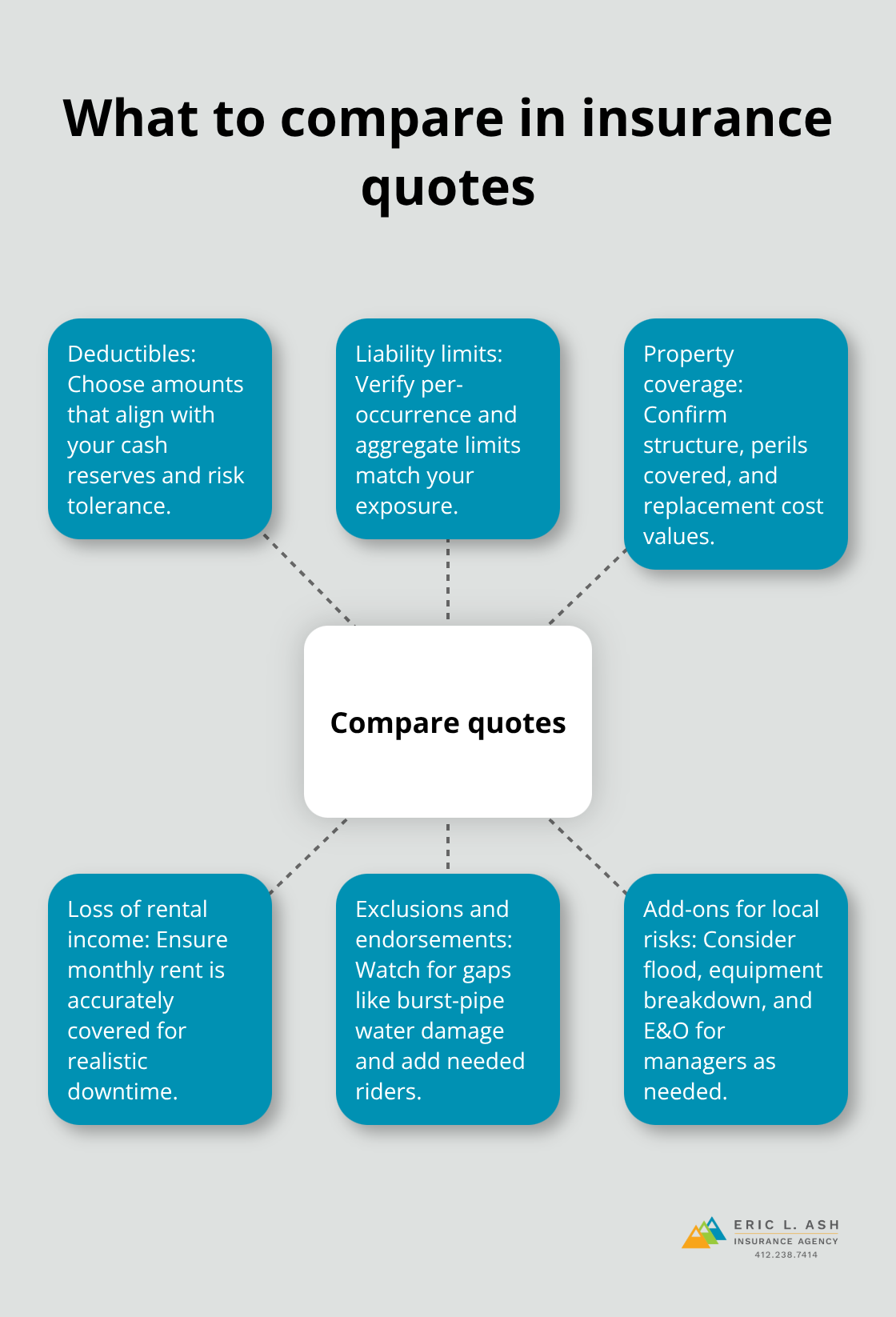
Once you identify your property type and location, evaluate the coverage limits that match your financial exposure. If you own a $300,000 rental property, insuring it for $200,000 leaves you underinsured. If a covered loss totals $250,000, you absorb the gap. Pennsylvania independent agents recommend setting your property insured value at no less than $75 per square foot to avoid coinsurance penalties that can deny claims or reduce payouts. For liability, $1 million per occurrence is standard for single-family and small multifamily properties, but if you own high-value properties or serve sophisticated tenants, higher limits or an umbrella policy become prudent.
Loss of rental income coverage should reflect your actual monthly rent. If a covered event makes your property uninhabitable for three months, can you absorb the lost income, or does your policy need to cover it? Many investors overlook this and regret it when a fire or major water damage forces temporary vacancy.
Choose Your Deductible Based on Cash Flow
Deductibles directly affect your premium, and this is where your risk tolerance matters. A $500 deductible costs more than a $1,000 deductible, but if you file a claim, you pay the lower amount out of pocket. If you have adequate reserves and can absorb a $1,000 loss without stress, the higher deductible saves money monthly. If unexpected expenses strain your finances, the lower deductible protects your cash flow when claims happen.
Compare deductibles, coverage limits, and policy exclusions across quotes, not just the premium. A policy that costs $40 per month but excludes water damage from burst pipes is worthless if that’s your biggest seasonal risk in Pennsylvania.
Work with a Pennsylvania Independent Agent
A Pennsylvania independent agent who understands your specific property and local market outperforms shopping online quotes from national carriers unfamiliar with state-specific exposures. An independent agent can confirm your brokerage’s exact insurance requirements in writing, shop multiple carriers to find competitive rates, compare what each policy actually covers, and help you avoid overpaying for protection you don’t need or leaving gaps that could cost far more than premium savings.
Your agent should ask detailed questions about your property’s condition, age, occupancy history, and whether you actively maintain it. Properties with deferred maintenance or older roofs cost more to insure because claims risk is higher. Properties with security systems, fire suppression, or recent renovations often qualify for discounts. Once you’ve selected a policy, confirm that your lender receives a certificate of insurance and that your coverage remains active year-round without gaps.
Final Thoughts
Investment property coverage PA protects your financial interests when accidents, damage, or vacancy threaten your rental income. Standard homeowners policies won’t cover rental properties, and landlord insurance, short-term rental coverage, and commercial property policies each address specific ownership models and risk profiles. The right choice depends on what you own, where it’s located, and how you operate it.
Assess your property type honestly, match your coverage limits to your actual financial exposure, and work with a Pennsylvania independent agent who understands local risks rather than relying on national carrier websites. A single slip-and-fall claim, water damage during Pennsylvania’s harsh winters, or months of lost rental income can erase years of profit, and proper coverage prevents that outcome. Gather basic information about your property (type, location, number of units, occupancy model, and current condition), contact multiple agents for quotes that specify liability limits and deductibles, and compare what each policy actually covers instead of focusing only on the monthly premium.
We at the Eric L. Ash Insurance Agency leverage relationships with multiple carriers to shop competitive markets and deliver rates backed by responsive, local service. Contact us today to discuss your investment property coverage needs and receive a quote tailored to your specific situation.
The information provided in this blog is for general informational purposes only and does not constitute legal, financial, or insurance advice. Coverage options, terms, and availability may vary. Please consult with a licensed professional for advice specific to your situation.