PA flood insurance homes: Safeguarding Property From Water Damage
Water damage from flooding poses a serious threat to Pennsylvania homeowners, and standard homeowners insurance won’t protect you when it happens. At Eric L. Ash Insurance Agency, we know that PA flood insurance homes require specific coverage that most people overlook until it’s too late.
The good news is that you have options to safeguard your property. This guide walks you through your flood insurance choices and practical steps to keep your home safe from water damage.
Why Your Standard Homeowners Policy Leaves You Exposed to Flood Damage
Standard homeowners insurance does not cover flood damage, period. Your policy protects against wind, hail, theft, and fire, but the moment water rises above normal levels and enters your home, you’re on your own financially. This gap exists because insurers classify flooding as a separate peril requiring its own underwriting and pricing. If you live anywhere in Pennsylvania near a river, creek, or low-lying area, this gap becomes a serious liability.
Flood Risk Isn’t Limited to High-Risk Zones
Pennsylvania’s geography makes flooding a real concern across much of the state. The Susquehanna River, Delaware River, and countless smaller waterways regularly overflow during spring snowmelt and heavy rainfall events. You could live blocks away from a designated flood zone and still face significant water damage from localized flooding, backed-up storm drains, or rapid runoff from heavy downpours. Tropical storm remnants also pose a threat to Pennsylvania, bringing intense rainfall that overwhelms drainage systems quickly.
Spring Snowmelt and Summer Storms Create Two Distinct Flood Seasons
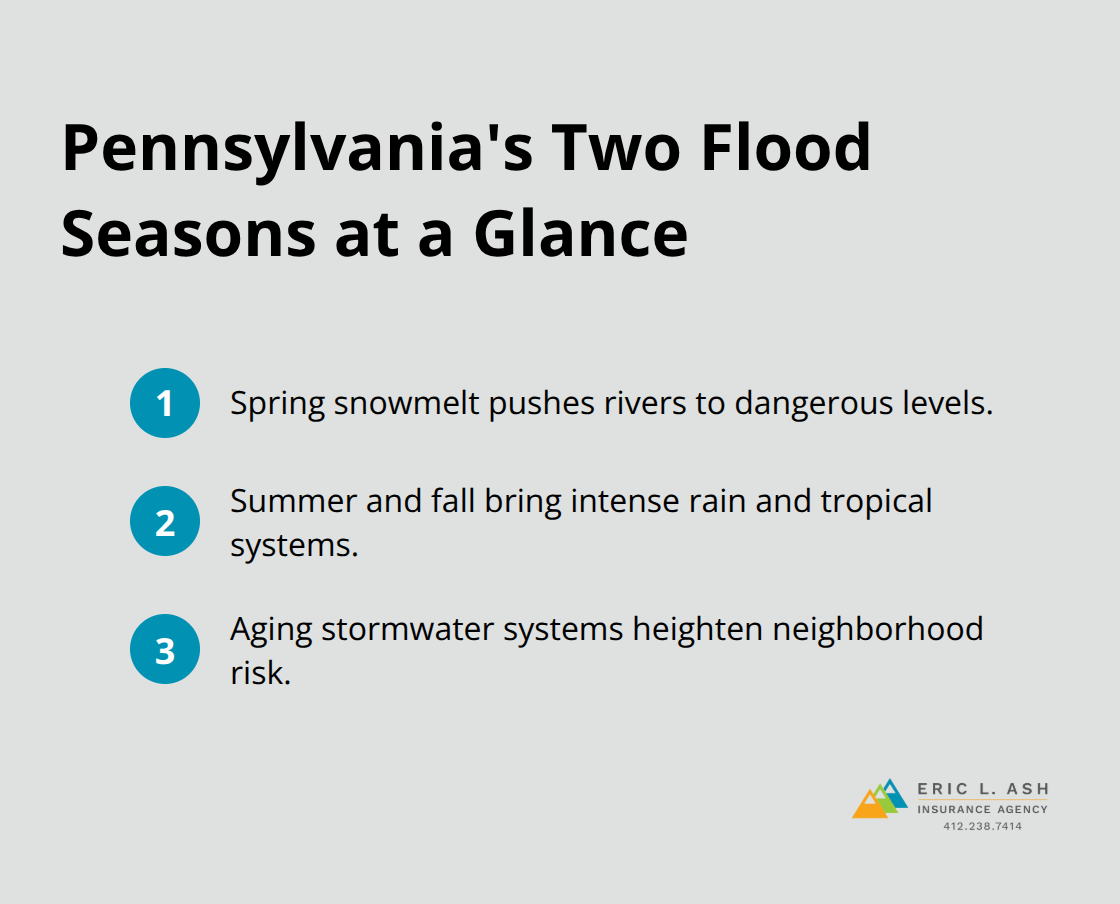
Pennsylvania experiences two primary flood seasons that threaten different regions. Spring snowmelt from the Appalachian region pushes rivers to dangerous levels, particularly affecting communities along major waterways. Summer and fall bring intense rainfall events and tropical storm systems that can dump several inches of rain in hours, overwhelming local infrastructure. Older neighborhoods with aging stormwater systems face even higher risk during these events.
Extreme Rainfall Intensity Has Increased Measurably
The frequency and intensity of extreme rainfall in the Northeast have increased over recent decades, making flood preparedness less optional and more essential. Your specific risk depends on your property’s elevation, proximity to waterways, and local drainage capacity. Two homes on the same street can have vastly different flood exposures based on these factors. Understanding your actual risk level requires looking beyond outdated flood zone maps to evaluate your property’s specific characteristics and location. Flood insurance protection covers what many homeowners policies don’t, filling the critical gap left by standard coverage.
Your Flood Insurance Choices in Pennsylvania
The National Flood Insurance Program and private flood insurers offer different paths to protection, and choosing between them requires understanding what each actually covers and costs. The NFIP, backed by the federal government, caps building coverage at $500,000 and contents coverage at $100,000, which sounds substantial until you price a Pennsylvania home replacement. Private flood insurers often provide higher limits, sometimes exceeding $1 million in building coverage, giving homeowners flexibility if their property value justifies it.
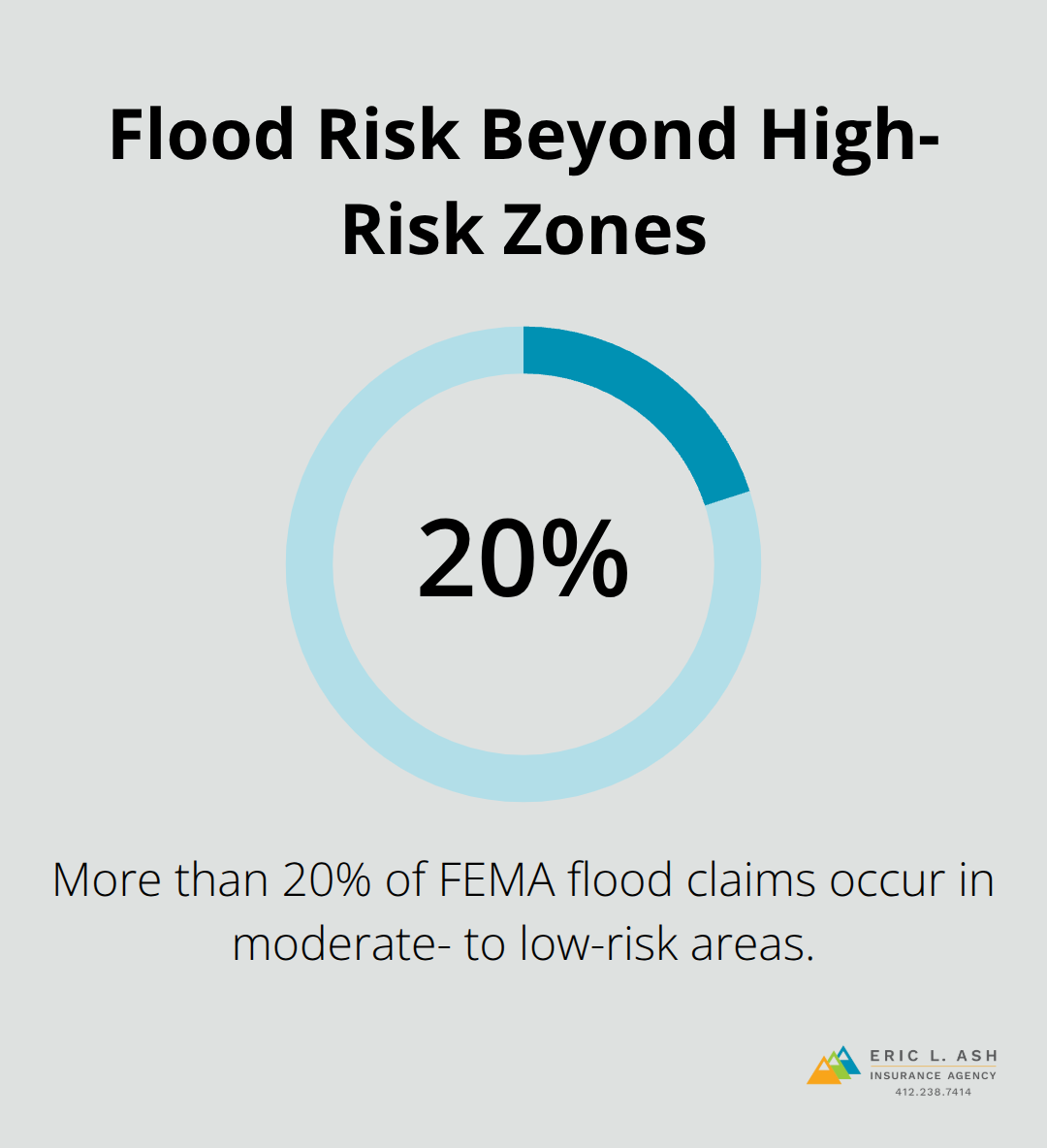
Your flood zone designation drives NFIP pricing heavily, but here’s the critical detail: more than 20 percent of flood claims occur in moderate- to low-risk areas according to FEMA data, meaning the official maps underestimate your actual risk. A licensed surveyor prepares an Elevation Certificate that reveals your property’s elevation relative to the Base Flood Elevation and can lower your risk designation with NFIP, potentially reducing your premium significantly. Deductibles matter too-choosing $5,000 instead of $1,000 lowers your annual premium, but you’ll pay that difference out of pocket when water enters your home.
What Flood Coverage Actually Protects
NFIP and private policies cover your home’s structural elements: foundation, electrical and plumbing systems, central HVAC, water heaters, furnaces, and built-in cabinetry. Contents coverage protects furniture, clothing, electronics, appliances, curtains, and area rugs-items you’d struggle to replace individually. What they explicitly don’t cover matters just as much: finished basements beyond basic structural elements, temporary housing costs, outdoor property like pools and decks, and often currency or high-value items.
How Property Characteristics Affect Your Rates
Premium factors extend beyond flood zone to property age, foundation type, and number of floors-newer homes built to current flood-resistant standards qualify for better rates because they’re simply less likely to suffer damage. An Elevation Certificate costs $300 to $500 but pays dividends if it qualifies you for better rates, especially in communities participating in the Community Rating System that offer additional discounts.
Reducing Your Premium Without Sacrificing Coverage
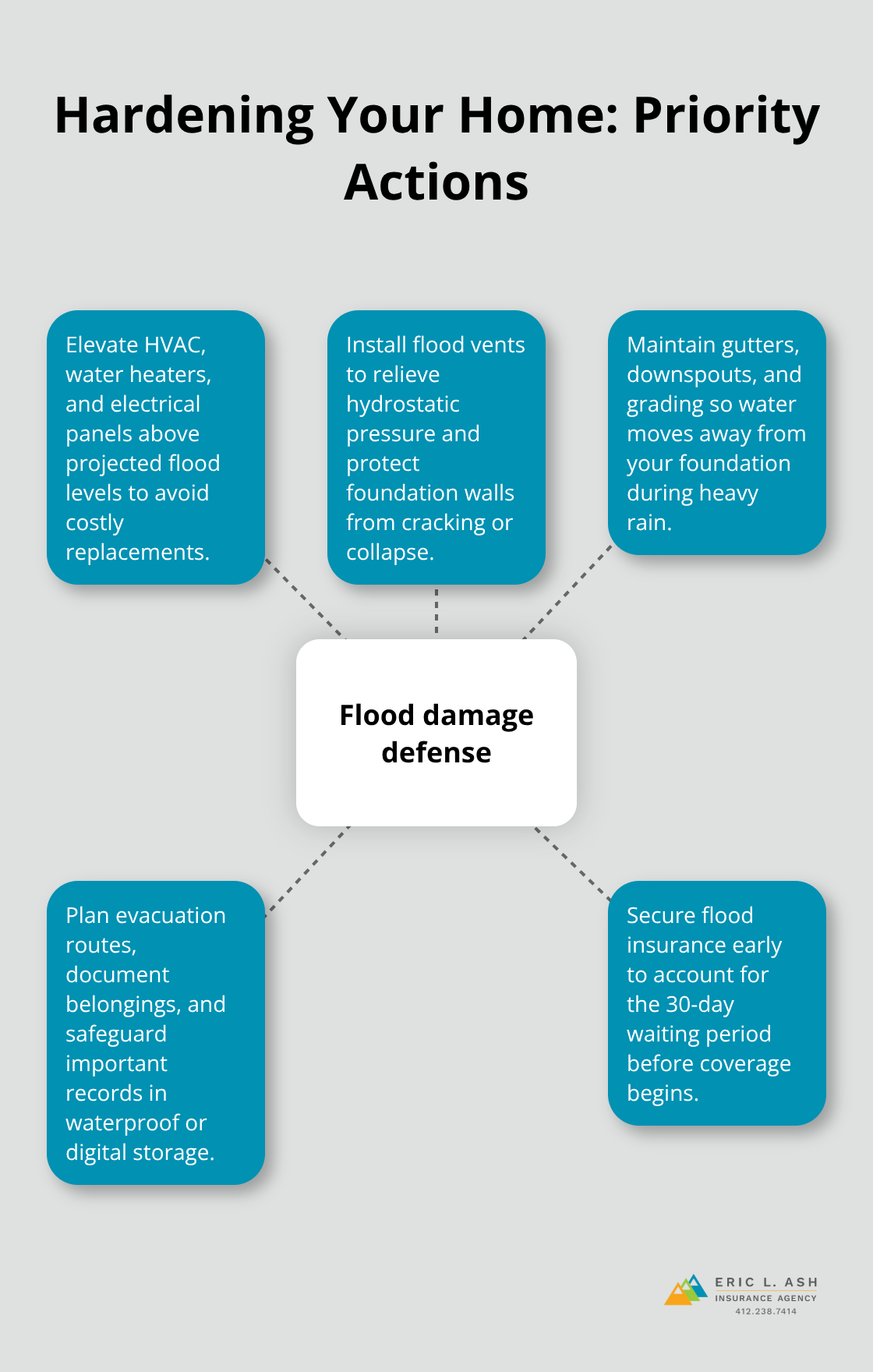
Elevating utilities and HVAC systems above projected flood levels and installing flood vents to relieve hydrostatic pressure are the most effective physical mitigation strategies, and some insurers reward these improvements with rate reductions. Maintaining continuous coverage without gaps prevents surcharges, so locking in a policy before you think you need it makes financial sense. The 30-day waiting period before coverage begins means securing a policy in June won’t protect you from July storms-timing matters. Bundling flood with your homeowners policy at the same agency simplifies claims handling and communication, though it rarely reduces the flood premium itself since NFIP pricing is regulated.
Finding the Right Coverage for Your Pennsylvania Home
As a veteran-owned, independent insurance agency in Pennsylvania, we leverage relationships with dozens of carriers to shop multiple markets and deliver competitive rates across both NFIP and private options. The right choice depends on your specific property, not generic recommendations. Understanding what physical improvements your home needs and what coverage limits match your actual replacement costs sets the foundation for the next critical step: taking action to harden your property against water damage.
How to Harden Your Pennsylvania Home Against Flood Damage
Water doesn’t wait for perfect conditions, and neither should your protection strategy. The most effective defense against flood damage combines physical improvements to your property with a realistic plan for when water arrives.
Elevate Critical Systems Above Flood Level
Elevating critical systems above your home’s projected flood level prevents thousands in replacement costs because HVAC systems, water heaters, and electrical panels are expensive and take weeks to replace during a disaster. Installing flood vents in foundation walls relieves hydrostatic pressure that can crack concrete and collapse walls, costing $10,000 to $25,000 in structural repairs according to FEMA guidance. These improvements aren’t theoretical-insurers offer measurable rate reductions when you complete them, sometimes cutting your annual flood insurance premium by 10 to 15 percent.
Start with a professional flood risk assessment of your specific property, which identifies exactly where water enters during heavy rainfall and which systems are most vulnerable. Your local county emergency management office can provide historical flood data showing how high water has reached in your neighborhood during past events, giving you a baseline for elevation decisions.
Maintain Drainage Systems Year-Round
Drainage systems fail during the exact moments you need them most, so you must maintain gutters, downspouts, and grading around your foundation as a monthly responsibility rather than an annual task. Clogged gutters during intense rainfall redirect water toward your foundation instead of away from it, and Pennsylvania’s frequent spring storms make this a constant concern. Extend downspouts at least 4 to 6 feet away from your foundation and grade soil to slope away from the house to prevent water from pooling against your walls.
Prepare for Evacuation and Recovery
You must identify evacuation routes, document your home’s contents with photos and receipts for insurance claims, and store important documents in waterproof containers or digital backups. During flooding events, you’ll have minutes to decide whether to stay or leave, and that decision becomes clearer when you’ve already planned it. Keep a go-bag with medications, irreplaceable documents, and cash accessible at all times during flood season.
Understanding your coverage limits matters here too-if your contents coverage maxes out at $100,000 with the NFIP, you already know that your antique furniture and electronics won’t be fully replaced, which changes what items you prioritize saving. Physical improvements, maintenance discipline, and realistic preparedness work together to minimize damage when flooding occurs in your Pennsylvania community.
Final Thoughts
Protecting your Pennsylvania home from flood damage requires three concrete actions: securing flood insurance coverage that matches your property’s actual replacement cost, completing physical improvements that reduce water entry, and maintaining those systems year-round. Standard homeowners policies won’t cover the damage, and waiting until storm season arrives means facing the 30-day waiting period that leaves you exposed during the exact months when flooding threatens most. PA flood insurance homes need both layers of protection working together-the financial safety net of a policy combined with the physical hardening of your property.
Your next step is straightforward: obtain a free flood insurance quote that compares both NFIP and private options for your specific address and property characteristics. An Elevation Certificate from a licensed surveyor costs $300 to $500 but often pays for itself through lower premiums if it qualifies you for a better risk designation. If your mortgage lender requires flood insurance because you’re in a high-risk zone, that decision is already made for you, but even homeowners without that requirement should carry coverage given the real flood risk across Pennsylvania’s river valleys and low-lying areas.
We at Eric L. Ash Insurance Agency shop multiple carriers to deliver competitive rates tailored to your property’s actual risk profile rather than generic recommendations. Visit Eric L. Ash Insurance Agency to discuss your specific situation with someone who understands Pennsylvania’s flood patterns and can match you with coverage that protects what you’ve built.
The information provided in this blog is for general informational purposes only and does not constitute legal, financial, or insurance advice. Coverage options, terms, and availability may vary. Please consult with a licensed professional for advice specific to your situation.