
PA Investment Property Guide: Navigating Landlord Coverage With Local Experts
Owning rental property in Pennsylvania comes with real financial exposure. Standard homeowners policies leave landlords vulnerable to gaps that can cost thousands when tenants get injured or rent stops flowing during emergencies.
We at Eric L. Ash Insurance Agency help Pennsylvania landlords build protection strategies tailored to their specific properties and tenant situations. This PA investment property guide walks you through the coverage types that actually matter and how to find the right insurance partner for your portfolio.
What Pennsylvania Landlords Actually Face With Insurance
Winter Damage and Aging Infrastructure Create Constant Risk
Pennsylvania’s rental market punishes landlords who skimp on insurance. Harsh winters mean frozen pipes that burst without warning, flooding basement units and destroying tenant belongings. The state’s aging housing stock-particularly in Philadelphia and Pittsburgh-compounds the problem, with outdated plumbing and electrical systems creating constant risk. When a pipe bursts and forces a tenant out for three weeks of repairs, a standard homeowners policy won’t reimburse the lost rent. That’s money straight out of your pocket. Philadelphia landlords collecting $2,000 monthly on a unit lose $6,000 in income during that repair window, and a homeowners policy simply doesn’t cover it.
Pennsylvania also sits in a region where ice dams, severe thunderstorms, and wind damage happen regularly, yet most standard policies cap or exclude coverage for the resulting water intrusion that damages walls, flooring, and tenant property.
Why Standard Homeowners Policies Fall Short
Standard homeowners insurance was built for owner-occupied homes, not investment properties generating income. Insurers treat rental units as commercial exposures, which means they either decline coverage outright or apply restrictions that create dangerous gaps. A tenant injured on your property-say, they slip on ice you didn’t salt, or a railing fails-can sue for medical bills and lost wages. Your homeowners policy won’t defend that claim because it excludes liability coverage for rental activities.
Equipment Breakdown coverage, which protects furnaces and water heaters, typically isn’t included either, and those systems fail constantly in older Pennsylvania buildings. Sewer and Drain Backup protection handles the backup failures that plague older Pennsylvania properties, yet standard policies omit this coverage entirely.
What Landlord-Specific Policies Actually Protect
Landlord-specific policies close these gaps with purpose-built protections. Property coverage with replacement cost rebuilds structures after fire or storm damage. General Liability with $1 million per occurrence shields you from injury lawsuits. Loss of Rental Income coverage actually reimburses lost rent during repairs-the protection that standard policies refuse to provide.
These policies also include Ordinance or Law coverage, which pays for code-required upgrades after a loss (critical for historic properties where replacement must meet current building codes, not original specifications). When you work with an independent agency that represents multiple carriers, you gain access to these specialized coverages designed specifically for Pennsylvania’s rental environment and its unique weather and property-age challenges.
The Three Coverages That Actually Protect Pennsylvania Rental Properties
Dwelling Fire Insurance: Replacement Cost Versus Actual Cash Value
Dwelling Fire Insurance protects the physical structure of your rental property from fire, wind, hail, theft, and vandalism. The critical detail most landlords miss is the difference between actual cash value and replacement cost. Actual cash value reimburses you for the depreciated worth of damaged materials, which means a 30-year-old roof gets pennies on the dollar. Replacement cost coverage rebuilds or repairs to current standards without depreciation deductions, which matters enormously in Pennsylvania where code-required upgrades often cost 20–40 percent more than original construction methods.
When a fire damages a historic Philadelphia rowhouse, the city requires upgrades to meet current electrical and plumbing codes, not restoration to 1920s specifications. Replacement cost coverage handles that gap; actual cash value leaves you paying the difference from your own pocket. Ordinance or Law coverage, included in specialized landlord policies, pays for these code-required upgrades after a loss-a protection that standard homeowners policies omit entirely.
Loss of Rent Reimbursement During Repairs
Loss of rent reimbursement while repairs happen is also included, though the duration and limits vary significantly between carriers. Some policies cap rent recovery at 12 months of lost income, while others limit it to the time repairs reasonably require. Philadelphia landlords collecting $2,000 monthly on a unit need to verify their policy covers the full three-to-six-month repair timeline for major structural damage.
Without this protection, you absorb 100 percent of lost income while still paying the mortgage, property taxes, insurance, and maintenance costs. A single month of vacancy on a $2,000-per-month unit costs you that full amount out of pocket, plus utilities and potential property damage during the repair period.
General Liability: Defending Against Injury Claims
General Liability coverage defends you when a tenant or visitor suffers injury on your property and sues for medical bills, lost wages, or pain and suffering. A slip-and-fall claim in winter, a faulty handrail, or a dog bite can trigger lawsuits exceeding $50,000 in legal defense costs alone, before any settlement. Pennsylvania courts award substantial damages for permanent injury, and liability limits of $300,000 per occurrence provide minimal protection for multi-unit properties.
Try $1 million per occurrence as the baseline for Pennsylvania landlords, with $2 million aggregate protection for larger portfolios. This coverage also shields you from allegations of discrimination or Fair Housing Act violations, which increasingly appear in tenant disputes. When you work with an independent agency that represents multiple carriers, you gain access to carriers offering these liability limits at competitive rates tailored to your specific property profile.
Selecting Coverage Limits That Match Your Risk
Policies vary on whether they reimburse the full monthly rent or only the net profit margin after expenses, and on how long coverage extends during repairs. Some carriers limit reimbursement to 12 months, while others extend it to 18 or 24 months depending on the loss severity. Pennsylvania landlords should demand clarity on these limits before binding coverage, since extended repairs from winter damage or major structural issues can easily exceed standard timeframes.
The right coverage limits depend on your property value, location, and tenant income levels. A multi-unit building in Pittsburgh faces different risks than a single-family home in a rural area, and your policy should reflect those differences. Shopping multiple carriers reveals which ones offer the flexibility and limits your portfolio actually needs-a process that independent agencies handle by leveraging relationships with dozens of carriers across Pennsylvania.
Finding the Right Insurance Partner for Your Pennsylvania Rental
National Carriers Miss Pennsylvania’s Rental Realities
National insurance companies operate on volume and standardization, which means their underwriters rarely understand Pennsylvania’s specific rental challenges or the regional variations that drive premium differences between Pittsburgh and Philadelphia. When you call a national carrier’s 1-800 number, you reach someone in a call center who processes applications using a checklist, not someone who knows that a rowhouse in Rittenhouse Square faces different liability exposure than a duplex in Scranton. Independent agencies leverage relationships with dozens of carriers, which gives you access to underwriters who specialize in Pennsylvania rental properties and can adjust coverage and pricing based on your actual risk profile rather than a corporate template.
An independent agent shops your property across multiple carriers simultaneously, revealing which ones offer replacement cost coverage for historic properties, which ones include Ordinance or Law protection, and which ones cap Loss of Rent reimbursement at 12 months versus extending it longer. National providers often decline coverage for older Pennsylvania properties outright or apply restrictions that make the policy nearly worthless, while specialized carriers understand that aging plumbing and outdated electrical systems are standard in Pennsylvania and price accordingly.
Why Independent Agencies Deliver Better Rates
When you obtain quotes from a national carrier and a local independent agency, you’ll notice the independent agency’s quotes often cost less because they match you with carriers that actually want your business rather than treating rental properties as a grudge line they tolerate. An independent agency representing multiple carriers can identify which underwriters compete aggressively for Pennsylvania rental properties and which ones price defensively.
Finding the right insurance partner for your Pennsylvania rental property means working with an agency that leverages relationships with multiple carriers to shop competitive markets and deliver rates backed by responsive, local customer service. This approach means you access carriers that specialize in Pennsylvania rental coverage rather than settling for a national company’s standard template.
Essential Questions to Ask Before Committing
Start by asking any potential agency whether they represent carriers that offer separate Equipment Breakdown and Sewer & Drain Backup coverage, since these protections are non-negotiable for Pennsylvania rental properties but many carriers bundle them as optional add-ons or exclude them entirely. Demand specifics on Loss of Rent coverage duration and whether the policy reimburses full monthly rent or only net profit after expenses, because that difference determines whether you stay cash-flow positive during a major repair.
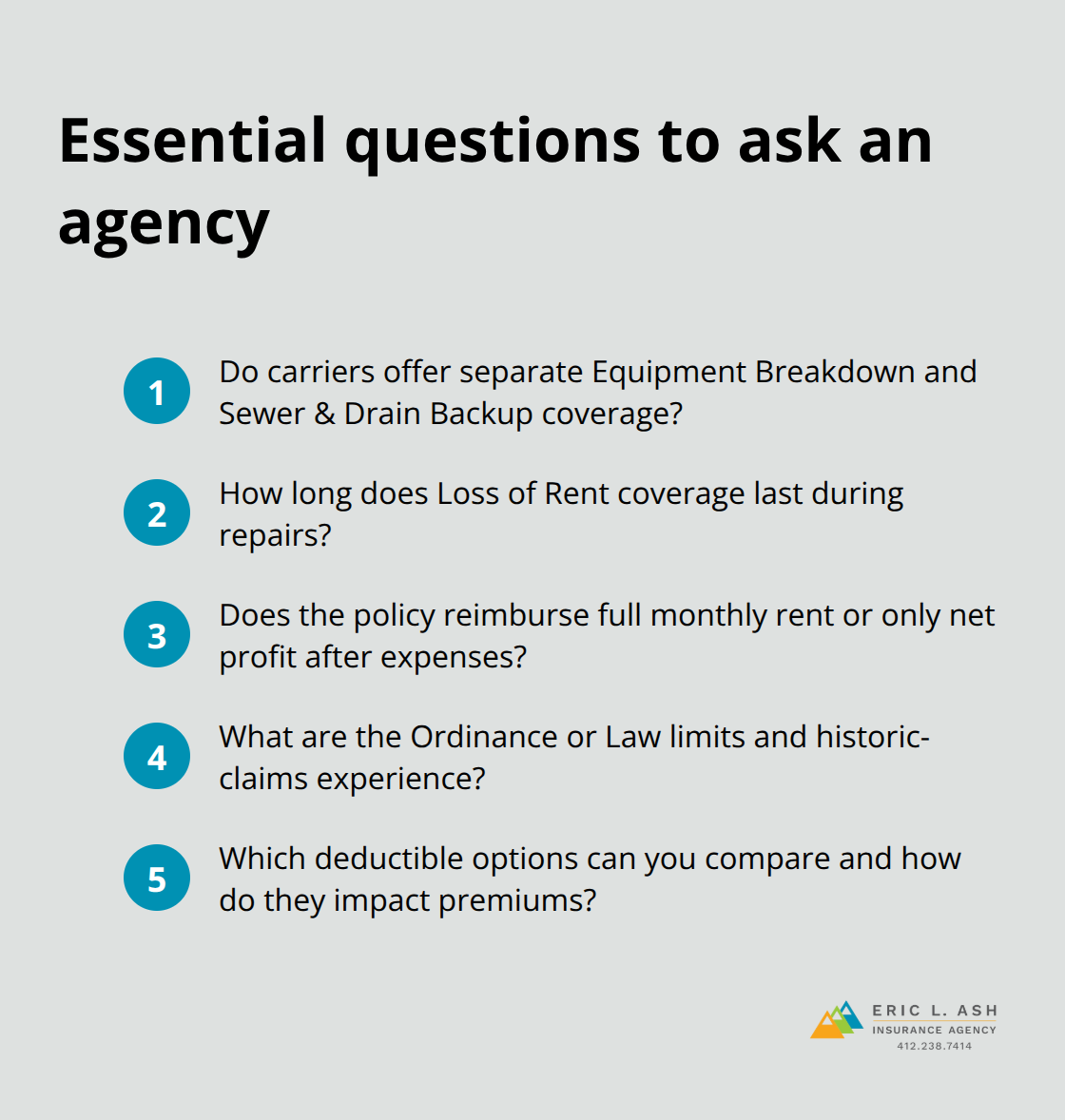
Ask about Ordinance or Law coverage limits and whether the carrier has experience with historic property claims in Pennsylvania, since code-required upgrades after a loss can exceed 40 percent of the repair cost and you need confirmation the policy covers that gap. Request a detailed comparison showing deductible options ranging from $2,500 to $10,000, since raising the deductible often cuts premiums by 20–30 percent and lets you self-insure smaller losses while maintaining catastrophic protection.
Comparing Quotes Across Multiple Carriers
Get premium quotes for the same coverage across at least three carriers before making a decision, because markets shift constantly and what was competitive last year may cost significantly more this year. A reputable independent agency will provide these comparisons without resistance and explain why they recommend one carrier over another based on your specific property profile and business goals. This transparency reveals which carriers offer the flexibility and limits your portfolio actually needs.
Final Thoughts
Pennsylvania landlords who skip landlord-specific insurance or settle for national carriers operating on templates absorb losses that adequate protection prevents. A frozen pipe, a liability lawsuit, or a month-long repair cycle wipes out your annual profit margin if your policy fails to cover Loss of Rent, General Liability, or code-required upgrades. The difference between solid protection and dangerous gaps comes down to whether you work with an agency that understands Pennsylvania’s rental environment or one that treats your property as a standard application.
Your coverage must match your actual risk, which this PA investment property guide emphasizes throughout. Philadelphia rowhouses face different exposures than Pittsburgh duplexes, and a 40-unit complex needs different limits than a single-family rental. Independent agencies representing multiple carriers match you with underwriters who specialize in Pennsylvania rental properties and adjust coverage based on your specific situation rather than a corporate template.
Contact Eric L. Ash Insurance Agency to discuss your rental property portfolio and access carriers that understand Pennsylvania’s rental challenges. We leverage relationships with dozens of carriers to shop competitive markets and deliver rates backed by responsive, local customer service. The right coverage protects your investment and keeps your business profitable when emergencies happen.
The information provided in this blog is for general informational purposes only and does not constitute legal, financial, or insurance advice. Coverage options, terms, and availability may vary. Please consult with a licensed professional for advice specific to your situation.