
Young driver insurance factors: What Really Impacts Your Auto Rates
Young drivers in Pennsylvania face some of the highest insurance premiums in the country. At Eric L. Ash Insurance Agency, we’ve seen firsthand how young driver insurance factors can swing rates by hundreds of dollars each year.
The good news? Most of these factors are within your control. Understanding what insurers actually measure-and how to work with those metrics-makes a real difference in what you pay.
Why Age Matters More Than You Think
Insurance Companies View Young Drivers as High-Risk
Insurance companies treat drivers under 25 as high-risk, and the numbers prove why. A 16-year-old in Pennsylvania pays roughly $4,769 annually for full coverage, while a 50-year-old pays about $1,216 for the same protection. That’s nearly four times more expensive. The gap narrows significantly as you age-by 17, premiums drop to $4,316; by 18, they fall to $3,808.
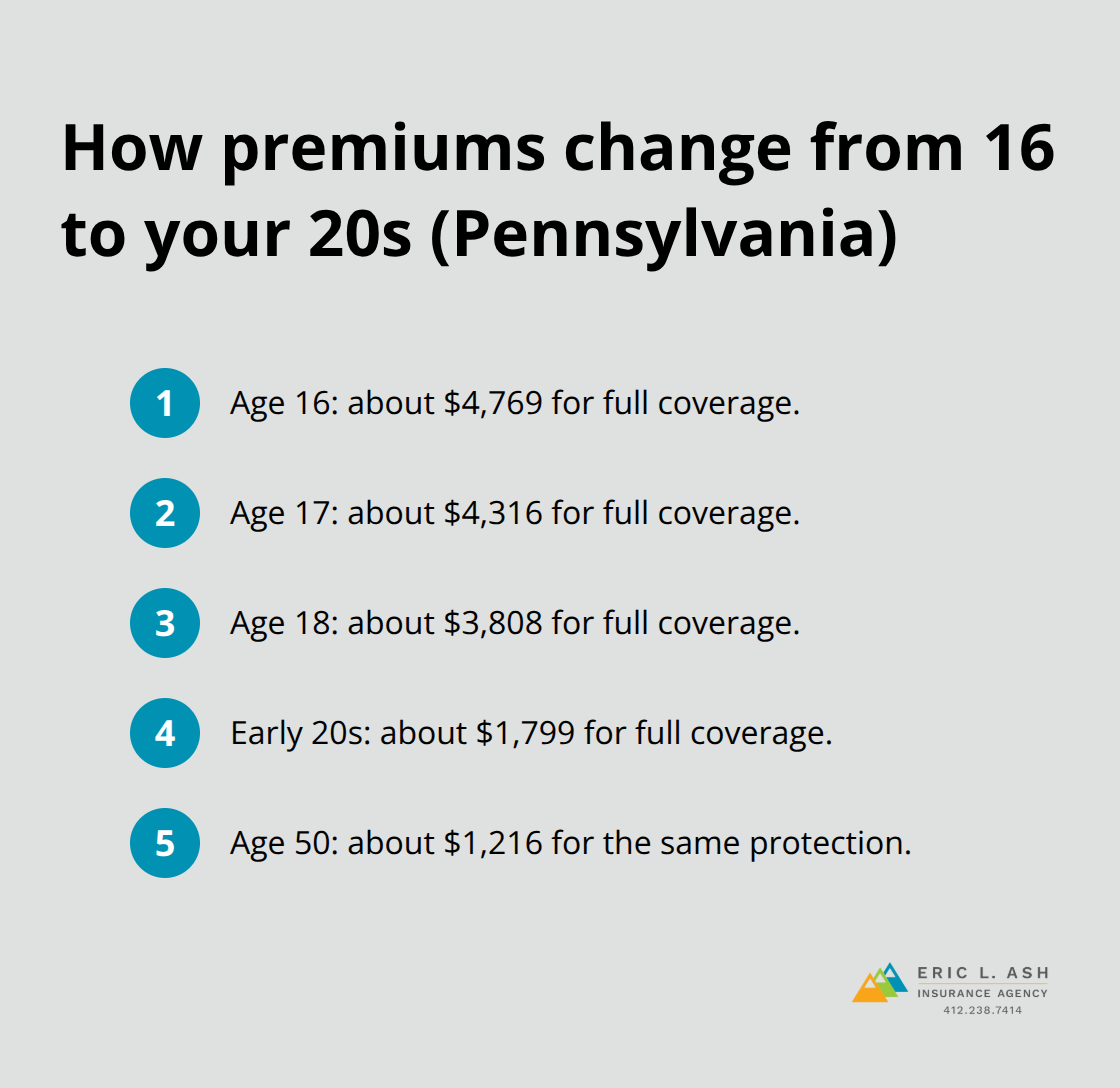
This steep decline continues through your early twenties, hitting $1,799 in your 20s. Insurance companies have decades of claims data showing that teen drivers have crash rates over 4 times those of drivers 20 and older per mile driven, which is why rates reflect that reality so sharply.
How Quickly Rates Drop as You Age
The good news is that this factor fixes itself automatically-you simply need to survive long enough to age out of the high-risk category. Each year you add to your life reduces your premium, even without any other changes to your policy. The steepest drops happen between 16 and 20, when rates fall by more than $1,600 annually. After your mid-20s, the rate of decline slows, but improvements continue into your 30s and 40s. This predictable pattern means young drivers can count on lower premiums as a matter of time, not effort.
Limited Driving History Amplifies Age-Related Costs
Limited driving history amplifies the age problem. When you’re 16 or 17, you have almost no track record for insurers to evaluate, so they default to worst-case assumptions. You haven’t proven you can avoid accidents, follow traffic laws, or handle emergency situations. This uncertainty costs money. However, once you hit your mid-20s and maintain a clean driving record for several years, insurers gain confidence in your actual behavior rather than relying on age-based stereotypes.
Build a Clean Record to Lower Rates Faster
The fastest way to reduce your rates isn’t waiting for your next birthday; it’s proving through consistent safe driving that you’re not the statistic insurance companies fear. Every year without an accident or violation directly translates into lower premiums. Starting with a good student discount if you qualify (typically a 3.0+ GPA or top 20% class ranking) or completing an approved driver education course can offset some age-related costs while you build that clean record. These early steps compound over time, bringing your rates down even further as you move into your 20s and beyond.
Your driving record and behavior matter just as much as your age, and that’s where you can take immediate action to control your costs.
How Your Driving Record Controls Your Rates
One accident or traffic violation costs far more than the ticket itself. In Pennsylvania, a single at-fault accident under $1,000 in damages affects your rates, though your exact increase depends on the type of accident and your insurer. Some insurers offer accident forgiveness programs, so you may not see a rate increase at all. A reckless driving citation runs $2,015 annually on top of your base rate, while an open container violation costs $1,847. Even a speeding ticket for going 16 to 20 miles over the limit lands you around $1,600 extra per year. One mistake wipes out years of safe driving discounts. A DUI or DWI adds approximately $1,083 to your annual premium in Pennsylvania and stays on your record for years, making it the single most expensive mistake you can make as a driver.
Every Violation Has a Price Tag
Young drivers especially need to understand that every decision behind the wheel carries a direct financial consequence. You cannot age your way out of a violation the way you age out of being 16. The financial impact compounds when violations stack up. Two speeding tickets in three years cost more than one ticket alone because insurers view repeat violations as evidence of reckless behavior rather than isolated mistakes. This pattern makes the difference between a minor rate increase and a major one.
Safe Driving Unlocks Real Savings
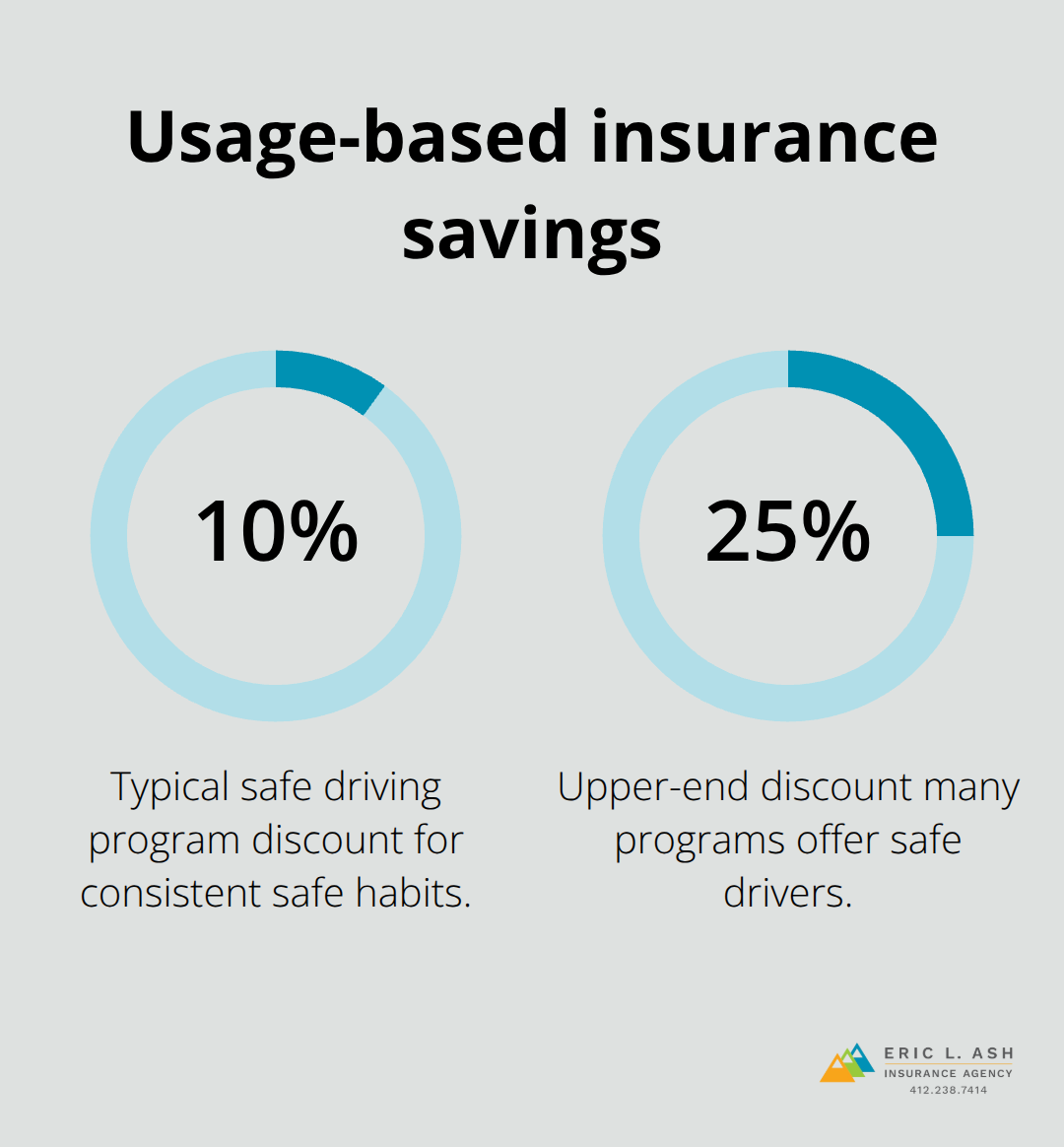
The counterpoint is equally powerful: a clean driving record becomes your strongest tool with insurers. After five years without an accident or violation, you qualify for claims-free discounts that meaningfully reduce what you pay. Some insurers offer monitoring programs like Steer Clear or Drive Safe & Save that track your actual driving habits through your phone or a device in your car. These programs often reduce premiums by 10 to 25 percent if you demonstrate safe behavior, and the discount applies regardless of your age.
Build Your Safety Record Early
Young drivers especially benefit from building a strong safety record early, locking in lower rates before you hit your mid-20s when rates naturally decline anyway. Combining a clean record with a good student discount (available for maintaining a 3.0 GPA or ranking in your class’s top 20 percent) or completing an approved driver education course multiplies your savings. The program essentially gives you control over your rate in real time. Treat your driving record not as something that happens to you, but as an active tool you manage to reduce costs month after month.
Your Vehicle Choice Shapes What You Pay
The vehicle you drive matters just as much as how you drive it. Sports cars and high-performance vehicles cost significantly more to insure than sedans or practical family cars because they carry higher repair costs and attract drivers who take more risks. Insurance companies charge more for vehicles with expensive parts, advanced technology, or powerful engines that increase accident severity. Your coverage choices and deductible amounts add another layer of control over your final premium.
What Your Vehicle Choice and Coverage Decisions Mean for Your Insurance Bill
Sports Cars and Practical Vehicles Create Different Price Tags
The car sitting in your driveway moves your insurance needle up or down faster than almost any other factor. Sports cars cost substantially more to insure than sedans because repair bills run higher and replacement parts cost more money. A sports car with a powerful engine and advanced technology creates higher claims costs when accidents happen, so insurers price that risk into your premium from day one. A practical sedan or used economy car keeps your insurance bill lower because repairs are cheaper and parts are readily available. If you’re a young driver shopping for your first vehicle, this single choice matters more than your age in some cases. Picking a safer, more affordable vehicle to insure can save you thousands over several years compared to a sporty alternative.
Why Vehicle Value Affects Your Rates
The vehicle choice compounds because young drivers already face the highest premiums in Pennsylvania, so adding a high-cost vehicle on top of that age factor creates a financial burden that lasts until you’re in your mid-20s. Insurance companies calculate premiums based partly on what it costs to repair or replace your car. An older Honda Civic costs far less to insure than a new BMW because parts are cheaper and repair shops charge less labor time. When you shop for your first car, ask your insurance agent what similar models cost to insure before you buy. This conversation takes minutes but saves thousands over the life of your ownership.
Liability, Collision, and Comprehensive Coverage Explained
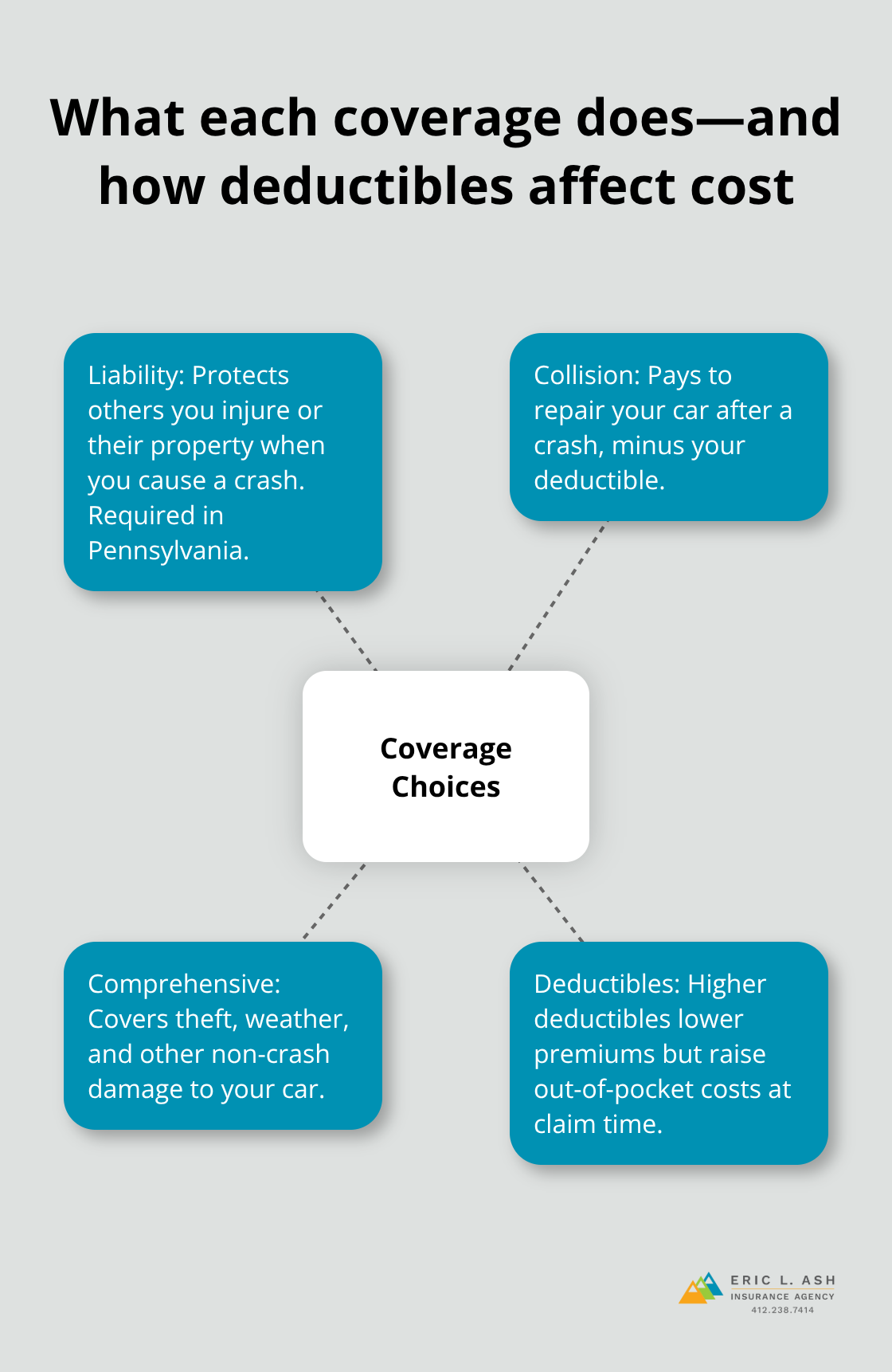
Your coverage selections and deductible amounts give you direct control over what you pay each month, though this control comes with real trade-offs you need to understand. Liability coverage protects the other person if you cause an accident, collision covers damage to your own car from crashes, and comprehensive covers theft, weather, and other non-crash damage. In Pennsylvania, you must carry liability insurance, but collision and comprehensive are optional unless you’re financing your car.
Young drivers often think dropping collision and comprehensive saves money, but this strategy backfires when an accident happens and you’re responsible for repairs out of pocket.
When to Drop or Keep Collision Coverage
If your car is worth less than $5,000, dropping collision makes sense because the premium savings exceed what you’d likely need for repairs. For vehicles worth more, keeping collision and comprehensive protects you from catastrophic costs. Your deductible amount directly controls your premium: a $1,000 deductible costs roughly $162 less annually than a $500 deductible in Pennsylvania, but you must have that $1,000 available when you need to file a claim. Young drivers should choose deductibles they can actually afford to pay without financial hardship, not just the option that looks cheapest on paper. Higher deductibles work only if you maintain an emergency fund specifically for this purpose.
Final Thoughts
Young driver insurance factors come down to three elements you control: your driving record, your vehicle choice, and your coverage decisions. You cannot change your age, but you can build a clean driving record starting today and select a vehicle that costs less to insure. Every year without an accident or violation directly reduces your premium, and every smart vehicle choice compounds those savings.
The steps to lower your costs start immediately. If you qualify for a good student discount through a 3.0 GPA or top 20 percent class ranking, apply it now. Complete an approved driver education course if you haven’t already, and choose a practical vehicle over a sports car. Set your deductible at a level you can actually afford to pay, then drive safely and avoid violations at all costs-one reckless driving citation costs $2,015 extra annually and wipes out years of safe driving benefits.
Shopping around with multiple carriers reveals how dramatically rates vary for the same driver and vehicle (one insurer might quote $2,400 annually while another quotes $1,900 for identical coverage). Young drivers especially benefit from comparing quotes because insurers weight age and driving history differently. Contact Eric L. Ash Insurance Agency to explore coverage options that fit your budget and protect your future.
The information provided in this blog is for general informational purposes only and does not constitute legal, financial, or insurance advice. Coverage options, terms, and availability may vary. Please consult with a licensed professional for advice specific to your situation.