
Teen Driver Policy Alternatives: Finding The Right Fit For Young Drivers
Getting your teen behind the wheel is a big step. At Eric L. Ash Insurance Agency, we know that finding the right teen driver policy alternatives can feel overwhelming for Pennsylvania families.
The good news is you have options. We’ll walk you through the coverage choices available and show you how to keep costs manageable without sacrificing protection.
Why Teen Drivers Cost More to Insure
Teen drivers represent a significant insurance risk, and Pennsylvania insurers price policies accordingly. Drivers 16 to 19 years old were involved in 4.8 fatal crashes per 100 million travel miles, compared to 3.3 for drivers 20 to 24. This reality directly affects what you pay. Teens lack the behind-the-wheel experience that builds judgment and reflexes. They misjudge distances, react slowly in emergencies, and make impulsive decisions on the road. Insurance companies factor these realities into premium calculations. A teen added to your policy will increase your overall auto insurance costs, sometimes significantly. The exact amount depends on your teen’s age, driving record, the vehicle they’ll drive, and your location in Pennsylvania, but you should expect rates to be higher than for an experienced adult driver.
The Experience Gap Creates Real Risk
Pennsylvania’s Graduated Driver Licensing system, which began in 1999 and was updated in 2011, addresses the inexperience problem directly. Learner’s permit holders must complete at least 65 hours of supervised driving (including 10 hours at night and 5 hours in poor weather). Despite these requirements, the transition from supervised to independent driving remains steep. Teens face nighttime driving restrictions until age 18 and passenger limits that vary by license stage. These restrictions work-the updated GDL system reduced crashes and fatalities for 16- and 17-year-olds in Pennsylvania.
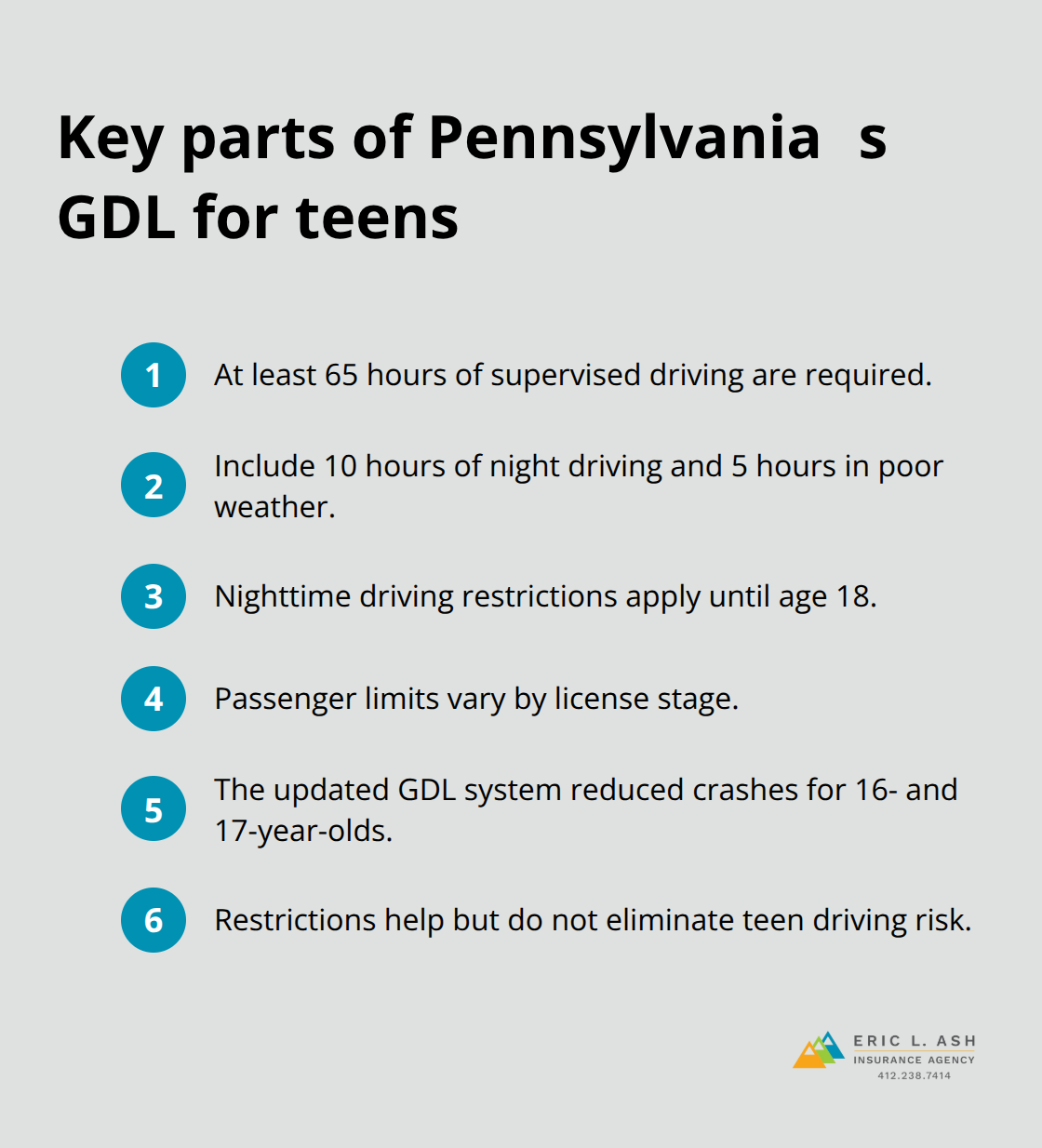
However, restrictions alone don’t eliminate risk. Insurers know that teen drivers still have significantly higher accident rates than adults. Your family’s insurance costs reflect the statistical likelihood that a teen driver will file a claim sooner rather than later.
What You’ll Actually Pay
Adding a teen to your existing policy costs less than purchasing a standalone teen policy. However, the total cost increase can range from 50% to 100% or more, depending on circumstances. Some families find that their teen qualifies for discounts that offset part of this increase-good student discounts, driver safety course discounts, or usage-based insurance programs can help. Still, the baseline cost will be higher. Understanding this reality upfront helps you make informed decisions about which policy structure works best for your family and budget. The key is knowing what options exist and which discounts your teen actually qualifies for in Pennsylvania. That’s where exploring your specific policy alternatives becomes essential.
Teen Driver Policy Options: Comparing Cost and Coverage
Adding Your Teen to Your Existing Policy
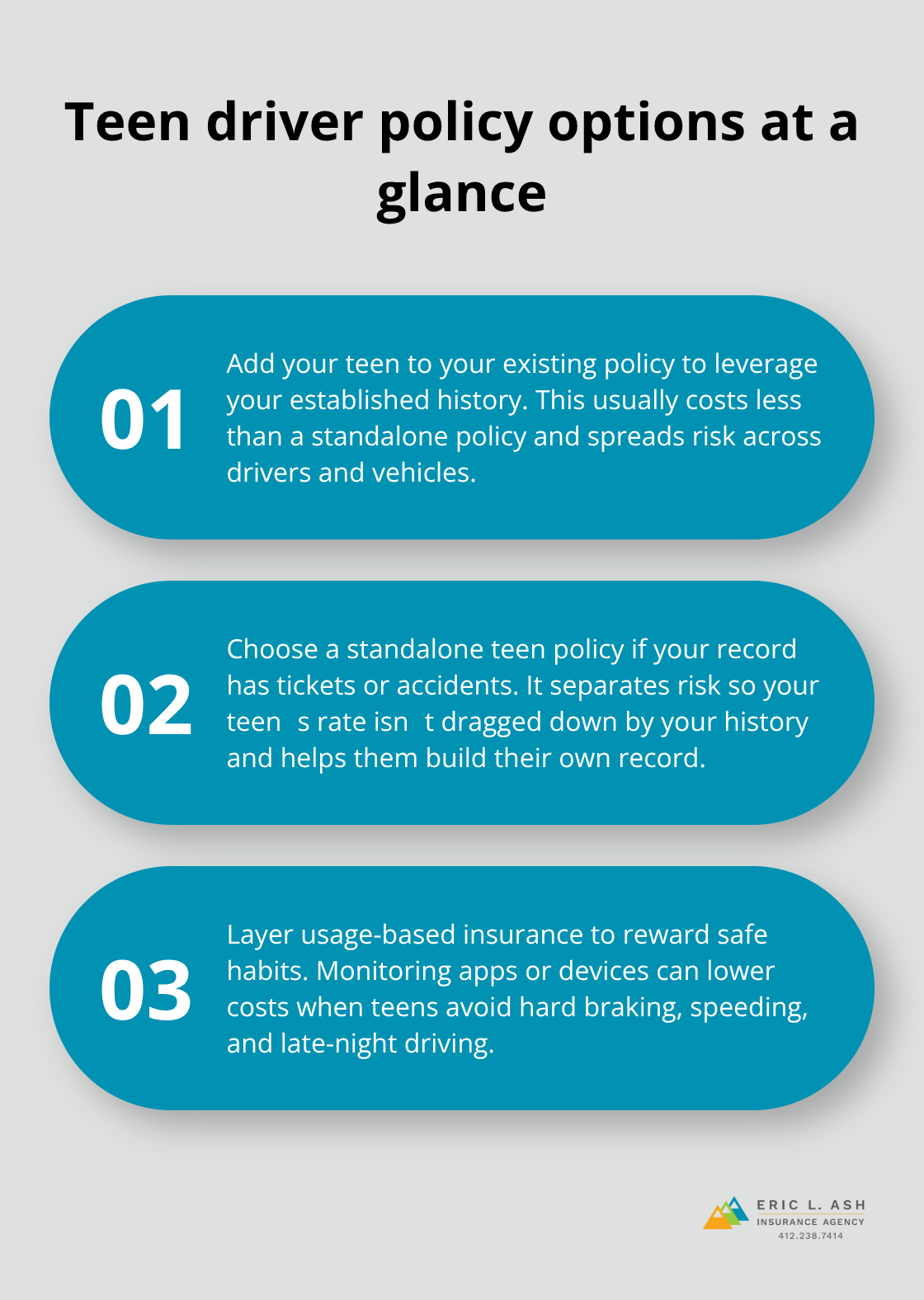
Adding your teen to your existing auto policy almost always costs less than buying a standalone teen policy. When you add a teen driver to a parent’s policy, you spread the risk across multiple drivers and vehicles, which insurers reward with lower rates. A teen on a parent’s policy typically increases your premium by 50% to 100%, but a standalone teen policy often costs 20% to 40% more than that same addition. The math is straightforward: insurers prefer established policyholders with clean records, and your history as a parent carries weight in their pricing models.
There’s a critical exception to this rule. If you have a poor driving record with tickets or violations, adding your teen to your policy might actually backfire. Your teen’s rates will be penalized by your record, sometimes making a separate policy cheaper. Before deciding, run quotes both ways with a local agent.
The difference can be hundreds of dollars annually, and you won’t know which option wins for your specific situation without comparing actual numbers.
Standalone Teen Policies: When They Make Sense
A standalone teen policy gives your teen their own coverage separate from your household policy. This option costs more upfront but protects your driving record from affecting your teen’s rates. If your record includes violations or accidents, a standalone policy often becomes the better financial choice despite the higher base premium.
Standalone policies also work well when your teen has their own vehicle or drives a family car regularly while you maintain a separate vehicle. The coverage structure remains simpler, and your teen builds their own insurance history from the start. This history matters when they turn 25 and rates begin to drop significantly.
Usage-Based Insurance: Monitoring Behavior for Savings
Usage-based insurance programs like Snapshot or DriveEasy represent a third path, and they work differently than traditional policies. These programs install a small device in your teen’s vehicle or use your phone to monitor driving habits over 30 to 60 days. Safe drivers who avoid hard braking, speeding, and nighttime driving earn discounts during the monitoring period. DriveEasy is designed to promote safe driving with personalized discounts based on safe driving behavior.
The appeal is obvious: your teen’s behavior directly controls the cost. However, these programs work best when your teen is actually a safe driver. If your teen struggles with speeding or aggressive driving, the monitoring period becomes expensive evidence rather than a savings opportunity. Additionally, not all insurers offer these programs in Pennsylvania, so availability varies. Usage-based insurance works as a supplement to either an added teen or standalone policy, not a replacement. The device or app sits on top of your existing coverage structure.
Stacking Discounts to Lower Your Teen’s Rate
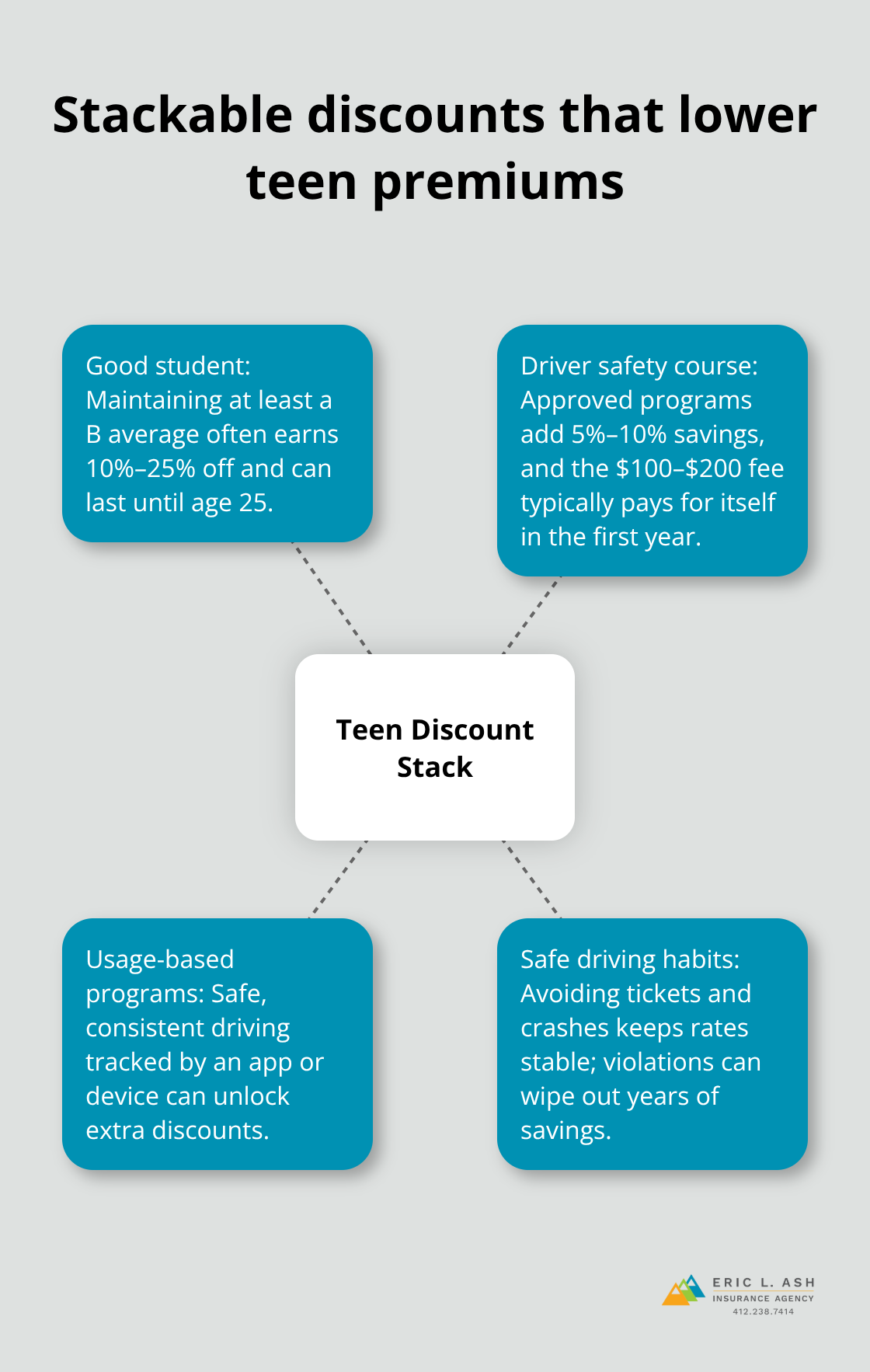
If your teen qualifies for a good student discount (typically a B average or better), you’re looking at an additional 10% to 25% savings depending on the insurer. Combine that with a driver safety course discount (often 5% to 10%), and your teen’s policy becomes significantly more affordable. These discounts apply regardless of whether your teen is added to your policy or carries a standalone policy.
Your teen’s vehicle choice also affects the final cost. Safer cars with lower theft rates cost less to insure than high-performance or luxury vehicles. An older, reliable sedan will generate lower premiums than a sports car, even with identical coverage levels. Raising your deductible from $500 to $1,000 also lowers your premium, though it means paying more out of pocket if your teen files a claim.
Making Your Decision
The real decision comes down to your teen’s driving record, your family’s record, and whether your teen qualifies for specific discounts in Pennsylvania. Each situation is different. A local agent can run multiple scenarios and show you exactly what each option costs for your household. The cheapest option on paper might not account for discounts your teen qualifies for or exceptions based on your driving history. Getting actual quotes removes the guesswork and reveals which policy structure truly saves your family the most money. Once you’ve narrowed down your policy structure, the next step involves selecting the right coverage limits and optional protections for your teen’s specific situation.
How Discounts and Safe Driving Cut Your Teen’s Insurance Costs
The gap between a teen’s baseline insurance premium and what your family actually pays comes down to three concrete factors: academic performance, a completed driver safety course, and safe driving habits over time. Families reduce their teen’s insurance costs by 15% to 35% when they stack these discounts together, and the process is straightforward once you know which discounts apply in Pennsylvania.
Good Student Discounts Reward Academic Achievement
A good student discount rewards teens who maintain at least a B average or place in the top 20% of their class. Most insurers offer 10% to 25% savings for this qualification, and the discount typically lasts until your teen turns 25. This means the savings compound over years, not months. If your teen maintains a 3.0 GPA or higher, contact your insurer immediately to add this discount to the policy.
Homeschooled teens can qualify through standardized test scores, so that option isn’t limited to traditional students.
Driver Safety Courses Pay for Themselves
The second major discount comes from a completed approved driver safety courses, which most insurers reward with an additional 5% to 10% off your premium. Pennsylvania recognizes these courses as evidence that your teen received formal instruction beyond the state’s Graduated Driver Licensing requirements. The course investment typically costs $100 to $200 and pays for itself within the first year through insurance savings. After your teen completes the course, the discount applies indefinitely unless your teen receives traffic violations that trigger a rate increase.
Safe Driving Habits Control Long-Term Costs
Safe driving habits create the final layer of cost control, and this is where your teen’s actual behavior on the road matters most. Every year without an accident or traffic violation keeps your teen’s rate stable or potentially lowers it, assuming your teen maintains the good student discount and your family’s policy remains claim-free. If your teen receives a speeding ticket or causes an accident, the rate increase will likely exceed the savings from all other discounts combined, making prevention far more valuable than any discount strategy. This is why setting clear expectations about distracted driving, speed limits, and passenger limits makes financial sense alongside safety sense.
Usage-Based Programs Reward Consistent Safety
Some insurers offer usage-based monitoring programs that provide additional discounts for consistently safe driving. These programs work best when your teen is already a careful driver rather than as a corrective tool. The combination of good student status, a completed safety course, and a clean driving record can reduce your teen’s annual insurance costs by 25% to 35% compared to a teen with none of these factors (depending on your insurer and location in Pennsylvania).
Final Thoughts
You now have a clear picture of the three core teen driver policy alternatives available to Pennsylvania families: adding your teen to your existing policy, purchasing a standalone teen policy, or layering usage-based insurance on top of either option. Your driving record, your teen’s qualifications for discounts, and Pennsylvania’s coverage requirements determine which path saves your family the most money. A single accident or speeding ticket erases years of savings from good grades and safety courses, so safe driving habits control your long-term costs far more than any discount strategy.
The next step is getting actual quotes that reflect your specific situation. We at Eric L. Ash Insurance Agency work with multiple carriers across Pennsylvania to find competitive rates tailored to your teen’s needs. Whether you’re adding a teen to an existing policy, exploring standalone coverage, or comparing usage-based programs, a local agent can run scenarios showing exactly what each option costs for your household and help you select coverage limits that match Pennsylvania’s minimum requirements while protecting your family’s assets.
Contact us today to discuss teen driver policy alternatives and discover how much you could save while keeping your teen protected on Pennsylvania roads.
The information provided in this blog is for general informational purposes only and does not constitute legal, financial, or insurance advice. Coverage options, terms, and availability may vary. Please consult with a licensed professional for advice specific to your situation.