Commercial Auto Insurance PA: Coverage for Fleets and Vehicles

Commercial Auto Insurance PA: Coverage for Fleets and Vehicles

Running a fleet in Pennsylvania means managing multiple vehicles, drivers, and risks simultaneously. Commercial auto insurance PA protects your business from liability claims, accidents, and equipment damage that could drain your budget.

We at Eric L. Ash Insurance Agency see too many business owners operating with gaps in their coverage. This guide shows you what protection actually matters for your fleet and where most policies fall short.

What Your Commercial Auto Policy Actually Covers

Liability Coverage: The Foundation That Falls Short

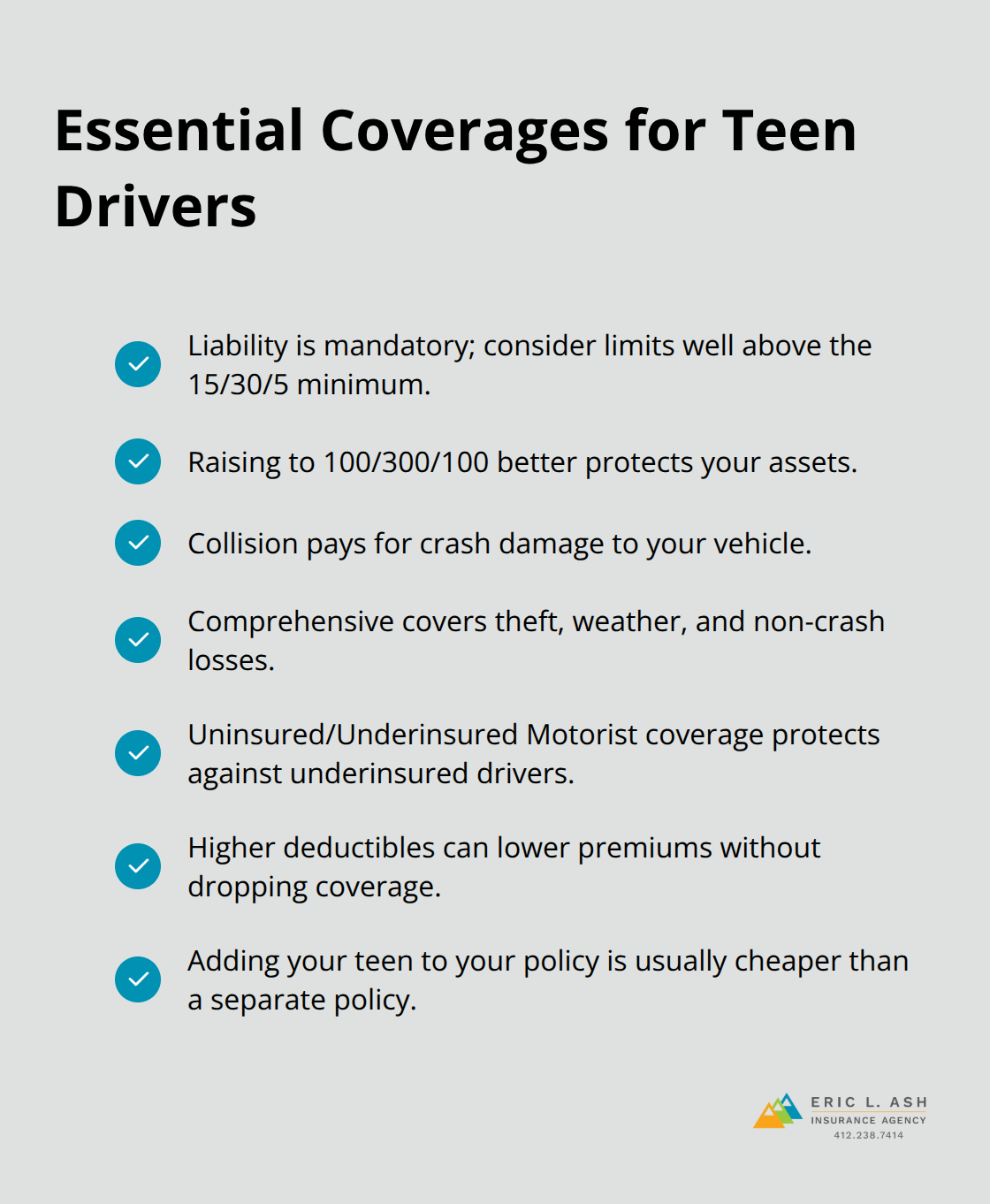
Pennsylvania’s minimum liability requirement of 15/30/5 (bodily injury per person, per accident, and property damage) leaves most fleets dangerously exposed. A single serious accident involving your vehicle can exceed these limits within seconds. We recommend doubling or tripling these minimums depending on your operation, especially if you run multiple vehicles.

Bodily injury liability covers medical expenses, lost wages, and legal fees when your driver injures someone else. Property damage liability pays for repairs to others’ vehicles, buildings, or infrastructure your vehicle damages. Pennsylvania also requires medical payments coverage as a separate protection. This coverage activates regardless of fault and covers medical expenses after an accident, which matters since medical costs can accumulate quickly following an incident.

Collision and Comprehensive: Protecting Your Own Vehicles

Collision covers accident damage regardless of fault, which matters significantly in Pennsylvania where urban congestion and mountain terrain create frequent multi-vehicle incidents. Comprehensive protection handles theft, vandalism, weather damage, and animal strikes-risks that hit rural Pennsylvania counties particularly hard, where vehicle theft rates spike seasonally.

These two coverages work together to shield your fleet from the most common loss scenarios. Without them, a single accident or theft can force you to absorb thousands in repair costs while your vehicle sits idle and your operations suffer.

Checklist of core commercial auto protections Pennsylvania fleets should consider - commercial auto insurance PA

Uninsured Motorists and Specialized Protections

Uninsured and underinsured motorist coverage protects your business when another driver causes an accident but lacks adequate insurance or flees the scene. Pennsylvania law doesn’t mandate this coverage, but operating without it exposes you to absorbing repair costs and medical expenses out of pocket. This gap alone has bankrupted small fleets after serious collisions.

Contractors transporting tools, food trucks with equipment, and service vehicles carrying high-value materials need additional cargo protection beyond standard commercial auto policies. Non-owned auto coverage extends your liability protection when employees use personal vehicles for business tasks, and hired auto coverage applies when your business rents vehicles for operations. These specialized coverages prevent gaps that could leave your business financially exposed when standard liability limits prove insufficient.

Your fleet’s specific risks determine which additional protections matter most. The next section examines how fleet size and daily operations shape your coverage strategy.

How to Lower Costs Across Your Fleet

Driver training and vehicle maintenance Cut Premiums

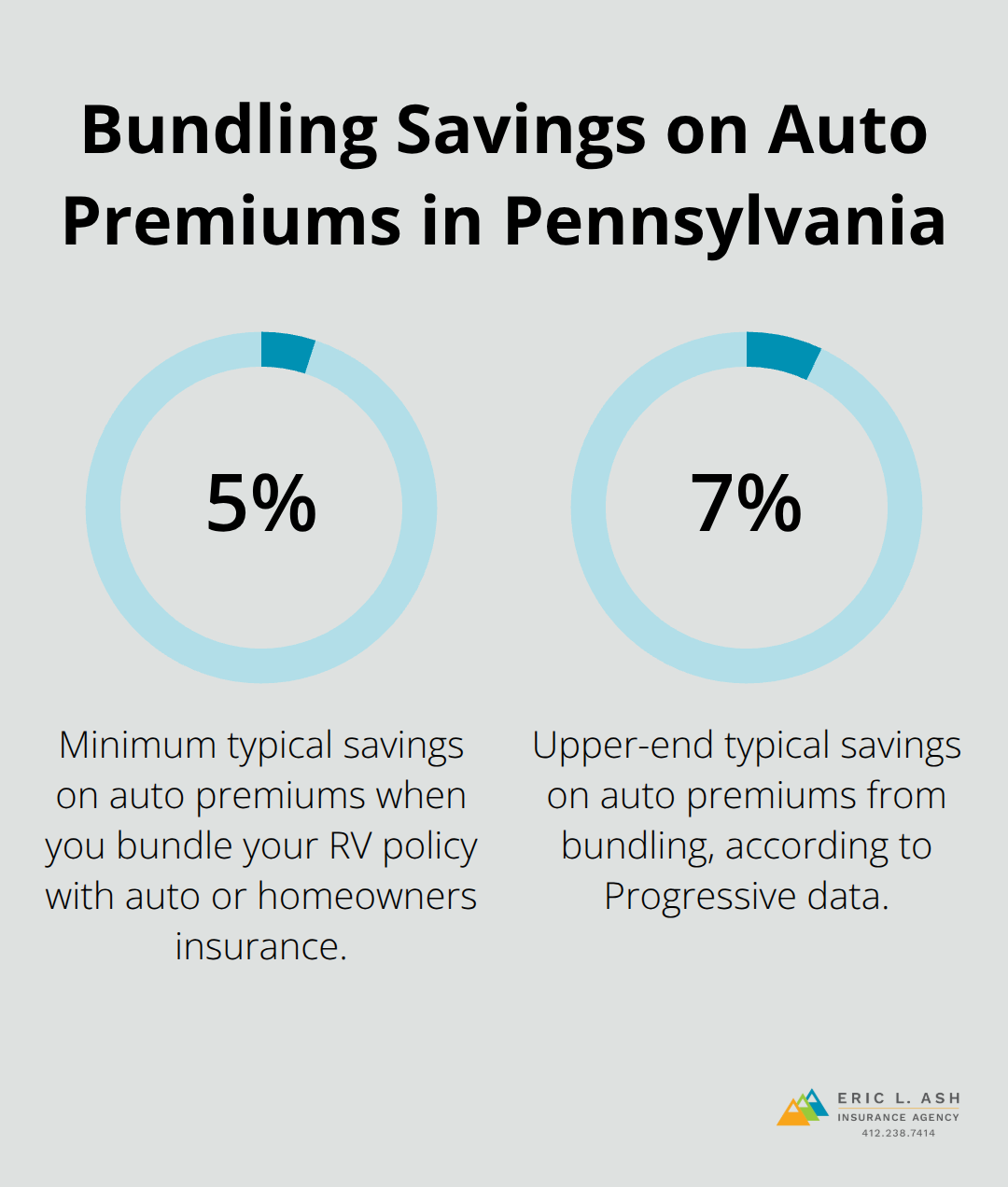
Driver training and vehicle maintenance form the backbone of lower insurance premiums for Pennsylvania fleets. Contractors, food service operators, and delivery companies cut their annual insurance costs by 10-15% through documented safety programs and consistent maintenance schedules. Insurance carriers reward fleets that invest in driver safety because accidents cost them money, and they pass those savings directly to you through lower premiums.

Bar showing 10% to 15% insurance premium savings from safety and maintenance programs

A commercial driver safety course covering defensive driving, load securing, and Pennsylvania winter driving conditions typically costs $200-400 per employee but reduces accident frequency enough to offset that investment within six months. Vehicle maintenance tracking matters equally-carriers want proof that your fleet receives regular inspections, tire rotations, and brake checks aligned with PennDOT requirements. Fleets that maintain detailed service logs and address mechanical issues before they cause accidents see measurable rate reductions at renewal time.

Fleet Management Systems Reveal Hidden Cost Drivers

Multi-vehicle fleets face unique cost challenges because claims on any single vehicle can trigger rate increases across your entire account. This reality demands a systematic approach to tracking expenses and claims patterns across all vehicles. You need to know which vehicles generate the most claims, which drivers cause the most damage, and whether certain routes or times of day correlate with higher accident rates.

Fleet management tools with GPS tracking and onboard diagnostics provide this data automatically-systems cost roughly $30-50 per vehicle monthly but reveal exactly where risk concentrates in your operation. A Pennsylvania manufacturing company discovered through GPS data that one driver consistently exceeded speed limits in residential areas, leading to three minor accidents in eighteen months; retraining that driver eliminated subsequent claims and saved the company roughly $2,000 in premium increases.

Customizing Coverage Prevents Overpaying and Underprotecting

Coverage customization based on fleet size and usage prevents overpaying for protections you don’t need while ensuring you carry adequate limits for your actual exposure. A five-vehicle plumbing contractor needs different coverage than a twenty-vehicle delivery fleet, and a contractor whose vehicles stay within a 25-mile radius faces different risks than one operating across three states.

Your coverage limits should reflect your highest-value claim exposure-if a serious accident could cost $150,000 in medical bills and vehicle damage, your liability limits should exceed that figure significantly. Pennsylvania’s minimum 15/30/5 liability requirement protects the state, not your business; try 100/300/100 as a practical baseline for most commercial fleets, with higher limits if your vehicles operate on major highways or in densely populated areas where claims settle for more.

The specific vehicles you operate and the cargo they carry determine whether you need additional specialized protections beyond standard liability and collision coverage.

Where Standard Policies Leave Your Fleet Exposed

Pennsylvania’s Minimum Limits Create False Security

Pennsylvania’s minimum liability limits of 15/30/5 create a dangerous false sense of security that evaporates the moment a serious accident occurs. A single incident involving a commercial vehicle can generate $100,000 or more in combined medical bills and property damage within hours, yet these minimum limits cap out at $30,000 per accident for bodily injury and $5,000 for property damage. Most business owners discover their coverage falls catastrophically short only after an accident happens. Standard commercial auto policies often lack the specialized protections that contractors, service businesses, and equipment-heavy operations actually need.

Tools and Equipment Fall Through Coverage Gaps

A roofing contractor whose truck carries $15,000 in tools faces a coverage disaster if those tools get stolen or damaged, since standard commercial auto policies explicitly exclude tools and materials inside vehicles. A plumbing service operating with hired auto coverage thinks they’re protected when employees use rental equipment vans, but that coverage only addresses liability-not damage to the rental vehicle itself. Your business absorbs those repair costs directly.

Three-item list illustrating common coverage gaps for commercial autos in Pennsylvania - commercial auto insurance PA

Food service operators transporting refrigerated equipment face an even steeper problem: if your truck’s refrigeration unit fails en route and spoils $8,000 worth of inventory, standard collision coverage won’t compensate you for the lost product.

Specialized Coverage Costs Less Than You Think

Contractors and service vehicles require cargo protection and specialized endorsements that most basic policies simply don’t include, yet these additions cost remarkably little relative to the exposure they address. A contractor paying $2,000 annually for standard commercial auto coverage might add cargo protection for $300-500 more, covering tools, materials, and equipment up to specified limits that actually match what sits in those vehicles. High-value equipment operations-whether that means HVAC contractors transporting compressors, electricians with specialized testing equipment, or landscaping companies with expensive machinery-need to verify their policy covers equipment while in transit, during loading and unloading, and when temporarily stored at job sites.

Regional Risks Demand Customized Limits

Pennsylvania’s mix of urban congestion and rural mountain routes creates additional exposure that standard policies underestimate. A delivery vehicle operating primarily in Philadelphia faces different risks than one covering Allegheny County’s terrain, yet many insurers apply one-size-fits-all limits that protect neither adequately. The solution demands matching your coverage limits and specialized protections directly to your actual operation: if your business depends on vehicles carrying expensive equipment, your policy must explicitly cover that equipment with named limits and defined conditions. This requires moving beyond Pennsylvania’s minimum requirements and the industry’s generic approach to actually specifying what protection your fleet genuinely needs.

Final Thoughts

Pennsylvania business owners operating fleets face a straightforward choice: accept the financial devastation that comes from inadequate coverage, or invest in protection that actually matches your operation. The gaps we’ve outlined throughout this guide aren’t theoretical-they’re the exact exposures that force contractors, service businesses, and delivery companies into bankruptcy after a single serious accident. Your commercial auto insurance PA protection starts with rejecting the state’s minimum liability limits as sufficient, since doubling or tripling those minimums costs far less than absorbing a six-figure claim out of pocket.

Audit your current policy against your actual operation right now. If your vehicles carry tools, equipment, or materials, verify your coverage explicitly protects those assets during transit and at job sites. If employees use personal vehicles for business tasks, confirm you carry non-owned auto coverage, and if you rent vehicles occasionally, hired auto coverage must be in place before that first rental agreement. The most expensive mistake is discovering coverage gaps after an accident happens-a quick policy review now prevents that disaster.

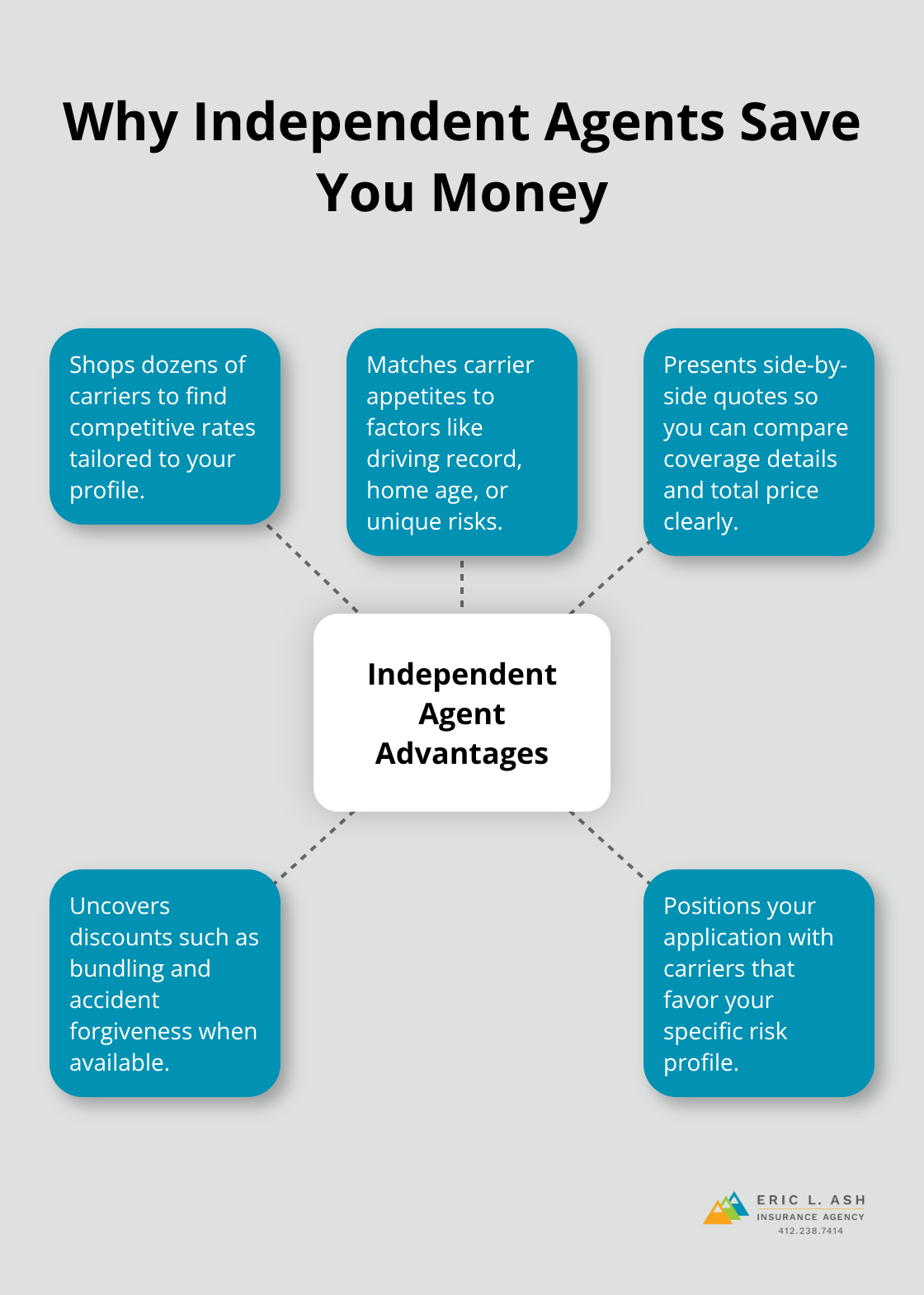
We at Eric L. Ash Insurance Agency work with Pennsylvania business owners to build commercial auto policies that protect what you’ve built without overpaying for unnecessary coverage. As an independent agency, we shop multiple carriers to find competitive rates backed by responsive local service. Contact us today to review your fleet’s coverage and get a competitive quote tailored to your Pennsylvania operation.

The information provided in this blog is for general informational purposes only and does not constitute legal, financial, or insurance advice. Coverage options, terms, and availability may vary. Please consult with a licensed professional for advice specific to your situation.

Teen Driver Insurance Pennsylvania: What Teens Need to Know

Teen Driver Insurance Pennsylvania: What Teens Need to Know

Teen drivers in Pennsylvania face some of the highest insurance premiums in the country. The good news is that there are concrete steps you can take right now to lower those costs and build safer driving habits.

We at Eric L. Ash Insurance Agency help families navigate teen driver insurance Pennsylvania options every day. This guide walks you through exactly what affects your rates and how to reduce them.

What Your Teen’s Pennsylvania Insurance Premium Actually Costs

Pennsylvania teen drivers pay significantly more than adults, and the gap widens dramatically based on age. A 16-year-old pays roughly $8,003 per year according to The Zebra’s analysis of over 32 million insurance rates, compared to about $5,690 at age 19. That’s a $2,313 difference in just three years of driving experience. The state requires minimum liability coverage of $15,000 per person and $30,000 per accident for bodily injury, plus $5,000 for property damage. These minimums are non-negotiable if your teen drives legally in Pennsylvania, but they represent the bare floor. Many families need additional protection through collision and comprehensive coverage, especially if the vehicle is financed or leased. The real cost depends on what your teen drives, where they live within Pennsylvania, and their driving record from day one.

Age Makes an Enormous Difference

Pennsylvania doesn’t ban age-based pricing like California, Hawaii, and Massachusetts do, so insurers charge substantially more for younger drivers. The progression is steep: 16-year-olds average nearly $8,000 annually, 17-year-olds drop to about $6,981, and at 18 the rate falls to $6,506. This reflects insurers’ data showing that 16-year-olds have a per-mile crash rate roughly 1.5 times higher than 18 and 19-year-olds, and a fatal crash rate approximately three times higher according to the Insurance Institute for Highway Safety. Male teen drivers pay up to 9 percent more than females at age 16 due to documented higher-risk behaviors. These aren’t arbitrary charges; they’re rooted in actual crash statistics. Your teen’s birthday matters more to their insurance bill than almost any other factor during these early years.

Three key age milestones and how they affect teen auto insurance costs in Pennsylvania - teen driver insurance Pennsylvania

Where You Live in Pennsylvania Changes Everything

Pennsylvania’s rates vary wildly across location and surrounding ZIP codes. Some states exceed $10,000 annually for teen coverage, while North Carolina sits around $3,692 per year. Pennsylvania falls somewhere in the middle-to-higher range, but specific premiums depend heavily on urban versus rural areas, population density, and local claim history. You should shop around every six months after your teen turns 16 if you want competitive pricing. Representative quotes from major insurers in Pennsylvania show Travelers at $51 monthly, GEICO and Erie at $68, State Farm at $74, and Auto-Owners at $97 for good drivers aged 16 to 24. These variations prove that one company’s quote can be $46 cheaper per month than another’s, totaling over $550 annually.

Compact list comparing monthly teen auto insurance quotes from major carriers in Pennsylvania - teen driver insurance Pennsylvania

As a veteran-owned, independent insurance agency in Pennsylvania, we leverage relationships with dozens of carriers specifically to help families find those competitive gaps rather than accept the first quote.

What Happens Next With Your Teen’s Rates

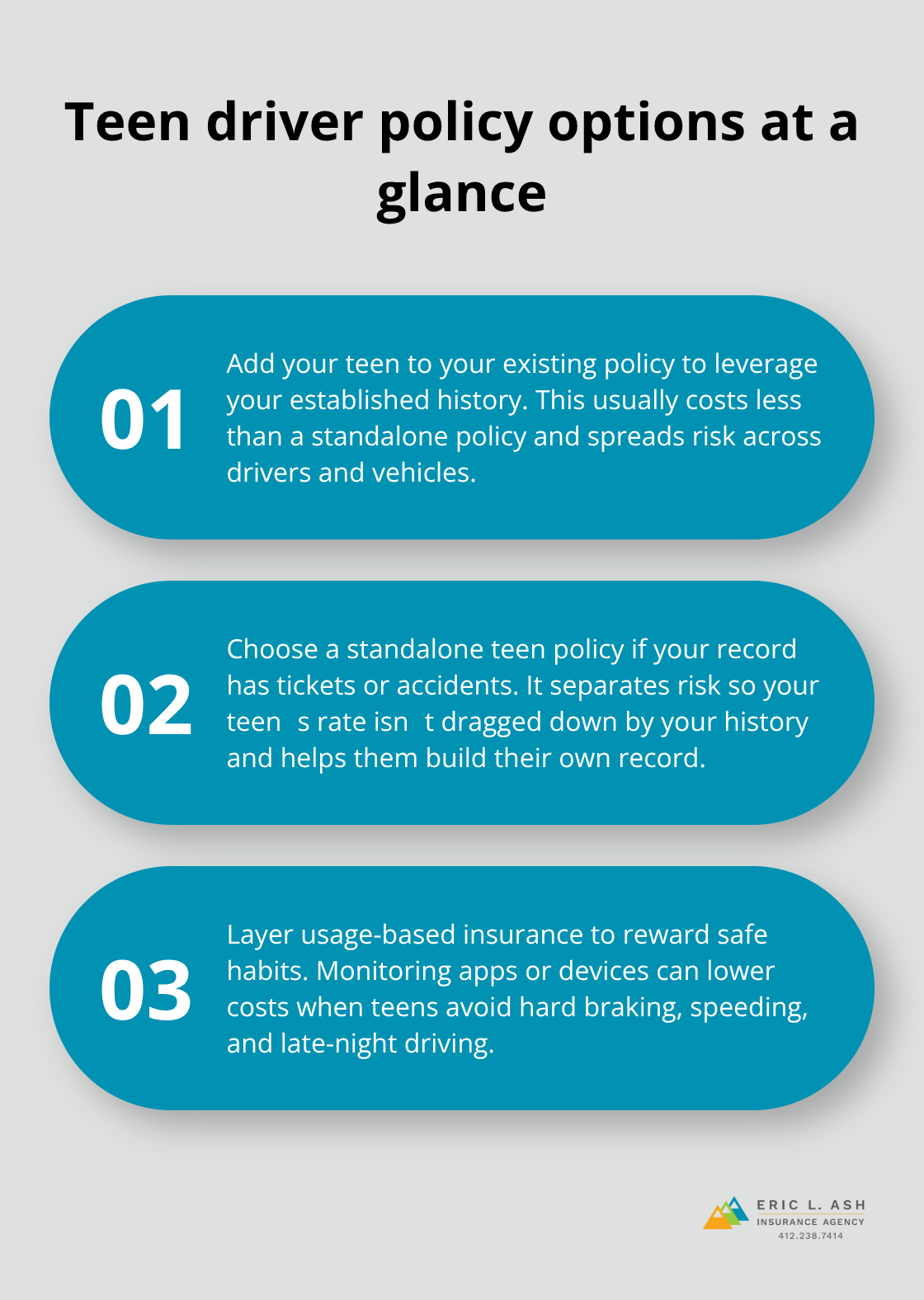
Your teen’s premium doesn’t stay frozen at age 16. Adding a teenage driver to your insurance policy can significantly increase your premiums due to their inexperience and higher risk factors, but each year of clean driving history lowers the cost, and most insurers reduce rates significantly until around age 25 (assuming no major violations or accidents). The vehicle itself also affects pricing-a low-value car under $4,000 costs less to insure than a high-performance vehicle, and you can cut costs further by dropping collision and comprehensive on older vehicles. Your teen’s driving record from the first day matters tremendously; even one ticket or minor accident can spike premiums or make it cheaper to move them to their own policy rather than keeping them on yours. The next section covers specific actions you can take right now to lower these costs before your teen even gets behind the wheel.

How to Cut Your Teen’s Insurance Costs Before They Get a License

The fastest way to lower your teen’s insurance premium is to act before they turn 16. Most families wait until their teen passes the driving test, then scramble to find affordable coverage. That approach costs money. Insurers reward specific actions taken early, and the savings stack quickly.

Complete a Defensive Driving Course

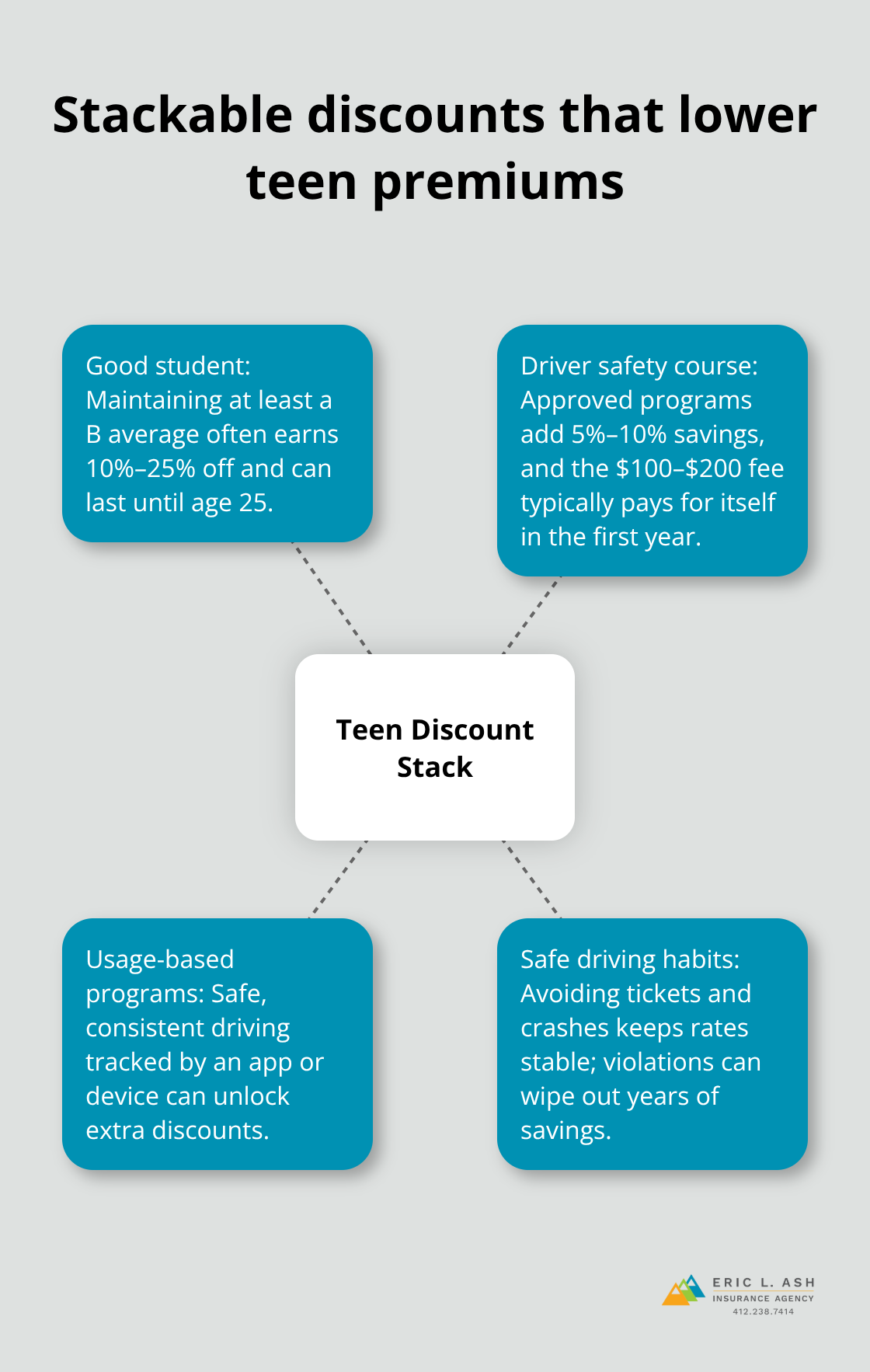
A defensive driving course completed before licensure triggers discounts immediately. Many major insurers including Liberty Mutual and GEICO offer discounts for drivers under 21 who complete a qualified program, but the discount amount varies by carrier and state. Contact your insurer before enrollment to confirm which courses qualify and what savings apply in Pennsylvania. The course teaches your teen to anticipate hazards and react defensively, which directly reduces crash risk and signals to insurers that you prioritize safety.

Maintain Good Grades for Immediate Savings

Good grades translate directly to lower premiums. A good student discount requires your teen to maintain at least a B average, and this discount applies to full-time students under 25 at most major carriers. The discount typically ranges from 10 to 15 percent depending on the insurer. Your teen’s GPA directly translates to money in your pocket, which motivates many families once they understand the connection. This discount costs nothing to earn and requires no additional paperwork beyond providing proof of grades when you apply.

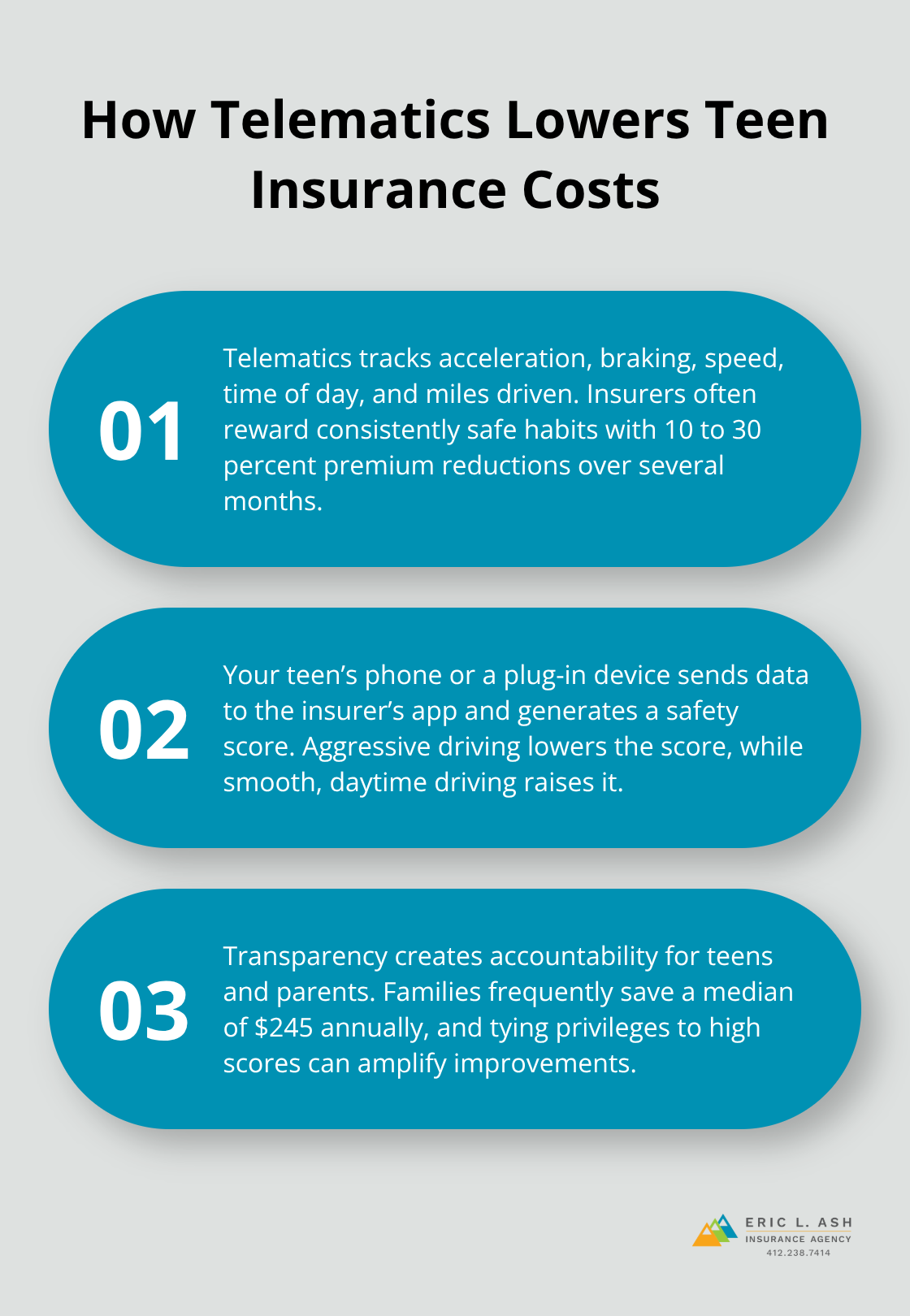
Enroll in a Telematics Program Early

Telematics and monitoring programs deliver the largest savings when your teen starts participation early. These apps track acceleration, braking, phone use, and nighttime driving, then provide feedback to help your teen understand exactly which behaviors spike crash risk. Safe drivers who participate in programs like Liberty Mutual’s RightTrack can see premium reductions up to 30 percent within months. The key is starting participation early in their driving journey when habits are still forming, not after they’ve already developed risky patterns. Insurers see participation as a signal that you’re serious about safety, and they price accordingly.

Stack Your Discounts for Maximum Impact

The real savings come from combining all three strategies. A teen who completes a defensive driving course, maintains a B average, and enrolls in a telematics program qualifies for multiple discounts that compound across different coverage types. One insurer’s discounts may not apply to another’s, which is why shopping around matters. As a veteran-owned, independent insurance agency in Pennsylvania, we leverage relationships with dozens of carriers to identify which specific discounts your carrier offers and ensure your teen qualifies for every one available. The difference between acting now and waiting is often $500 to $1,500 annually-money that compounds year after year as your teen builds a clean driving record.

Your teen’s actual driving behavior on the road will determine whether these discounts stick around. The next section covers the specific mistakes that erase savings and spike premiums, and how to help your teen avoid them.

What One Mistake Costs Your Teen’s Insurance

One speeding ticket at age 16 can lock your teen into higher premiums for years. Pennsylvania’s risk-based sanctions for under-18 drivers are severe: accumulating six or more points triggers a 90-day license suspension, and driving 26 mph or more over the limit results in an immediate suspension regardless of point count. The insurance consequence runs deeper than the suspension itself. A single violation signals to insurers that your teen engages in risky behavior, and that signal translates into rate increases that persist long after the ticket disappears from their driving record.

Hub-and-spoke diagram showing how a single teen driving mistake can trigger multiple, long-term insurance and licensing consequences

According to the Insurance Institute for Highway Safety, speeding and improper turning rank among the top contributing factors in teen crashes. Your teen’s first instinct after getting a ticket might be to hide it from you, but the insurer will find it during the next renewal. At that point, keeping them on your policy might actually cost more than moving them to their own separate policy.

How Distracted Driving Multiplies Your Costs

Distracted driving compounds this problem dramatically. The CDC documents that teen drivers have higher rates of distracted driving than older drivers, and a single accident caused by phone use doesn’t just spike your premium-it creates a claim history that follows your teen for years. If your teen causes an accident while texting at age 16, that claim will be visible to insurers until age 21 or later depending on your state’s reporting window. The accident itself matters less than what caused it; an insurer reviewing a distracted-driving claim will price your teen’s risk substantially higher than someone who had a single unavoidable collision.

The Claim-Filing Dilemma

Filing a claim early in your teen’s driving history creates a permanent record that underwriters reference forever. Many families face a genuine dilemma: their teen causes minor damage worth $2,000, but filing a claim triggers a $3,000 rate increase over three years. In that scenario, paying out of pocket and skipping the claim saves money overall. However, this calculation only works for minor damage; if your teen causes serious injury or major property damage, not filing a claim exposes your family to liability that far exceeds the premium increase. Pennsylvania’s minimum coverage of $15,000 per person and $30,000 per accident sounds adequate until an accident involves multiple vehicles or serious injury. One bad decision at age 16-speeding through a school zone, checking a text message at a red light, or filing a claim for preventable damage-can cost your family thousands in elevated premiums across multiple years.

Making Financial Consequences Visible

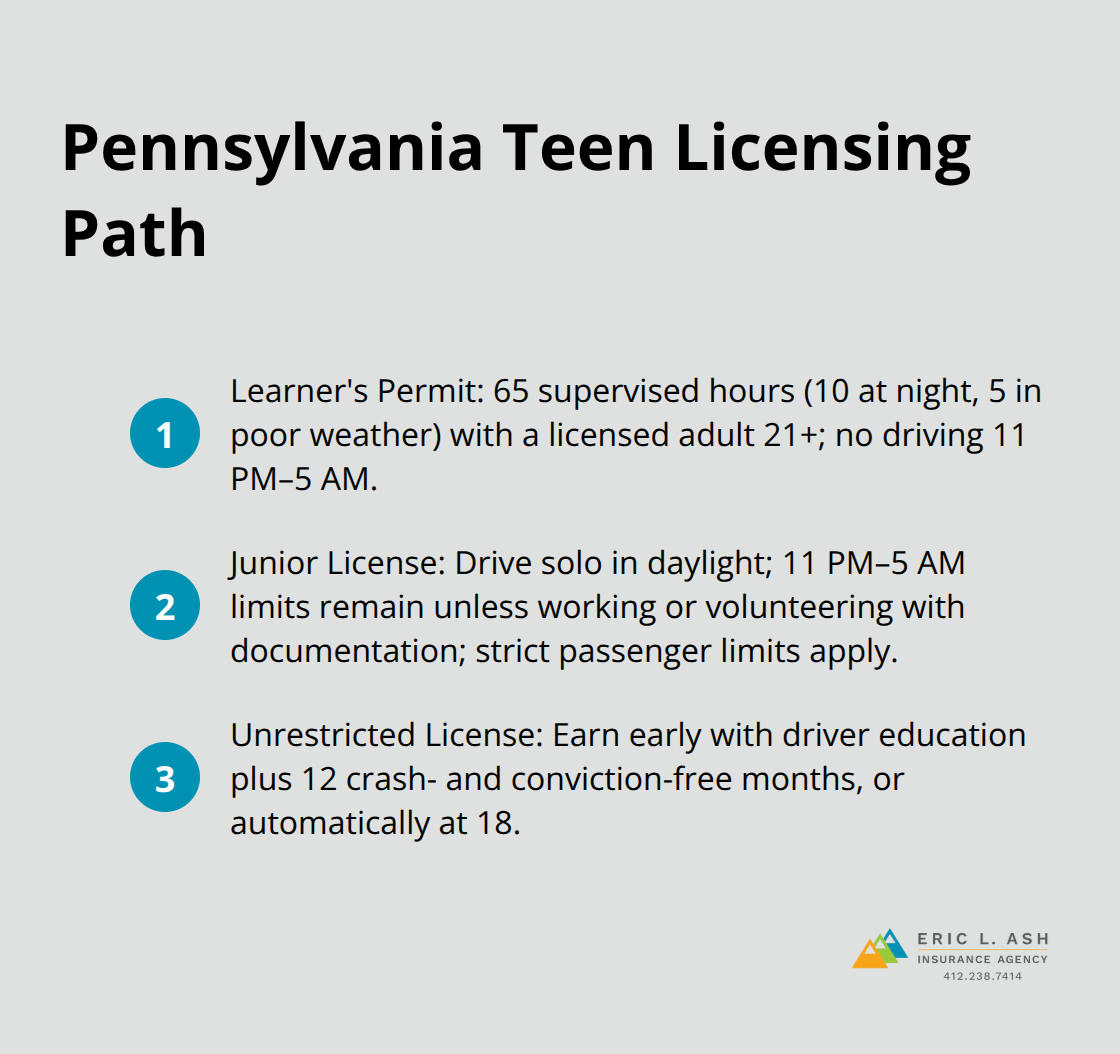
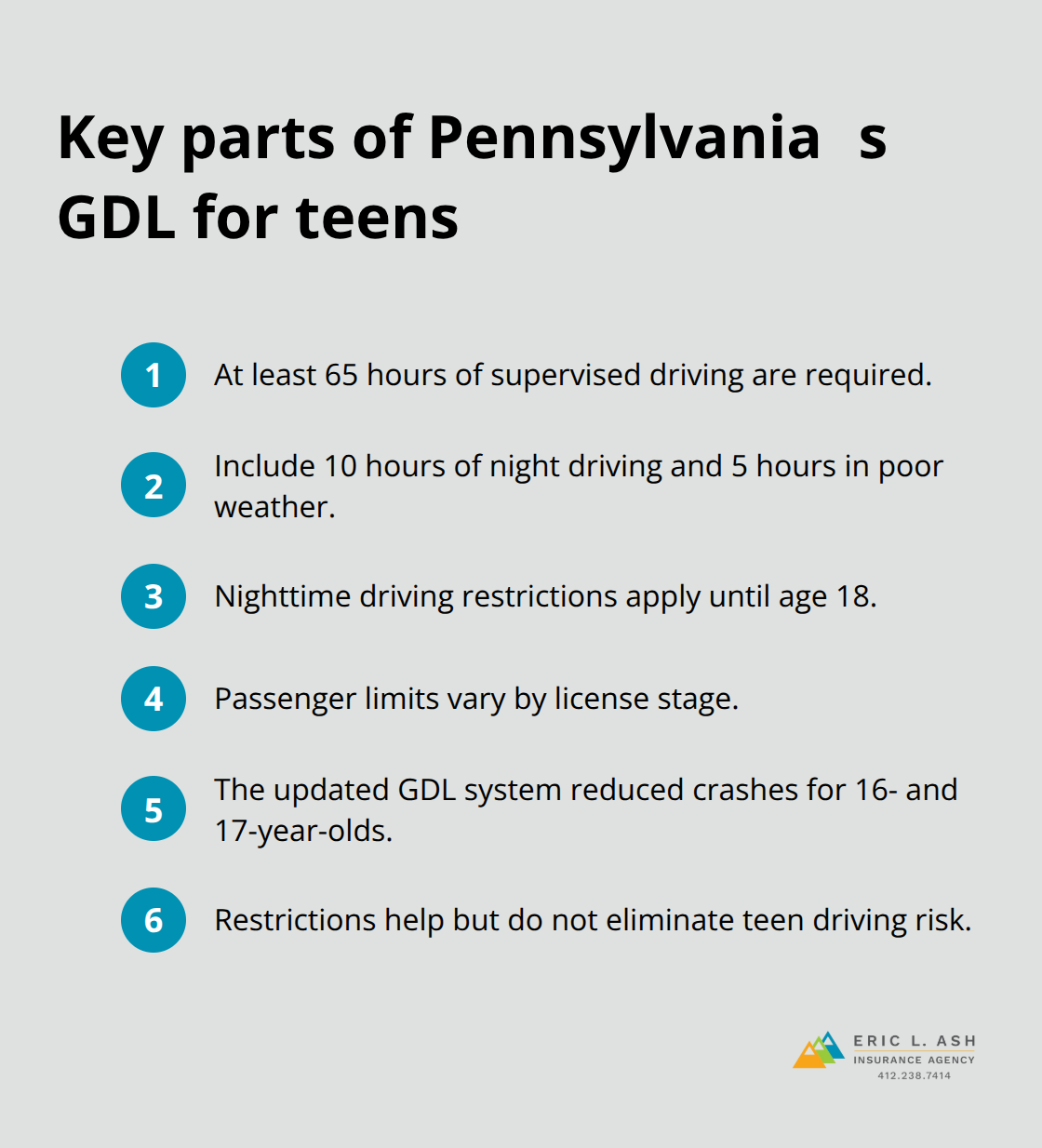
The solution isn’t lecturing your teen about safety; it’s making the financial consequences visible and specific. Show your teen the exact dollar amount their speeding ticket will add to your premium. Calculate what a distracted-driving accident would cost in rate increases over five years, then compare that number to the cost of a new phone mount or hands-free system. Use Pennsylvania’s Graduated Driver Licensing restrictions as a framework rather than a frustration-the nighttime driving ban from 11 PM to 5 AM and passenger limits exist specifically because these situations create crash risk. Your teen’s first six months of driving determine whether they build a clean record that qualifies for premium reductions or a violation history that locks them into higher rates. As a veteran-owned, independent insurance agency in Pennsylvania, we help families understand these specific tradeoffs before their teen makes a costly mistake.

Final Thoughts

Your teen’s first year of driving determines whether they build a clean record that qualifies for premium reductions or a violation history that locks them into higher rates for years. The actions you take now-before your teen turns 16-directly control whether they pay $8,000 annually or significantly less. Complete a defensive driving course, maintain good grades, and enroll them in a telematics program that tracks their actual driving behavior, and these three steps compound into savings that reach $500 to $1,500 per year.

One speeding ticket at age 16 spikes your premium by hundreds of dollars annually, and a distracted-driving accident creates a claim history that follows your teen until age 21 or beyond. Pennsylvania’s minimum liability coverage of $15,000 per person and $30,000 per accident protects you legally, but only if your teen avoids the mistakes that trigger rate increases. Show your teen the exact dollar cost of risky behavior-not as a lecture, but as a financial reality they can understand and avoid.

Teen driver insurance Pennsylvania costs more than most families expect, but the cost isn’t fixed. Shopping around every six months after your teen turns 16 reveals competitive gaps between carriers that can save $500 or more annually, and we at Eric L. Ash Insurance Agency leverage relationships with dozens of carriers to identify which specific discounts your teen qualifies for. Contact us at ericlashagency.com to get a competitive quote and discuss coverage options tailored to your family’s situation.

The information provided in this blog is for general informational purposes only and does not constitute legal, financial, or insurance advice. Coverage options, terms, and availability may vary. Please consult with a licensed professional for advice specific to your situation.
Short Term Landlord Insurance: Protecting Holiday Rentals

Short Term Landlord Insurance: Protecting Holiday Rentals

Holiday rental properties operate differently than traditional homes, which means standard insurance won’t cut it. We at Eric L. Ash Insurance Agency see firsthand how short-term landlord insurance fills critical gaps that leave owners vulnerable.

Guest turnover, liability exposure, and income loss are real risks that standard homeowners policies simply don’t cover. The right protection keeps your investment safe.

Why Your Holiday Rental Faces Risks Standard Insurance Won’t Cover

Standard Policies Don’t Account for Short-Term Rental Operations

Short-term rental properties operate in a fundamentally different risk environment than owner-occupied homes, and standard homeowners policies were never designed to handle this reality. When guests rotate through your property every few days or weeks, the exposure to property damage increases dramatically. A guest-caused hole in drywall, broken furniture, or damaged appliances happens far more often in a short-term rental than in a traditional home.

Standard homeowners policies explicitly exclude active business use, meaning short-term rental activity is treated as a commercial operation and can lead to claim denial or policy cancellation without proper coverage. The frequency of occupancy matters enormously-a property with 50 guest stays per year faces exponentially higher risk than a home with two family vacations annually.

Hub-and-spoke infographic showing main risk drivers for short-term rentals in the U.S.

Guest-Caused Damage Overwhelms Traditional Coverage

Property owners who rent their homes to paying guests quickly discover that standard policies leave them exposed. Short-term rental property damage claims fall outside what traditional homeowners insurance covers. Standard policies simply don’t account for the volume and variety of damage that paying guests inflict on a property.

We at Eric L. Ash Insurance Agency work with property owners across Pennsylvania who’ve learned this lesson after a claim was denied because their policy didn’t cover paying guests. The financial impact of even a few denied claims can exceed what owners would have paid for proper short-term rental coverage.

Liability Exposure Multiplies with Commercial Activity

Liability exposure with short-term rentals operates on a different scale than traditional homeownership. A guest injured on your property, a visitor to a guest who slips on the deck, or damage caused by your guests to a neighbor’s property all create liability scenarios that standard policies either exclude or severely limit. When someone pays to stay at your property, insurers view the relationship as commercial, which changes their willingness to defend claims.

Income Loss Creates a Hidden Financial Gap

Loss of rental income presents a third major gap that most property owners overlook. If a covered event like a fire or hurricane makes your property uninhabitable, standard homeowners insurance won’t replace the income you would have earned from guest bookings during the repair period. For properties generating significant monthly rental revenue, this gap can mean thousands in uncompensated losses while contractors rebuild your home.

Short-term landlord insurance addresses these three exposures directly: it covers guest-caused property damage, provides liability protection for the rental activity itself, and includes loss-of-income coverage to protect your cash flow when a covered event interrupts bookings. Understanding what these policies actually cover helps you determine whether your current protection is sufficient.

What Short-Term Landlord Insurance Actually Covers

Guest-Caused Property Damage Coverage

Short-term landlord insurance fills three distinct coverage gaps that standard homeowners policies leave wide open, and understanding exactly what you’re buying matters far more than chasing the lowest premium. Property damage coverage protects against guest-caused destruction, whether intentional or negligent, covering everything from broken windows and damaged furniture to holes punched in walls and spilled liquids on flooring. Unlike standard policies that treat paying guests as a reason to deny claims, short-term rental policies explicitly include guest-caused damage, with replacement-cost valuation paying to replace items at current market prices rather than depreciated values.

Liability Protection for Rental Operations

Liability coverage under these policies typically starts at $1 million and protects you when a guest suffers an injury at your property or when your guests damage a neighbor’s home. This coverage extends to situations standard homeowners policies would exclude, such as a guest who falls in the shower and sues, or a guest’s child who damages the fence next door. The liability component addresses the commercial nature of your rental operation, which standard policies simply refuse to cover.

Three key coverage areas for short-term rental insurance visualized for U.S. property owners. - short term landlord insurance

Loss-of-Income and Additional Protections

Loss-of-income protection reimburses you for rental revenue lost when a covered event like fire, storm, or burst pipes makes the property uninhabitable during repairs, directly addressing the cash-flow crisis that property owners face when bookings must be canceled. Many short-term rental policies also include amenities liability coverage for pools, hot tubs, bikes, and kayaks, which standard policies often exclude or underrate. Bed bug and flea protection has become increasingly standard, covering extermination costs and lost revenue from canceled bookings.

Understanding Premium Costs and Deductible Options

For an average-sized Florida home, annual short-term rental insurance typically costs about $2,000 to $3,000, though premiums vary significantly based on occupancy rate, guest turnover patterns, seasonal booking spikes, and whether your property includes high-risk amenities. Higher-value properties or those with extensive amenities cost substantially more. Deductible selection dramatically affects both premium and out-of-pocket exposure: a $1,000 deductible reduces your annual cost but means paying $1,000 for every claim, while a $2,500 to $5,000 deductible lowers premiums but requires maintaining cash reserves for emergencies.

Tailoring Coverage to Your Specific Operation

The real protection comes from policies that accommodate your specific operation, which means documenting your occupancy rate, guest turnover frequency, seasonal patterns, and offered amenities before shopping for coverage. Obtaining quotes from at least three insurers and requesting written details on coverage limits, deductibles, and exclusions prevents vague marketing summaries from obscuring what you actually purchase. Comparing deductibles and identifying coverage gaps by reading actual policy sections-ensuring guest-damage covers intentional and negligent acts, verifying amenity coverage, and confirming loss-of-income protection during vacancies-separates adequate protection from inadequate policies. Requesting a sample policy document (not just a quote) allows you to review actual terms, exclusions, and conditions before committing to any carrier.

How to Choose the Right Short-Term Rental Coverage

Document Your Property’s Specific Operation

Start your search by documenting exactly how your property operates. Occupancy rate, guest turnover frequency, seasonal patterns, and specific amenities drive both coverage needs and premium costs, so vague estimates waste time and money. A property renting 40 weeks annually with five-day average stays faces different risks than a property renting 20 weeks with two-week stays. Properties with pools, hot tubs, or bikes need explicit amenities liability coverage, since standard short-term rental policies often exclude or underrate these exposures.

Obtain Written Quotes from Multiple Carriers

Once you understand your operation, obtain written quotes from at least three carriers and require detailed breakdowns of coverage limits, deductibles, and exclusions rather than accepting vague marketing summaries. Request actual sample policy documents, not just quote summaries, so you can read the real terms before committing. Many property owners skip this step and later discover coverage gaps that cost thousands when claims arise.

Compact step-by-step list to select short-term rental insurance in the United States. - short term landlord insurance

Compare Liability Limits and Deductible Options

Liability coverage typically starts at $1 million but varies substantially across carriers. Some offer $2 million or higher limits, which matters if your property attracts high-traffic guest volume or sits in densely populated areas near downtown locations where liability exposure runs higher. Deductible selection directly affects both your annual premium and out-of-pocket costs for each claim. A $1,000 deductible reduces annual premiums but means paying $1,000 for every guest-damage claim, while a $2,500 to $5,000 deductible lowers premiums but requires maintaining cash reserves for emergency repairs.

The math differs for each property: high-occupancy rentals with frequent small claims benefit from lower deductibles, while seasonal properties with fewer bookings might accept higher deductibles to cut annual costs. Property damage coverage should use replacement-cost valuation, paying current market prices rather than depreciated values, and guest-caused damage coverage must explicitly include both intentional and negligent acts.

Identify Coverage Gaps Before You Commit

Read the actual policy language for loss-of-income coverage, verifying it protects revenue during vacant periods and covers repairs after covered events. Florida properties face hurricane season income risk, making loss-of-income protection genuinely important rather than optional. Bed bug and flea protection has become standard in most short-term rental policies, typically covering extermination costs and lost revenue from canceled bookings, so confirm this protection exists in your quotes.

Amenities liability deserves specific attention: pools, hot tubs, bikes, and kayaks create distinct liability exposures that many standard policies exclude entirely. An independent agency with access to multiple A-rated carriers can tailor coverage to your specific rental model more effectively than online quote tools that force properties into standardized categories. We at Eric L. Ash Insurance Agency leverage relationships with dozens of carriers to shop multiple markets and help property owners across Pennsylvania compare actual policy terms and identify which carriers best match their operation, rather than settling for the lowest premium on an inadequate policy.

Final Thoughts

Short-term landlord insurance protects your investment in ways standard homeowners policies simply cannot. The gaps are real, the financial consequences are substantial, and waiting until after a claim denial to address coverage leaves you exposed to losses that proper insurance would have prevented. Property owners who operate holiday rentals without dedicated short-term landlord insurance are gambling with their income and their property, betting that guest damage, liability claims, and income interruptions won’t happen to them.

Standard policies exclude paying guests by design because insurers built homeowners coverage around owner-occupied residences, not commercial rental operations. When you rent your property to strangers for short stays, you fundamentally change the risk profile, and your insurance needs to reflect that reality. The difference between adequate protection and inadequate coverage often comes down to whether you took time to read actual policy documents and compare what carriers actually offer rather than accepting the first quote that arrived in your inbox.

We at Eric L. Ash Insurance Agency shop multiple markets across Pennsylvania to find carriers that understand short-term rental operations and offer coverage tailored to your specific property, occupancy patterns, and amenities. Start by documenting your operation, obtain written quotes from multiple carriers, and request actual policy documents so you can read the terms yourself. Contact us to discuss your specific rental operation and explore coverage options that protect both your property and your income stream.

The information provided in this blog is for general informational purposes only and does not constitute legal, financial, or insurance advice. Coverage options, terms, and availability may vary. Please consult with a licensed professional for advice specific to your situation.
Vacation Rental Landlord Insurance Essentials for Property Owners

Vacation Rental Landlord Insurance Essentials for Property Owners

Owning a vacation rental can be profitable, but it exposes you to risks that standard homeowners insurance simply doesn’t cover. Guest injuries, property damage, and lost income from cancellations are real threats that require specialized protection.

At Eric L. Ash Insurance Agency, we’ve seen too many property owners learn this lesson the hard way. This guide walks you through vacation rental landlord insurance essentials so you can protect your investment properly.

What Vacation Rental Insurance Actually Protects

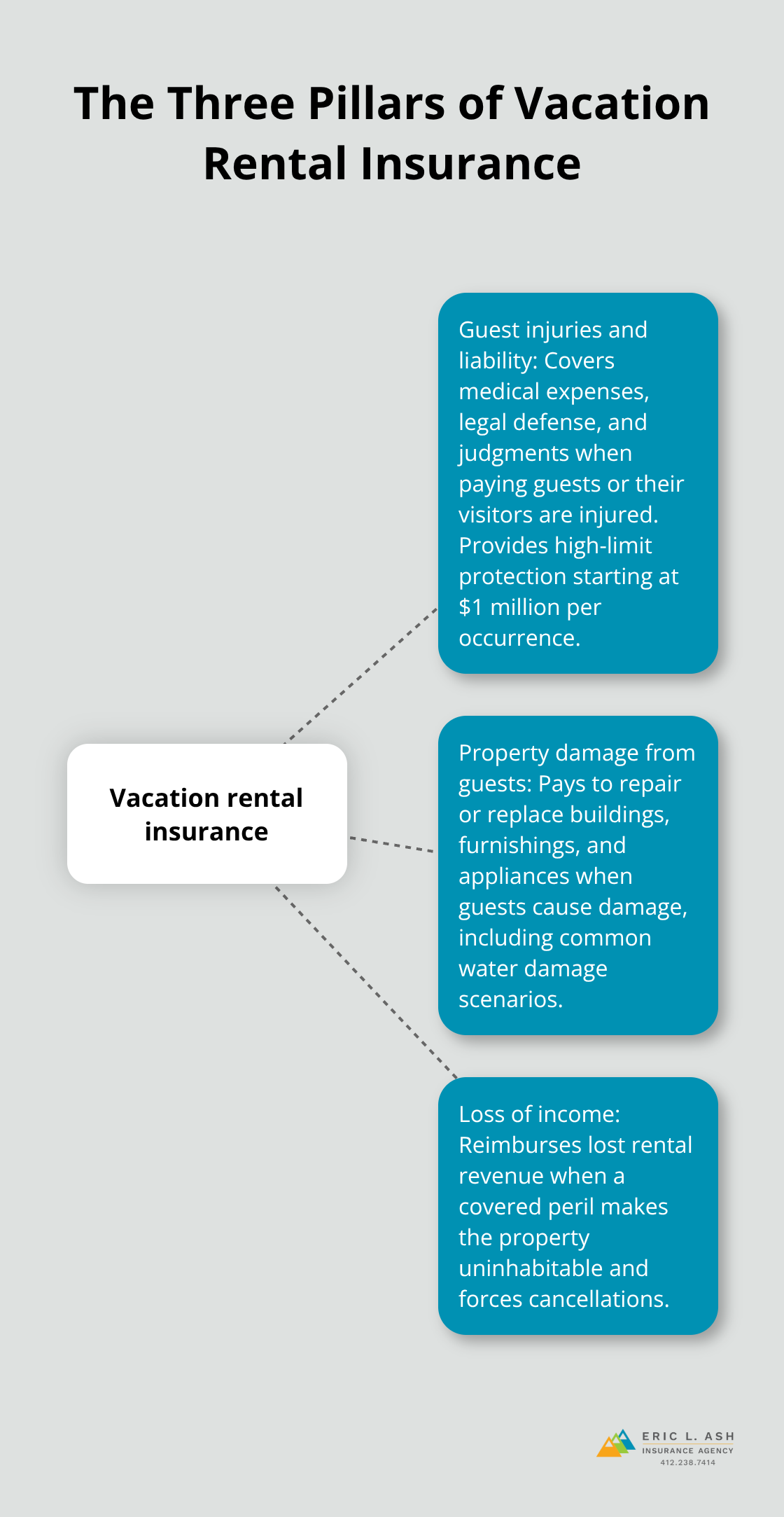
Vacation rental insurance covers three critical areas that standard homeowners policies explicitly exclude. The first is liability protection when a guest gets injured on your property. If someone slips on your deck, gets food poisoning, or claims you caused them harm, a guest injury claim can result in significant legal defense costs and settlements. Vacation rental liability coverage typically starts at $1 million in commercial general liability limits, though you should verify this protects off-premises situations and includes liquor liability if you provide alcohol to guests. The second protection is property damage and loss coverage for your building, systems, and furnishings. Water damage from a guest’s negligence can cost $20,000 to $50,000 if it affects multiple floors, according to industry data. Your policy should cover accidental damage by guests, intentional damage by guests, theft, and vandalism without artificial caps on payouts. Many policies also include enhanced water damage coverage and protection during vacancy periods, which matters if you need to close temporarily for repairs.

Infographic showing liability, property, and income protections for U.S. vacation rentals - vacation rental landlord insurance

The third layer is loss of rental income protection. If a covered peril like fire or severe water damage makes your property unlivable, this coverage reimburses you for the rental income you would have earned during the repair period. This matters tremendously because your mortgage, property taxes, and maintenance costs don’t pause while you’re fixing storm damage.

Guest Liability Needs Real Limits

Your liability limits should match your asset value and guest volume. If you host multiple guests weekly across a four-bedroom home, $1 million feels safer than $300,000. Consider adding umbrella insurance on top of your base policy to extend liability protection and cover squatter-related eviction costs or bed bug infestations, which standard coverage often excludes.

Property Coverage Must Be Replacement Value, Not Actual Cash Value

Replacement value policies pay what it costs to rebuild or replace items today, not what you paid five years ago. Actual cash value subtracts depreciation, leaving you short when you file a claim. Ask your agent explicitly whether your policy covers intentional guest damage, per-claim dollar limits on specific items, and whether limits exist on how often you can rent per year.

Loss of Income Timing Matters

Loss of rent coverage typically begins after a waiting period (often 14 to 30 days after the covered loss occurs). Some policies cap the payout period at 12 months. Confirm these terms with your carrier so you understand how long you’re protected and whether the daily limit matches your actual nightly rate. Standalone vacation rental policies tend to offer broader terms than endorsements added to homeowners policies, especially if you rent year-round.

The specifics of what your policy covers directly affect how well you can recover from a guest-related incident. Next, you’ll need to understand why your current homeowners insurance won’t cut it-and what gaps you’re actually facing.

Why Your Homeowners Policy Won’t Cover Your Vacation Rental

Standard homeowners insurance explicitly excludes rental activity, and most carriers will deny your claim or cancel your policy if they discover you host paying guests. Your homeowners insurer views vacation rental operations as a commercial business, not residential occupancy. When you sign a homeowners policy, you affirm that you occupy the property as your primary residence or occasional personal-use property. The moment you list your home on Airbnb or Vrbo, that contract breaks.

What Happens When You File a Claim Without Disclosure

If you file a claim without disclosing rental activity, the insurer can deny coverage entirely, refuse to renew your policy, or raise your premiums significantly when they discover the truth. This isn’t a gray area-policy exclusions make it explicit. A guest injury claim that would cost $500,000 to defend and settle becomes your personal liability if your homeowners policy has excluded business operations.

Checklist of outcomes when filing a claim without disclosing short-term rental use

The liability limits on a homeowners policy (typically $100,000 to $300,000) won’t protect you against a serious guest injury lawsuit. Commercial general liability coverage for vacation rentals starts at $1 million, and that’s the minimum we recommend for any property that hosts multiple guests annually.

The Coverage Gaps That Matter Most

Your homeowners policy also doesn’t cover intentional or malicious damage by guests, theft of furnishings, or loss of rental income when the property becomes uninhabitable. Water damage from a guest’s negligence, fire from a guest’s cooking accident, or vandalism during a party all fall outside standard homeowners coverage because they tie to rental operations, not personal residence use. The coverage gaps widen further when you factor in vacancy periods, property entrustment (guest damage to your belongings), and bed bug infestations-all common vacation rental risks that homeowners policies either exclude or cap at unrealistic limits.

Endorsements vs. Standalone Policies: The Cost and Coverage Trade-Off

If you operate a short-term rental property without proper vacation rental insurance and experience a significant loss, you’ll discover that your homeowners premium provides zero protection. Standalone vacation rental policies or home sharing endorsements close these gaps by explicitly covering guest-caused damage, liability arising from paying guests, and loss of income during repairs. The cost difference is real-standalone STR insurance typically runs $600 to $1,500 annually depending on property value and occupancy, but that investment protects your entire business model. Endorsements added to homeowners policies cost $200 to $600 per year and work for properties rented fewer than 180 days annually, though they still offer narrower liability limits and more exclusions than standalone policies.

When Standalone Coverage Becomes Non-Negotiable

If you rent your property year-round or operate multiple units, a standalone vacation rental policy is the only option that won’t leave you exposed. The distinction matters because your mortgage lender also expects appropriate coverage, and an undisclosed rental operation can trigger a policy violation that affects your ability to refinance or sell the property later. Your lender won’t accept a homeowners policy as proof of coverage for a rental property-they’ll require documentation that your insurance specifically addresses the commercial nature of your operation.

Understanding these gaps sets you up to make an informed decision about which type of coverage actually fits your rental model and risk profile.

How to Choose the Right Vacation Rental Insurance Policy

Choosing vacation rental insurance requires matching your coverage to three concrete factors: your property’s physical characteristics, how often guests occupy it, and what assets you need to protect. Start by documenting your property type, number of bedrooms, square footage, and replacement cost. A 2,000-square-foot three-bedroom home in Pennsylvania costs significantly more to rebuild than a one-bedroom condo, and your coverage limits must reflect that reality. Next, calculate your actual guest volume over a 12-month period.

Assess Your Property Type and Guest Volume

If you rent fewer than 180 days annually, a home sharing endorsement on your existing homeowners policy might work and will cost $200 to $600 per year. If you rent 180 days or more, or operate year-round, standalone vacation rental insurance is mandatory because endorsements cap occupancy and often exclude intentional guest damage or bed bug coverage that standalone policies include. The 180-day threshold isn’t arbitrary-it marks the point where rental activity shifts from occasional to primary business operation, and your insurance must reflect that distinction.

Calculate your expected annual rental income and compare that number against potential loss scenarios. If you generate $40,000 in annual rental revenue but your property sits vacant for 60 days during repairs after a water damage claim, loss of income coverage becomes essential, not optional. Your policy should reimburse lost rental income for at least 12 months following a covered loss.

Compare Liability Limits and Deductibles

Standard commercial general liability starts at $1 million, which protects you against guest injury claims up to that amount. If you host large parties or serve alcohol, request explicit confirmation that your policy includes liquor liability coverage, which many basic policies exclude. Property damage deductibles typically range from $500 to $2,500 per claim, and higher deductibles lower your premium but increase your out-of-pocket costs when damage occurs.

Choose your deductible based on your financial position. If you can absorb a $2,500 claim without stress, that deductible saves you money annually. If a $1,000 claim would strain your cash flow, stick with a $500 deductible even if premiums cost slightly more. Replacement value coverage is non-negotiable; actual cash value policies depreciate your belongings and leave you underfunded when you file claims. Request replacement cost explicitly in writing from your agent.

Evaluate Additional Endorsements and Add-Ons

Additional endorsements and riders close specific gaps in your base policy. Bed bug coverage costs $50 to $150 annually and protects against infestation claims, which standard policies exclude. Squatter protection covers eviction-related legal fees and lost rent if an unauthorized occupant claims tenancy rights. High-value item riders protect furnishings, appliances, or art worth more than standard per-item limits.

Professional cleaning staff liability covers injuries or property damage caused by your hired cleaners. Evaluate which riders match your actual operational risks-if you never hire outside cleaning crews, that rider wastes money, but if you employ housekeeping staff, it’s essential. The cost of these add-ons (typically $50 to $300 annually per rider) should align with the specific risks your rental operation faces.

Compact list of common endorsements and typical costs for U.S. vacation rentals - vacation rental landlord insurance

Final Thoughts

Vacation rental landlord insurance protects your investment where homeowners policies leave you exposed. A single guest injury or water damage claim can cost tens of thousands of dollars out of your pocket if you carry the wrong coverage type. The gaps between standard homeowner protection and what your rental operation actually needs are too large to ignore.

Calculate your annual rental days and property replacement cost, then contact an insurance agent who specializes in vacation rental coverage. Ask specifically about commercial general liability limits, replacement value coverage, loss of income protection, and which endorsements match your operational risks. Request quotes from multiple carriers so you can compare liability limits, deductibles, and annual premiums side by side.

We at Eric L. Ash Insurance Agency work with property owners across Pennsylvania who operate vacation rentals on platforms like Airbnb and Vrbo. Our team understands the specific risks vacation rental owners face and can help you avoid the gaps that leave owners exposed. Contact Eric L. Ash Insurance Agency to get proper coverage in place with a consultation and quote tailored to your property and guest volume.

The information provided in this blog is for general informational purposes only and does not constitute legal, financial, or insurance advice. Coverage options, terms, and availability may vary. Please consult with a licensed professional for advice specific to your situation.

Smart Guide to Short Term Rental Insurance for Pennsylvania Hosts

Smart Guide to Short Term Rental Insurance for Pennsylvania Hosts

Running a short-term rental in Pennsylvania opens doors to steady income, but it also exposes you to risks that standard homeowners insurance won’t cover. Your regular policy explicitly excludes commercial activity like guest rentals, leaving you vulnerable to liability claims and property damage costs.

At Eric L. Ash Insurance Agency, we’ve seen hosts face unexpected gaps in coverage that cost them thousands. The right short-term rental insurance fills those gaps and protects both your property and your income stream.

What Your Short-Term Rental Insurance Actually Protects

Liability Protection Shields You From Guest-Related Claims

Liability protection defends you when a guest suffers an injury on your property or causes damage to someone else’s belongings. Most policies offer $1 million in coverage per occurrence, with standard limits including $2 million aggregate, which matters because a single slip-and-fall claim or a guest’s visitor injured in your hot tub can easily exceed $100,000 in medical costs and legal fees. This coverage pays for medical expenses, legal defense, and settlement costs that would otherwise come directly from your pocket.

Overview of short-term rental liability coverage components for hosts in Pennsylvania - short term rental insurance

Without it, you face personal financial exposure that can devastate your rental income and personal assets.

Property Damage Coverage Protects Your Physical Investment

Property damage and loss coverage reimburses you for damage to your furnishings, appliances, and structural elements caused by covered perils like water damage from burst pipes, fire, storms, and vandalism. Water damage from broken pipes and appliance leaks represents the most expensive type of property damage for rental properties, so this coverage directly protects your largest investment. The valuation method matters significantly-replacement cost value policies pay what repairs actually cost, while actual cash value policies deduct depreciation and leave you short. You should always select replacement cost value coverage to avoid substantial out-of-pocket expenses when damage occurs.

Loss of Rent Coverage Maintains Your Cash Flow

Additional living expenses coverage, sometimes called loss of rent, reimburses you for lost rental income when a covered claim makes your property uninhabitable. If a fire forces you to close for three months, this coverage pays the income you would have earned during that period, protecting your cash flow when you need it most. Loss of rent coverage typically pays actual rental income lost with no time limit up to your chosen amount, which differs from homeowners policies that cover temporary living expenses only. This distinction proves critical for hosts who depend on rental income to cover mortgage payments or property expenses.

Tailoring Coverage to Match Your Property’s Needs

A $1 million liability limit protects you adequately for most Pennsylvania properties, though larger homes with pools or hot tubs warrant higher limits. Steadily and other Pennsylvania insurers offer these coverages for rental periods as short as one night, and policies can be tailored to include specific risks or limited coverages based on your property’s needs and your budget. The key is verifying that your chosen policy covers the specific exposures your rental creates, because gaps in coverage leave you personally liable for costs that specialized insurance would otherwise handle. An independent agent can help you assess which coverage options match your property type and guest volume.

Why Standard Homeowners Policies Exclude Rental Activity

Your homeowners insurance policy contains explicit language that excludes rental activity, and this exclusion exists for a fundamental reason: your insurer priced that policy assuming your home remains your primary residence. When you start accepting guests and collecting rental income, you fundamentally change the risk profile of the property in ways your standard homeowners policy was never designed to handle. Homeowners insurance is designed for owner-occupied properties, not for business use. This means filing a claim related to your rental operation can result in a denial, and some insurers may even cancel your policy once they discover you operate a short-term rental. The financial exposure here is real and immediate-you lose coverage precisely when you need it most.

Guest Liability Falls Outside Standard Coverage

Guest liability represents a specific blind spot in standard homeowners policies. Your regular policy covers you if a family member’s friend slips on your stairs, but it explicitly excludes injuries to paying guests and their visitors. A guest who sustains a serious injury in your rental can pursue a claim against you personally, and without proper coverage, you become personally liable for medical bills, lost wages, and pain-and-suffering damages. Standard homeowners policies also ignore the unique exposures that come with short-term rentals-damage caused by guests who treat your property differently than long-term tenants would, theft of your furnishings and amenities, or property damage from parties and gatherings.

Lost Rental Income Receives Zero Protection

Your homeowners policy provides loss of use coverage for your own temporary housing needs if your home becomes uninhabitable, but it provides zero protection for lost rental income. If a fire makes your property unrentable for two months, your homeowners policy covers your hotel costs while you find alternative housing, but it won’t reimburse the thousands in rental income you forfeit. This gap forces you to absorb that income loss entirely from your own pocket, even though the loss resulted from a covered peril.

Specialized Insurance Closes the Coverage Gaps

Specialized short-term rental insurance closes all three gaps-it extends liability protection to guests, covers guest-related property damage and your furnishings, and replaces lost rental income when covered claims force a shutdown. Understanding these gaps helps you recognize why your current homeowners policy leaves you vulnerable, and it points directly to the solution: coverage specifically designed for the risks that short-term rental hosts actually face.

Checklist of common gaps standard homeowners insurance leaves for short-term rental hosts

The next step involves selecting the right policy for your Pennsylvania property, which requires assessing your specific situation and comparing what different carriers offer.

Selecting the Right Coverage for Your Pennsylvania Rental

Calculate Your Property’s True Replacement Cost

Matching coverage limits to your actual property risk starts with calculating what it would cost to fully replace your furnishings, appliances, and structural improvements if a total loss occurred. A three-bedroom home in the Poconos with mid-range furnishings typically requires $75,000 to $150,000 in property coverage, while a fully equipped property with outdoor amenities like hot tubs or pools warrants $150,000 or higher. Your guest volume matters equally-properties hosting 30 guests monthly face different liability exposures than those hosting 5 guests monthly, and your coverage limits should reflect this frequency.

Compact guide to setting property and liability coverage for Pennsylvania short-term rentals - short term rental insurance

For liability, the industry standard of $1 million per occurrence works for most Pennsylvania rentals, but properties with pools, hot tubs, or accommodations for large groups should carry $2 million.

Set Deductibles and Loss of Rent Coverage to Match Your Financial Situation

Deductibles represent your out-of-pocket responsibility when claims occur, and selecting a $1,000 deductible saves roughly 15–20% on premiums compared to a $500 deductible, though this only makes sense if you can absorb that cost without financial strain. Loss of rent coverage should equal your average monthly rental income multiplied by the number of months you reasonably estimate your property could remain uninhabitable-if you earn $4,000 monthly and want protection for three months of closure, you need $12,000 in loss of rent coverage minimum. This calculation protects your income stream when covered events force temporary shutdowns.

Compare Quotes From Multiple Carriers With Identical Coverage Specifications

Steadily, Proper Insurance, and Erie Insurance each offer different coverage combinations and price points across Pennsylvania, so comparing quotes from multiple carriers reveals meaningful differences in both cost and what’s actually covered. Request quotes with identical coverage limits and deductibles from at least three carriers, then examine what each policy actually covers beyond the base liability and property protection-some policies include amenities coverage for bikes or kayaks while others exclude them, some cover bed bug and flea liability while others don’t, and some include squatters protection if a guest refuses to leave. Water damage from broken pipes and appliance leaks represents the most expensive property damage claim type for rental properties, so verify that your policy covers both and doesn’t impose limitations on coverage during vacancy periods. Ask each carrier whether your policy covers guest personal property damage, because a guest who damages their own laptop or camera during their stay shouldn’t create liability for you, yet some policies create confusion on this point.

Understand Premium Variation Across Pennsylvania Regions

Premium costs vary substantially-a basic policy might run $600–$800 annually while comprehensive coverage with higher limits can reach $1,500–$2,500 depending on your property location, size, and guest volume. Pennsylvania regions like Philadelphia and Pittsburgh often command higher premiums than rural areas due to higher replacement costs and claim frequency, though this varies by specific neighborhood. An independent insurance agency can obtain quotes from dozens of carriers simultaneously, saving you hours of individual research and revealing options you wouldn’t find by shopping directly with insurers online.

Review Policy Documents and Identify Coverage Gaps

Before binding any policy, read the actual policy document rather than relying on marketing summaries, because exclusions buried in the fine print can eliminate coverage you thought you had. Ask your agent which perils aren’t covered-most policies exclude flood, earthquake, and acts of war, and if your property sits in a flood zone or faces other specific risks, you’ll need separate riders or policies to address those gaps.

Final Thoughts

Standard homeowners insurance leaves Pennsylvania short-term rental hosts exposed to three critical gaps: guest liability claims, property damage from rental activity, and lost income when your property becomes uninhabitable. These gaps exist because your homeowners policy was priced for owner-occupied homes, not income-generating rental operations. A single guest injury or fire that forces a three-month closure can cost you tens of thousands in medical claims, legal fees, and lost rental income that your standard policy won’t cover.

Specialized short-term rental insurance solves these gaps directly by extending liability protection to guests and their visitors, covering property damage caused by rental activity, and reimbursing lost rental income when covered claims force temporary shutdowns. The right policy matches your property’s replacement cost, reflects your guest volume, and includes coverage for the specific exposures your rental creates-whether that’s amenities like hot tubs or the risk of guest damage to your furnishings. You need to calculate your property’s true replacement cost and set liability limits that reflect your guest volume and amenities.

We at Eric L. Ash Insurance Agency work with dozens of carriers to shop multiple markets and deliver competitive rates tailored to your specific rental situation. As a veteran-owned, independent agency serving Pennsylvania, we specialize in short-term rental insurance and can help you assess your property’s actual risk profile and find coverage that protects both your investment and your income stream. Contact us today to compare quotes and close the coverage gaps that leave you vulnerable.

The information provided in this blog is for general informational purposes only and does not constitute legal, financial, or insurance advice. Coverage options, terms, and availability may vary. Please consult with a licensed professional for advice specific to your situation.
Small Business Commercial Auto: Affordable Auto Insurance

Small Business Commercial Auto: Affordable Auto Insurance

Running a small business means managing countless expenses. Your vehicles are essential to operations, but the wrong insurance choice can drain your budget or leave you exposed to serious liability.

We at Eric L. Ash Insurance Agency help small business owners find commercial auto coverage that actually fits their finances. This guide shows you how to secure affordable protection without cutting corners on what matters.

Why Your Business Vehicles Need Commercial Coverage

Personal auto insurance won’t cover your business vehicles, and operating without proper commercial auto coverage exposes you to financial ruin. Most states legally require liability coverage for any vehicle used for business purposes, whether you own it, lease it, or occasionally use a personal vehicle for work. Citations for operating without commercial auto insurance result in fines ranging from hundreds to thousands of dollars, depending on your state, plus potential license suspension and vehicle impoundment. More importantly, if an accident occurs and you lack coverage, you become personally liable for medical bills, property damage, lost wages, and legal fees-costs that can easily exceed six figures and bankrupt a small operation.

The Real Cost of an Uninsured Accident

A single accident involving your business vehicle can destroy your finances. If your driver injures someone, medical expenses for spinal injuries, brain trauma, or permanent disability often exceed $100,000. Property damage claims add up fast: rear-ending another vehicle, hitting a storefront, or damaging commercial equipment can easily cost $20,000 to $50,000 in repairs and liability. Without commercial auto coverage, you pay these costs from your business bank account or personal assets. Courts can garnish your wages, seize equipment, and force you to liquidate inventory to settle judgments. Litigation funding in auto liability cases has also become common, meaning third-party financiers back lawsuits against drivers and businesses, pushing settlements into seven figures. One accident without insurance typically ends small businesses.

What Vehicles Actually Need Commercial Coverage

Service vans, box trucks, food trucks, dump trucks, utility vehicles, and any vehicle regularly used for business operations require commercial auto insurance. This includes company cars used to visit clients, delivery vehicles, vehicles hauling equipment or materials, and even personal vehicles if you use them for regular business activities. Trailers under 3,000 pounds receive automatic liability coverage under most commercial policies, but trailers larger than 3,000 pounds or multi-axle trailers must be specifically listed on your policy to receive physical damage coverage.

Visual guide showing which business-use vehicles require commercial auto insurance in the U.S.

Many small business owners mistakenly assume their personal auto policy covers occasional business use-it doesn’t, and filing a claim for business-related accidents often results in denial and policy cancellation. The distinction is clear: if the vehicle serves a business purpose beyond commuting to a single workplace, you need commercial auto insurance.

Why Personal Policies Fall Short

Your personal auto policy explicitly excludes business use. Insurance companies investigate claims carefully, and they deny coverage when they discover business activity. This denial leaves you uninsured at the exact moment you need protection most. The insurer may also cancel your entire personal policy for misrepresenting the vehicle’s use, leaving you scrambling to find coverage elsewhere. State regulators and insurers take this seriously because business vehicles operate at higher risk than personal commuter cars. Your personal policy simply wasn’t priced or designed to handle the exposure that comes with business operations.

How to Determine Your Coverage Needs

Start by listing every vehicle your business operates or controls. Include company-owned vehicles, leased equipment, and personal vehicles your employees drive for work. Next, identify how each vehicle is used: local deliveries, long-distance hauling, client visits, equipment transport, or service calls all carry different risk profiles. Vehicles with higher mileage, longer routes, or multiple drivers typically cost more to insure because they face greater exposure. Your industry also matters-construction fleets, food service vehicles, and delivery operations all present distinct risks that affect pricing and available coverage options. Once you understand your fleet’s composition and usage patterns, you can work with an independent agent to select the right commercial auto policy.

Finding the Lowest Rates Without Sacrificing Coverage

Get Multiple Quotes to Expose Price Gaps

Getting multiple quotes is non-negotiable if you want affordable commercial auto insurance. Most small business owners request one quote, assume that’s the market rate, and move forward-a costly mistake. Commercial auto rates vary dramatically between carriers because each insurer weighs risk differently. One carrier might charge $1,200 annually for a service van with one driver, while another charges $1,800 for identical coverage. The only way to find competitive pricing is to request quotes from at least three to five different insurers. This takes 30 minutes of your time and can save you hundreds of dollars per year.

Steps to get and compare commercial auto insurance quotes for small businesses in the United States. - small business commercial auto

Many carriers now offer online quote tools that let you input your fleet details once and see rates immediately, removing the excuse of inconvenience. When you gather quotes, make sure you compare apples to apples-same coverage limits, same deductibles, same vehicle types. A quote that looks cheaper because it has a $2,500 deductible instead of $1,000 isn’t actually cheaper if an accident forces you to pay more out of pocket. Track each quote in a spreadsheet with the carrier name, premium, coverage limits, deductible amounts, and any discounts applied. This comparison document becomes your negotiating tool.

Stack Discounts on Top of Bundle Savings

Bundling your commercial auto policy with other business insurance cuts premiums significantly. If you carry general liability, property insurance, or workers’ compensation, adding commercial auto to the same carrier typically saves 10 to 25 percent on your total premium. Carriers offer bundle discounts because they want to consolidate your business and reduce their acquisition costs. A small business paying $800 for general liability and $1,500 for commercial auto separately might pay $1,900 total when bundled with one insurer instead of $2,300 with separate carriers. The math is straightforward: bundling works.

However, bundling only makes sense if the bundled rate is genuinely competitive. Get separate quotes first, then ask carriers what they’ll charge for a complete bundle. If one insurer’s bundled rate is significantly higher than competitors’ individual rates, walk away. Some small business owners also neglect to ask about specific discounts that stack on top of bundled pricing. Safety training discounts, paperless billing discounts, autopay discounts, and claims-free discounts often reduce premiums by another 5 to 15 percent.

Make Driver Safety Your Competitive Advantage

Implement a driver safety program-even a simple one with monthly safety meetings and clear vehicle maintenance standards-and you qualify for additional savings. Clean driving records for all your drivers matter enormously. A single at-fault accident or moving violation on an employee’s record can raise your premium by 10 to 30 percent, so make driver qualification standards part of your hiring process and monitor records annually. As an independent agency, we work with multiple top-rated insurance providers to identify which ones offer the best discounts for your specific safety practices and driver profiles. This approach helps small business owners access rates that reflect their actual risk, not just industry averages.

Your next step involves understanding what coverage options actually protect your fleet and which ones you can safely skip.

What Coverage Actually Protects Your Fleet

Liability Coverage: Your First Line of Defense

Liability coverage forms the foundation of commercial auto insurance, and it’s the only coverage most states legally require. This coverage pays for medical expenses and property damage when your driver causes an accident-it protects the other person, not your vehicle. State minimum liability limits vary widely. Some states require as little as $15,000 in bodily injury coverage per person, while others demand $50,000 or more. These minimums are dangerously low for small businesses. A single serious injury claim can exceed $100,000 in medical costs alone, and if your coverage limit is only $25,000, you personally owe the remaining $75,000. Courts can garnish your business income for years to satisfy a judgment.

Carry at least $100,000 per person and $300,000 per accident in bodily injury liability, plus $100,000 in property damage liability. These higher limits cost only slightly more than minimums but protect your business assets from catastrophic claims. If you operate multiple vehicles or employ drivers, the additional premium for adequate liability limits pays for itself through protection.

Collision and Comprehensive: Protecting Your Own Vehicles

Collision and comprehensive coverage protect your own vehicles, not third parties. Collision pays for repairs when your vehicle hits another car, object, or structure-regardless of fault. Comprehensive covers non-collision damage like theft, vandalism, weather, and animal strikes. Many small business owners skip comprehensive because they think their vehicles are low-risk, but this miscalculation often backfires. A food truck damaged by hail, a service van hit while parked, or equipment stolen from an unlocked vehicle represents lost revenue and repair costs you must absorb. The question isn’t whether damage will occur-it’s when.

Your deductible choice matters enormously for affordability. A $1,000 deductible costs significantly more than a $2,500 deductible, but only if you can actually afford to pay $2,500 out of pocket after an accident. Many small businesses choose deductibles they cannot afford, which defeats the purpose of having insurance.

Uninsured Motorist Coverage: Filling the Gap

Uninsured motorist coverage protects you when another driver lacks adequate insurance or hits you and flees. According to the National Highway Traffic Safety Administration, roughly 13 percent of drivers nationwide carry no auto insurance, and in some states that number exceeds 20 percent. If an uninsured driver injures your employee or damages your vehicle, your uninsured motorist coverage steps in to cover medical expenses and repairs up to your policy limits.

Percentage of drivers nationwide without auto insurance, illustrating why uninsured motorist coverage matters. - small business commercial auto

This coverage is inexpensive-typically $50 to $150 annually depending on your limits-and it fills a critical gap that liability coverage cannot address. Skipping uninsured motorist protection is a false economy that leaves your fleet vulnerable to the growing number of uninsured drivers on the road.

Final Thoughts

Affordable small business commercial auto insurance requires three concrete actions: comparing multiple quotes, bundling policies strategically, and implementing driver safety practices that reduce your actual risk. Most small business owners overpay because they accept the first quote they receive or fail to ask about discounts that stack on top of bundled rates. The carriers you choose matter less than the effort you invest in shopping around and understanding your coverage needs.

Start by listing your vehicles and how you use them, then request quotes from at least three carriers with identical liability limits, deductibles, and coverage options. Ask each carrier what they’ll charge if you bundle commercial auto with general liability, property, or workers’ compensation, and track these numbers in a spreadsheet so you can see exactly where you save money. Once you’ve identified your lowest competitive rate, ask that carrier about safety training discounts, paperless billing discounts, and claims-free discounts that might apply to your business.

We at Eric L. Ash Insurance Agency work with multiple carriers to find competitive rates and tailored coverage for Pennsylvania small businesses. Contact us at ericlashagency.com to request a quote and compare your options for small business commercial auto protection.

The information provided in this blog is for general informational purposes only and does not constitute legal, financial, or insurance advice. Coverage options, terms, and availability may vary. Please consult with a licensed professional for advice specific to your situation.
Builder Risk Insurance: Protecting Construction Projects from Start to Finish

Builder Risk Insurance: Protecting Construction Projects from Start to Finish

Construction projects face constant threats from weather, theft, and accidents. Builder risk insurance protects your investment by covering property damage and losses during the building process.

At Eric L. Ash Insurance Agency, we know that one unexpected event can derail your entire project timeline and budget. The right coverage gives you peace of mind from groundbreaking to final inspection.

What Builder Risk Insurance Actually Protects

Builder risk insurance covers three critical areas that construction projects face daily: property damage from on-site events, theft and vandalism of materials and equipment, and weather-related destruction. Comprehensive coverage addresses damage from fire, lightning, hail, explosions, and acts of nature such as hurricanes. Your policy protects the building structure itself, all materials and supplies on site, equipment in transit to the job, and materials stored at other locations before installation. Soft costs matter too-many policies cover lost rental income, loan interest, and real estate taxes when weather delays push your timeline back.

Visualization of core builder risk insurance coverage areas for U.S. construction projects

Understanding Coverage Limits and Exclusions

The key is understanding what sits outside your coverage. Builder risk excludes earthquakes, floods, wind damage in certain coastal areas, and wear and tear from normal construction activity. Defective workmanship typically falls outside protection unless your policy includes an ensuing loss provision, which covers damage to other property caused by faulty installation work. Setting your coverage limits equal to your anticipated total construction cost prevents underinsurance; data shows the average builder’s risk premium runs about $1,259 per year for small businesses, with costs typically ranging from 1% to 4% of your total completed value.

How Location Impacts Your Premium

Location matters significantly-Florida and Texas premiums run higher than Colorado due to natural disaster risk, while proximity to fire stations and flood zones directly impacts your rate. Construction materials and quality influence risk as well; fire-resistive construction receives more favorable ratings than wood-frame structures. These factors combine to shape what you’ll pay for protection across your project phases.

Protecting Materials in Transit

Many contractors overlook coverage gaps when materials move between locations. Standard builder risk policies may not cover equipment and supplies traveling from supplier to job site, which means a truck accident or theft during transport leaves you unprotected. Inland marine insurance or contractor’s tools and equipment coverage fills this gap specifically for items in motion. Carriers offer extensions for scaffolding, temporary structures, and debris removal costs after a loss, which you should evaluate during the quote process.

Timing, Coinsurance, and Inflation Adjustments

Work with an agent who inventories all exposures across your project phases-site, in transit, and off-site storage-to identify whether targeted coverage or broader protection serves your needs better. Coverage starts when contracts are signed and ends at project completion or when the building reaches occupancy, so verify these exact triggers in your policy language before materials arrive. A 100% coinsurance clause appears in most policies, requiring you to insure at least the full replacement cost to avoid penalties on claims. Inflation adjustments matter; construction costs rise throughout your project, so revisit your insured value periodically to maintain adequate protection and avoid out-of-pocket losses when you file a claim. Understanding these mechanics positions you to select a policy that actually matches your project’s real exposure.

Why Your Project Needs Builder Risk Insurance

Without builder risk insurance, a single weather event or theft costs you tens of thousands of dollars in materials, labor, and project delays. Lenders and general contractors across the industry won’t move forward without proof of coverage, making this insurance a hard requirement rather than an option. Construction projects stall when owners underestimate their exposure or delay purchasing protection. The financial stakes are real: small business contractors pay around $1,259 annually for builder risk coverage, which represents genuine protection against losses that could exceed your entire project budget. Your lender requires coverage equal to the full construction cost before you break ground, and most general contractors demand proof that subcontractors carry their own policies. This layered approach protects everyone with a financial stake in the project.

Checklist of lender and contractor requirements plus financial reasons to carry builder risk insurance

Lenders Won’t Fund Without It

Banks and construction lenders make builder risk insurance a condition of financing, period. They need assurance that if a fire destroys the framing or a storm damages the roof, the insurance payment goes toward rebuilding rather than your personal bank account. Your loan agreement specifically names the lender as loss payee, meaning they receive claim payments directly. This protects their investment in your project and ensures you complete construction even after a major loss. Missing this requirement delays your entire financing timeline, and some lenders refuse to disburse funds until you provide a certificate of insurance showing active coverage.

Contractors and Subcontractors Demand Proof

General contractors require all subcontractors to carry builder risk insurance or be added as additional insureds on the project policy. This protects the general contractor from bearing the financial burden if your materials burn, get stolen, or suffer weather damage. Many construction contracts specifically state that subcontractors must maintain coverage throughout their work phase. If you show up without proof of insurance, you lose the job or face significant delays while you arrange coverage. The contractor’s own policy may not cover damage to your specific materials and tools, so separate coverage protects your financial interest.

Timeline Delays Cost Real Money

Construction delays from uninsured losses cascade quickly. A theft of copper wiring or HVAC equipment doesn’t just cost the materials; it delays your entire timeline, pushing back the occupancy date and triggering additional costs for extended financing, storage, and labor. Builder risk policies cover soft costs arising from a delay in project completion when delays extend beyond your anticipated completion date (these provisions prevent a weather event from becoming a financial catastrophe that extends your project months beyond schedule). Without this protection, you absorb every penny of delay costs out of pocket while your lender watches your completion date slip.

Choosing the Right Coverage for Your Situation

The decision to purchase builder risk insurance isn’t whether to buy it-your lender and contractors will require it-but rather how much coverage you need and which endorsements protect your specific project. Project size, location, construction materials, and timeline all influence what you should carry. Working with an insurance agent who understands construction exposes all the gaps that standard policies leave uncovered, from materials in transit to temporary structures on your site. The next section walks you through how to select a policy that actually matches your project’s real exposure rather than settling for whatever quote arrives first.

How to Choose the Right Builder Risk Policy

Calculate Your Coverage Limit Accurately

Start with your total construction cost down to the penny, then add 10-15% for inflation and unexpected material price increases during your project timeline. This number becomes your coverage limit baseline, and underestimating it creates serious problems when you file a claim.

Three-step guide to calculating builder risk coverage limits and avoiding coinsurance penalties

Coinsurance penalties hit hard: if you insure a $500,000 project for only $400,000 and suffer a $50,000 loss, your insurer calculates the claim as if you’re responsible for 20% of all losses, meaning you collect just $40,000 instead of the full $50,000. Work backward from your architect’s cost estimate and construction schedule to lock in the right limit before you purchase a policy. Your lender will demand proof that your coverage limit equals the full construction cost anyway, so this isn’t optional.

Map All Exposures Across Your Project Phases

Inventory every exposure across your project phases: materials stored on-site, equipment arriving at the job, supplies sitting at off-site warehouses, and temporary structures like scaffolding and tool sheds. Most standard builder risk policies cover on-site damage but create gaps for coverage for materials in transit or stored away from the job. If your subcontractors deliver materials directly to your site, standard coverage usually protects them. But if you stage materials at a warehouse across town before installation, you need explicit coverage for that location. Request quotes that include extensions for debris removal, temporary structures, and ensuing loss provisions that cover damage to other property caused by faulty workmanship. These endorsements cost extra but prevent expensive surprises when a covered peril damages something your base policy doesn’t mention.

Compare Quotes Side-by-Side on Coverage, Not Just Price

Obtain quotes from at least three carriers before selecting a policy, but don’t just compare the monthly premium. Compare the coverage limits, deductibles, and exclusions side-by-side because a cheaper policy often excludes perils that matter to your specific project. A $50 monthly difference across a 12-month project saves just $600, but missing coverage for theft or water damage could cost $50,000 or more. Ask each carrier explicitly whether their policy covers materials in transit, scaffolding, temporary structures, and soft costs from project delays. Document their answers in writing because verbal assurances disappear when you file a claim. Request sample policies before committing, and read the exclusions section carefully-that’s where carriers bury the gaps that will hurt you. Pay special attention to how each policy defines your anticipated completion date, since coverage ends at completion or when the building becomes occupied, whichever comes first. A policy that ends 30 days after your anticipated completion date leaves you exposed if your project runs long.

Select a Deductible That Protects Your Cash Flow

Your deductible choice directly impacts your monthly premium: a $500 deductible costs significantly less than a $1,000 deductible, which costs less than a $2,500 deductible. Try a deductible you can actually afford to pay out-of-pocket without disrupting your project cash flow, because that’s what you’ll pay before your insurance kicks in. For most construction projects, a $1,000 deductible strikes the right balance between keeping premiums manageable and retaining enough coverage to matter. If your project involves high-value equipment or materials in transit regularly, a lower deductible protects you better against frequent small losses. If you’re building a simple structure with minimal materials on-site, a higher deductible reduces your monthly costs without sacrificing meaningful protection. Never select a deductible based solely on getting the cheapest monthly payment-that penny-wise approach costs dollars when you file a claim.

Final Thoughts

Builder risk insurance protects your investment from the moment contracts are signed through final occupancy, and without it, a single weather event or theft becomes a financial catastrophe that drains your budget. Your lender demands it, your contractors require it, and your project’s success depends on having adequate coverage in place before materials arrive on site. The coverage you select today determines whether unexpected losses get absorbed by insurance or by your bank account.

Proper builder risk insurance means calculating your limits accurately, mapping every exposure across your project phases, and selecting endorsements that close gaps standard policies leave open. You need to understand your deductible choice, verify your completion date triggers, and maintain inflation adjustments as construction costs rise throughout your project. The difference between adequate protection and inadequate coverage often comes down to whether you worked with someone who understands construction or simply accepted the first quote that arrived.

Contact Eric L. Ash Insurance Agency to discuss your project’s coverage needs and get quotes from carriers with real construction expertise. We work with construction professionals across Pennsylvania to build builder risk policies that match your actual project exposure rather than settling for generic coverage. Your next step is straightforward: reach out to an insurance professional who understands construction and can inventory your specific exposures so your project stays protected from groundbreaking to completion.

The information provided in this blog is for general informational purposes only and does not constitute legal, financial, or insurance advice. Coverage options, terms, and availability may vary. Please consult with a licensed professional for advice specific to your situation.
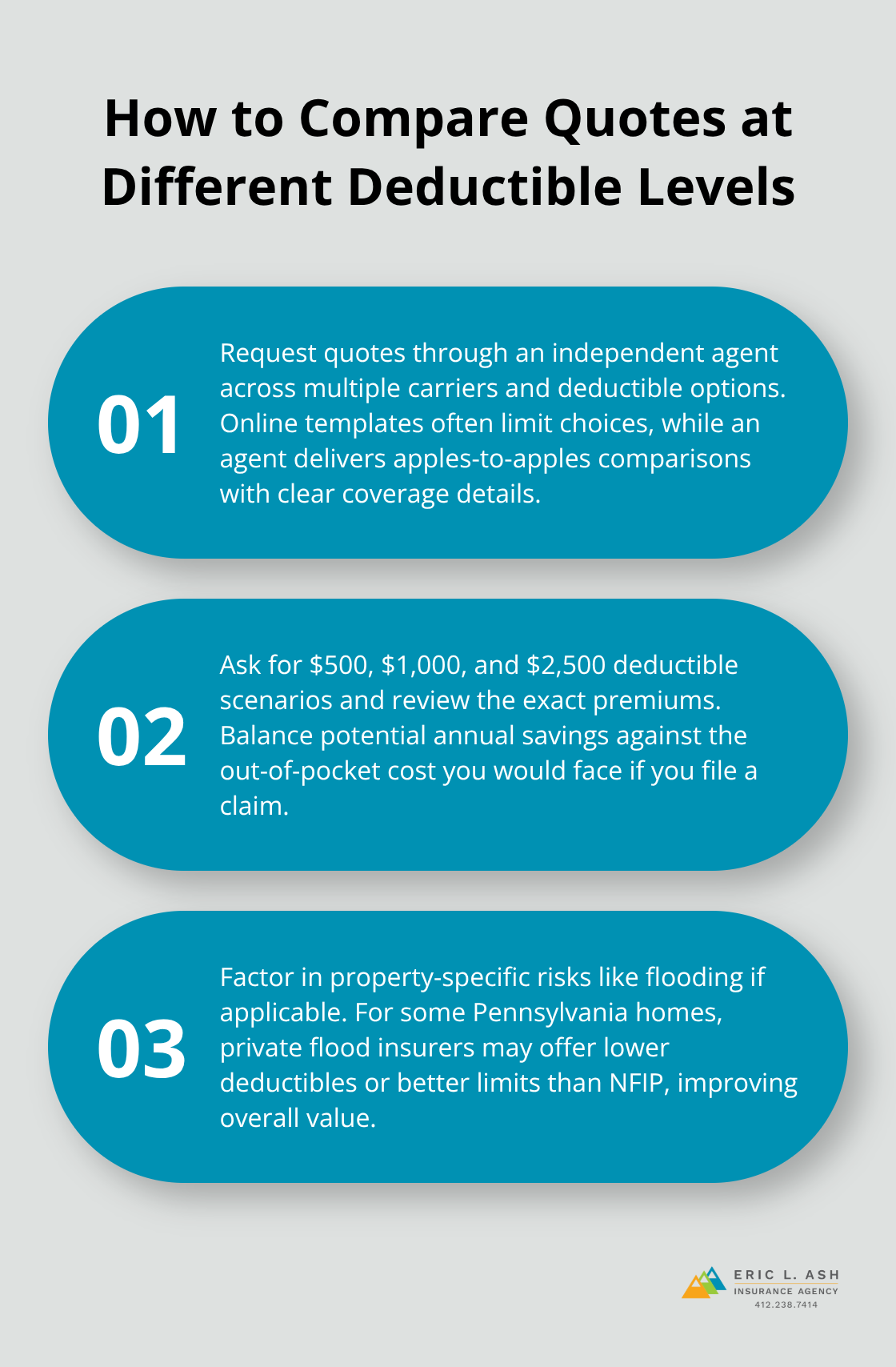
Airbnb Rental Insurance: Protecting Your Short-Term Space

Airbnb Rental Insurance: Protecting Your Short-Term Space

Your standard homeowners policy won’t cover your Airbnb income or protect you from guest-related accidents. That gap leaves you exposed to serious financial risk.

At Eric L. Ash Insurance Agency, we see hosts discover this problem too late. Airbnb rental insurance fills those gaps with coverage designed specifically for short-term rental operators.

Why Your Homeowners Policy Leaves You Exposed

Standard homeowners policies were written for owner-occupied homes, not businesses. The moment you list your property on Airbnb, you’ve crossed into commercial activity that most traditional policies explicitly exclude. Insurance companies know the difference between a family living in a home and a host running a vacation rental operation with constant guest turnover, and they price accordingly-or they don’t cover you at all.

Most homeowners policies contain a business exclusion clause that voids coverage for income-generating rental activity. This isn’t a gray area or a technicality. If you file a claim related to your Airbnb operation and your insurer discovers you were running a short-term rental, they can deny the entire claim. You lose not just the coverage you thought you had, but also the premium you’ve been paying.

The Income Problem Nobody Talks About

Your homeowners policy will not reimburse you for lost rental income. If a fire damages your property and you can’t accept guests for three months, your policy covers the structure and contents-but not the income you had to forgo. Short-term rental hosts depend on that income as a primary revenue stream for many properties.

A covered loss that makes your property uninhabitable means zero income during recovery, and your homeowners policy won’t replace a single dollar of that lost revenue. This gap forces many hosts to choose between reconstruction costs and survival, and it’s entirely preventable with the right coverage.

Liability Exposure Extends Beyond Your Walls

Standard homeowners liability coverage typically maxes out at $300,000 to $500,000 and assumes a family household, not a business with dozens of rotating guests annually. When a guest is injured on your property or claims damage from something they brought with them, the liability exposure multiplies.

A guest who slips on your deck and breaks their leg, a guest whose friend is injured using your hot tub, or a guest who causes property damage at a neighboring property while using your kayak-all of these scenarios create liability that extends far beyond what homeowners insurance contemplates. Airbnb’s Host Protection Insurance provides up to $1 million per occurrence for liability, but it has critical exclusions. It does not cover mold, pollution, certain water damage, or property damage to your own rental. Host Protection also does not cover lost income.

Relying solely on Airbnb’s program leaves significant gaps, particularly around property damage claims and business interruption. Your homeowners policy won’t fill those gaps because the business exclusion clause already removes your commercial operation from coverage entirely. This combination of gaps-income loss, property damage, and extended liability-is exactly what specialized Airbnb rental insurance addresses.

What Airbnb Rental Insurance Covers

Property Damage from Guests

Specialized Airbnb rental insurance replaces the gaps left by your homeowners policy with coverage designed for the realities of short-term hosting. Unlike traditional policies that exclude your rental operation entirely, these policies acknowledge that you run a business and build protection around the specific risks that come with it.

Property damage from guests tops the list. When a guest damages your furniture, breaks appliances, or causes structural damage, your homeowners policy won’t pay because the business exclusion clause already removed you from coverage. Airbnb rental insurance covers guest-caused damage to your building and contents using replacement cost valuation, which means you receive payment for what it costs to replace items new, not what they’re worth after depreciation.

Proper Insurance covers all-risk building and contents with no sub-limits on theft, vandalism, or water damage. This matters because a single incident involving intentional guest destruction or water damage could easily exceed $10,000, and you need coverage that doesn’t cap payouts for specific claim types.

Four key protections Airbnb hosts get beyond standard homeowners policies

Host Liability for Guest Injuries

Host liability for guest injuries represents your second major exposure, and it’s where platform protection falls dangerously short. While sites like Airbnb do offer some property protection for hosts against damage by a guest, it does not include liability insurance. Airbnb’s Host Protection Insurance caps liability at $1 million per occurrence, but it explicitly excludes mold, pollution, and certain water damage claims.

Real Airbnb rental insurance extends liability coverage to incidents both on and off your property. If a guest suffers injury using your kayak three miles away at a local lake, that coverage applies. If a guest experiences a bed bug infestation and files a liability claim, that coverage applies too, including extermination costs and lost revenue from canceled bookings. Commercial General Liability in specialized policies starts at $1 million per occurrence with options up to $2 million, addressing the expanded exposure that comes with rotating guests.

Business Interruption Coverage

The third critical piece is business interruption coverage, which homeowners insurance explicitly won’t provide. If a covered event like fire or water damage makes your property uninhabitable, this coverage reimburses your actual lost rental income with no time limit on payouts.

For hosts earning $2,000 to $5,000 monthly from their property, three months of lost income while repairs happen represents $6,000 to $15,000 in unrecovered revenue. Specialized policies cover this gap entirely, protecting your cash flow when you need it most.

Scheduled Coverage for High-Value Items

High-value items deserve scheduled coverage. If you furnish your rental with expensive artwork, electronics, or designer pieces, standard coverage often applies sub-limits that leave you underprotected. Adding scheduled personal property coverage to your Airbnb rental insurance means each valuable item gets listed individually with its full replacement cost guaranteed, eliminating depreciation calculations and sub-limit surprises when you file a claim.

When you understand what specialized coverage actually protects, the next step involves comparing specific policies and providers to find the right fit for your property’s unique characteristics and occupancy patterns.

Selecting the Right Coverage for Your Rental Property

Calculate Your True Replacement Cost and Occupancy Rate

Start with your actual replacement cost, not your purchase price. Many hosts underestimate what it would cost to rebuild their property today, which leads to insufficient coverage limits. If your rental cost $300,000 to purchase but would cost $450,000 to rebuild with current labor and material prices, your coverage limit should reflect the higher figure.

Occupancy patterns matter equally. A property that hosts guests 200 nights annually faces different risk exposure than one occupied 100 nights yearly. Properties with higher turnover see more guest-caused damage, theft, and liability incidents. When you request quotes, provide accurate occupancy data because insurers price based on exposure frequency.

Compare Pricing Across Multiple Providers

CBIZ Vacation Rental Insurance and Safely both tailor quotes to specific occupancy rates. CBIZ reports plans ranging from about $3 per day to roughly $100 per month depending on property characteristics. Safely offers customized pricing based on stay length, number of properties, occupancy, and deductible selection, with 98% of claims paid within 4 to 5 days. This speed matters when you need cash flow restored quickly after a loss.

Safely pays 98% of claims within 4–5 days - Airbnb rental insurance

Proper Insurance covers all 50 states plus Washington, D.C., and includes squatter protection with legal support and lost revenue coverage if a guest refuses to vacate, plus bed bug and flea protection covering extermination costs and booking cancellations. Truvi offers global coverage outside travel-advisory countries with payouts in 3 to 5 days and pricing starting around £13.80 per booking.

Evaluate Coverage Details Beyond Premium Amounts

Compare what each provider actually covers rather than focusing solely on premium. CBIZ covers all 50 states plus Puerto Rico, Washington, D.C., and the U.S. Virgin Islands, with $2 million general liability and legal expense coverage for squatter situations. Allstate HostAdvantage provides guest-damaged personal property protection up to about $10,000 per rental period in select states.

Key factors for selecting the right short-term rental insurance policy - Airbnb rental insurance

The exclusions matter more than the coverage limits. Ask specifically whether the policy covers water damage without sub-limits, whether bed bug claims include lost revenue, and whether liability extends to guests using amenities off-site (kayaks, bikes, pools). These details separate adequate protection from policies with hidden gaps that emerge only when you file a claim.

Final Thoughts

Your standard homeowners policy excludes your rental operation entirely, and that exclusion removes coverage the moment you accept your first guest. Airbnb rental insurance fills this gap with replacement cost protection for guest-caused damage, liability coverage that extends beyond your property boundaries, and business interruption protection that replaces lost income during recovery. Providers like Proper Insurance, CBIZ, and Safely have built policies specifically around the operational realities of short-term hosting, including protections for bed bugs, squatters, and amenity-related incidents that traditional insurers either exclude or severely limit.

The right coverage depends on your specific property, occupancy rate, and the amenities you offer. Comparing quotes across multiple providers reveals significant differences in what you actually get for your premium-a policy that costs $50 monthly might exclude water damage sub-limits or cap bed bug coverage, while another at a similar price includes unlimited protection for those same risks. The details matter far more than the headline premium.

We at Eric L. Ash Insurance Agency work with hosts across Pennsylvania to find Airbnb rental insurance that matches their operations without leaving dangerous gaps. As an independent agency, we shop multiple carriers to deliver competitive rates and tailored protection backed by responsive local service. Contact us to review your current coverage and explore specialized options that actually protect your investment and income.

The information provided in this blog is for general informational purposes only and does not constitute legal, financial, or insurance advice. Coverage options, terms, and availability may vary. Please consult with a licensed professional for advice specific to your situation.

The Journey, Part II: Community Service

There’s always something special about the journey.

Over a decade ago, when I started in the insurance business as a new small business owner, I was searching for ways to connect with the surrounding communities. As I explored different civic organizations — the Lions Club, Rotary Club, and local business networking groups — I realized these groups offered the opportunity to do more good, on a larger scale, than I could ever accomplish alone.

That realization led me to join the Rotary Club of Elizabeth, an organization with more than 50 years of service in our community. Rotary’s mission, “Service Above Self,” resonated deeply with me, and I quickly saw that our local club lived out that motto through projects that supported food banks, Meals on Wheels, and other local nonprofits. What drew me in most, though, was the club’s strong partnership with the Elizabeth Forward School District (EFSD).

That relationship is especially meaningful because of its impact at every level of the school district. What began with the high school Interact Club (a student version of Rotary) and the five annual Community Service Awards presented to deserving EFHS seniors has grown into so much more. Our club proudly supports the #DictionaryProject, providing every third grader in the district with their own dictionary. About eight years ago, we also launched the third-grade spelling bee, which now draws 60–70 enthusiastic participants each year.

In 2025, we’re expanding our partnership even further — working with Elizabeth Forward Middle School to support mentorship and esports programs.

Today, I’m honored to serve as Co-President of the Elizabeth Rotary Club, a role I’ve held for the past few years. If you’re looking for a way to give back and make a difference in your community, I encourage you to give Rotary a try.

We meet on the 1st and 3rd Thursdays of each month at noon at The Carriage Inn. We’d love to have you join us.

Here’s to the next decade of Rotary service — and the journey that continues to inspire us all.

The Journey

“It is good to have an end to journey towards; but it is the journey that matters, in the end.” — Anonymous

Lily setting out on another bike adventure along the Great Allegheny Passage heading towards Pittsburgh

The journey I think about is in my recent past, more specifically the last twelve years.

Everyone’s career arc is different. You often hear, “I never dreamt in my wildest dreams I’d be where I am today when I look back on what I studied in school.” In my case, I spent almost fifteen years after college working as a public relations professional, steadily climbing the corporate ladder. At some point, that arc hit a ceiling, and downsizing and the imminent closure of the agency I worked at loomed on the horizon. This was a pivotal turning point. On one hand, it was hard to give up what seemed to be my lifelong career path; on the other, the thought of starting over was scary to contemplate.

Eventually, I chose the latter. It became not only a challenge to become a first-time small business owner, but also an opportunity to dive into a whole new world of insurance education. What made the decision easier were two things:
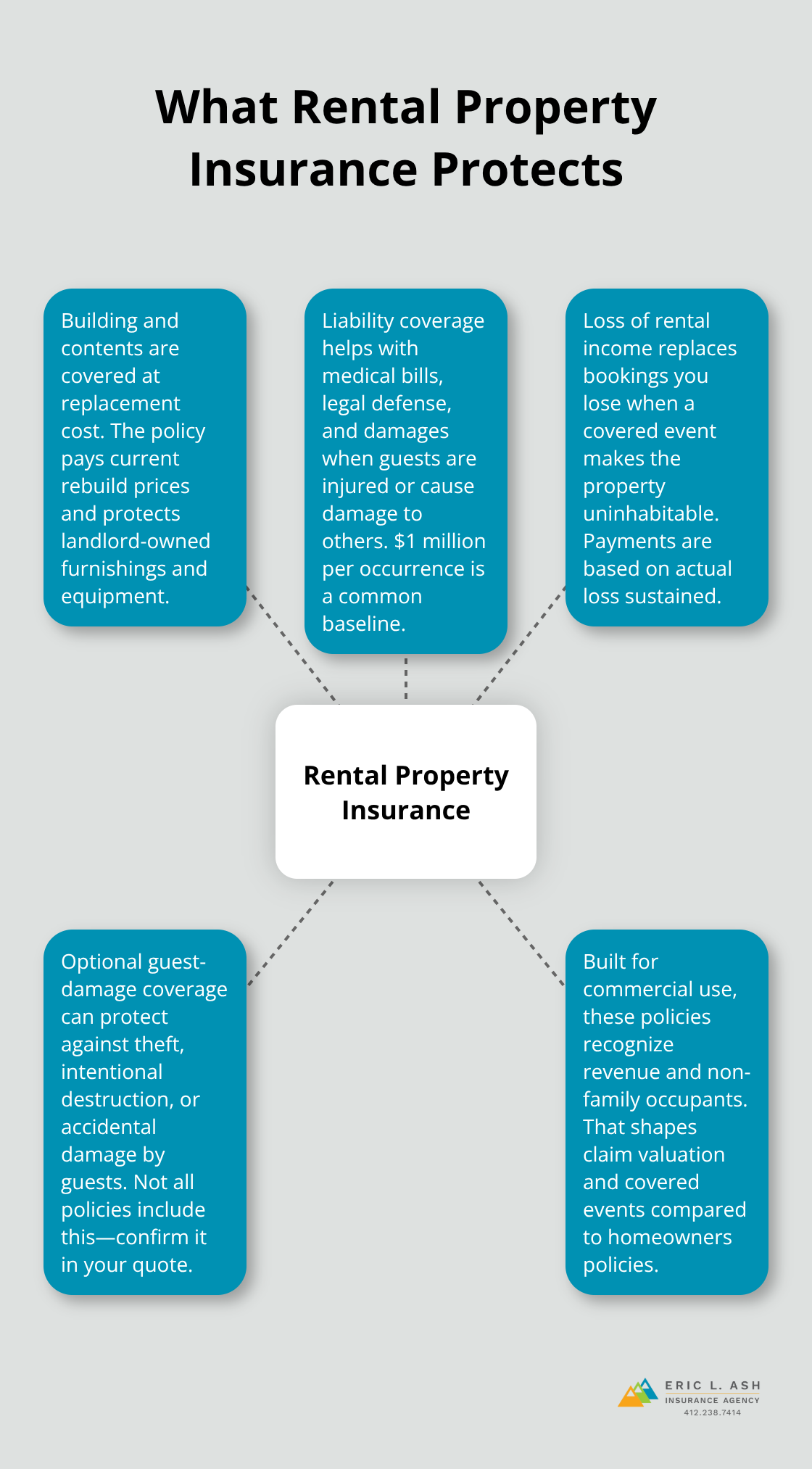
  1. Being closer to home to make childcare a little easier
  2. Most importantly, being able to spend time with my preschool-aged daughter

The two of us spent the better part of a few months enjoying the crisp fall weather while adventuring outdoors—bike rides, hikes, geocaching, and more. As the weather grew chillier, we moved indoors to rock climbing, ice skating (most days just the two of us on the sheet of ice), visiting museums, and so on. What made this time so special was simply being together. It seems like only yesterday, yet now twelve years have passed. I wouldn’t trade that time for the world—it wasn’t about jumping into the next job or being away from family with a city career. It was about being there for my daughter and building a relationship.

So, what does this have to do with selling insurance, you may ask? This “new” career path has given me the chance to be present for life’s special moments with my family—whether traveling, cheering at my daughter’s first ice hockey game, a golf match, or a cross-country meet. It has allowed me to enjoy watching the little girl in the cute cat bike helmet grow into a beautiful young woman with lofty dreams and an amazing soul.

Sometimes the destination isn’t what you expect or can predict, but it’s the journey along the way that shapes who we are, how we view success, and how we evaluate one’s life’s work.


Enjoy the journey,

Eric